

boAt TAG review
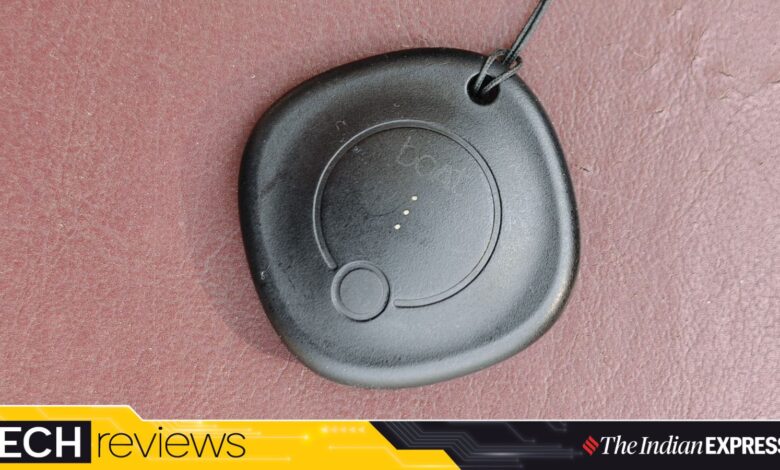

Ever since I switched from the Galaxy S23 Ultra to the OnePlus 13, my Galaxy SmartTag2 stopped working, as it is only compatible with Samsung smartphones. After learning this slightly expensive lesson, I was looking for a tracker that works with any Android device, and the boAt TAG was just that.
Priced at Rs 1,299, the boAt TAG is slightly cheaper than solutions like the JioTag Go and has since found a permanent place on my keychain. In this review, I have tried to answer the question: Is the boAt TAG as good as the brand claims?
Works with any Android smartphone
In terms of look and feel, I appreciate that the boAt TAG has its own character with an oval-shaped design, making it easy to carry on a keychain in your pocket. However, if you plan to carry it inside a wallet, it will add a noticeable bulge. I also like the fact that it comes in black, which helps it stay clean and smudge-free.
Story continues below this ad
It is easy to set up and use. (Image credit: Vivek Umashankar/The Indian Express)
The best part about the boAt TAG is that it works with almost any Android device. If you are someone like me who switches phones, all you have to do is pair it once with your Google account, and it will appear on all smartphones logged in with the same account. This eliminates the need to manually pair it with each device. On top of that, there is no need to install an additional app, as it works natively with the Google Find My app, which comes pre-installed on Android smartphones.
How to set it up?
Setting up the boAt TAG is a straightforward process. Simply pull out the plastic layer to activate the battery. If you have a fairly modern smartphone, you should receive a pop-up on your screen. Note that this happens only if Bluetooth is enabled; otherwise, you will need to pair it manually from the Bluetooth settings menu.
Free lanyard and an additional battery
The tag can be easily attached to a keychain. (Image credit: Vivek Umashankar/The Indian Express)
The retail package of the boAt TAG includes a free lanyard, making it easy to attach to a keychain. Additionally, it comes with a spare battery. According to the brand, the pre-installed battery should last for six months, and with the extra battery included, the boAt TAG will remain powered for up to a year. However, unlike many other smart tags, replacing the boAt TAG’s battery requires a Phillips screwdriver. I feel this could have been avoided, and the brand should have implemented a more convenient battery replacement mechanism, similar to the Apple AirTag or Galaxy SmartTag2. However, unlike the more expensive Apple AirTag, it does not offer real-time and step–step tracking.
Does it work as expected?
Yes, it does. To test the capabilities of the boAt TAG, I parked my scooter and left the tracker in the under-seat storage compartment. Using Google Find My Device, I was able to track and navigate it back to my vehicle. Similarly, it has helped me locate my misplaced keychain at home playing a sound to pinpoint its location.Story continues below this ad
The tracker comes with an additional battery. (Image credit: Vivek Umashankar/The Indian Express)
Despite being a Bluetooth-powered device, it uses the Google Find My Device network, allowing users to track it anywhere in the world.
Should you buy one?
If you are someone like me who tends to misplace keys and wallets, the boAt TAG is a worthy investment. It is affordable, lightweight, and compact, making it a must-have smartphone accessory—especially for those who like to keep an eye on their valuables at all times.
Pros
Cons
Works with all Android phones
Battery change needs a screwdriver
Affordable price
Bulky in wallets
Easy to set up
Uses Google Find My (no extra app)
Includes extra battery and keychain loop
Helps find lost items (sound & location)
Small and light
© IE Online Media Services Pvt Ltd
Expand

