

8 animals that have the best eyesight | Pets-animals News

When it comes to seeing the world, not all eyes are created equal. While humans rely on decent daylight vision and can perceive millions of colours, many animals outshine us in ways that are nothing short of extraordinary.Whether it’s spotting prey from kilometres away or detecting light patterns invisible to us, the animal kingdom boasts some stunning visual talents. Let’s look at a few creatures renowned for having the best eyesight, according to science.
1. Eagle
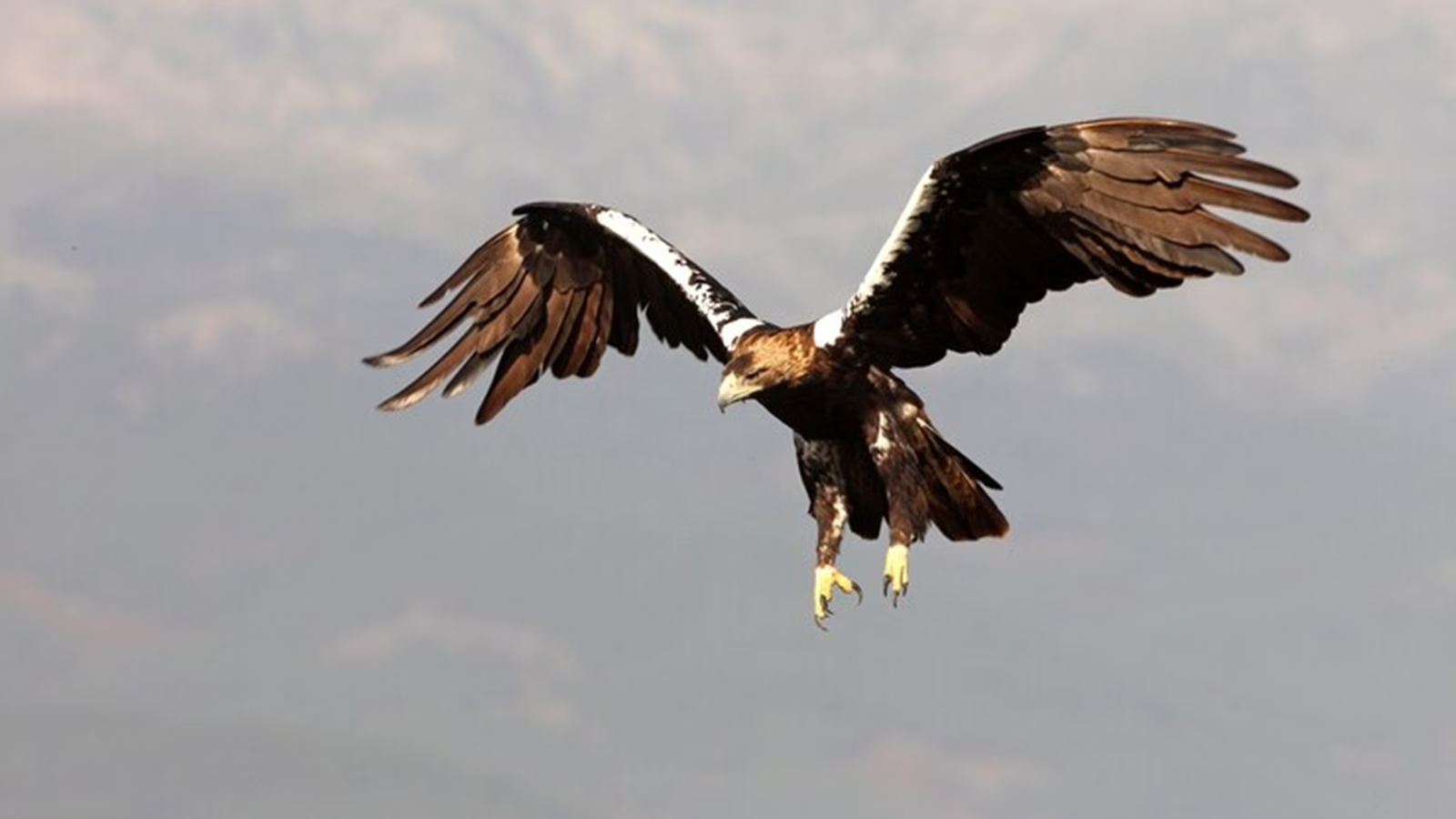
Often used as a metaphor for sharp eyesight, the eagle’s visual abilities are truly exceptional. With a visual acuity about four to five times better than humans, eagles can spot a rabbit or fish from over 3 kilometres away.
Story continues below this ad
According to National Geographic, this is thanks to their densely packed photoreceptors and a retina with a deep fovea, allowing them to see finer details at great dances.
2. Mantis Shrimp
Don’t let their size fool you; mantis shrimps have what may be the most complex eyes in the animal world. Each eye can move independently and contains up to 16 types of photoreceptor cells (compared to the three humans have for red, green, and blue).
According to Smithsonian Magazine, they can detect polarised light, UV light, and colours we can’t even imagine. In a sense, they “see” dimensions of light that are completely beyond our perception.
3. Chameleons
Chameleons don’t just change colours, they also see the world in an incredible way. Their eyes can move independently, allowing them to look in two different directions at once. This gives them a full 360-degree view without moving their heads.Story continues below this ad
While their visual acuity isn’t as high as birds of prey, their unique eye structure makes them visual strategs, especially when hunting insects.
4. Owls
Owls are nocturnal hunters with eyes specially adapted for low light. Their eyes are large, tube-shaped (not spherical), and contain an abundance of rod cells, which are excellent at detecting light in dark environments.
According to BBC Earth, some owl species can see 35 to 100 times better than humans in the dark. Their binocular vision also helps with depth perception while swooping down on prey.
Owls are nocturnal hunters with eyes specially adapted for low light (file)
5. Dragonflies
Dragonflies have enormous compound eyes that cover nearly all of their head, giving them almost 360-degree vision. Their eyes contain around 30,000 facets, each capable of detecting light and movement. They’re experts at tracking fast-moving objects, which makes sense considering they catch their prey mid-air.Story continues below this ad
A 2023 study in Nature Communications also revealed that dragonflies can anticipate the movement of their prey—like a tiny aerial hunter jet.
6. Goats
Goats may not top the l in visual acuity, but their rectangular pupils give them an incredible panoramic view of about 320-340 degrees. This allows them to watch for predators while navigating rocky terrain.
According to Live Science, this pupil shape also helps them maintain a steady image of the horizon—even when climbing steep hills.
7. Cats
While not as powerful as owls, cats—especially domestic cats—have excellent night vision.Story continues below this ad
Their eyes have a tapetum lucidum, a reflective layer that bounces light back through the retina, improving their ability to see in the dark. That’s why their eyes glow when caught in headlights. Cats can see six to eight times better than humans in low light, making them efficient twilight hunters.
8. Tarsiers
These small, tree-dwelling primates from Southeast Asia have some of the largest eyes relative to body size in the animal kingdom. Each eye is as large as its brain! Tarsiers have excellent night vision and depth perception, allowing them to jump precisely from branch to branch in dim light.
According to the Encyclopædia Britannica, their eyes are fixed in their sockets, so they turn their heads nearly 180 degrees to compensate.

