

Who is Alexandr Wang, and why is Meta betting billions on his startup Scale AI? | Technology News
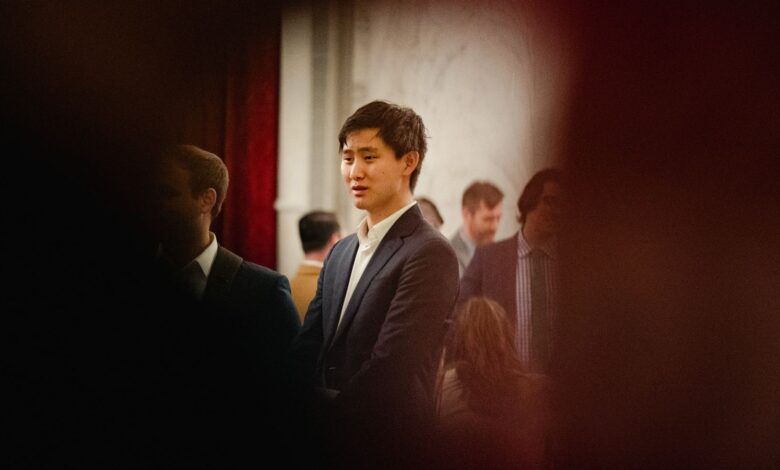

Alexandr Wang is the CEO and co-founder of Scale AI, a data-labelling startup that helps other companies train and deploy cutting-edge AI models. Over the years, Wang has built his startup into the backbone of the AI boom, quietly enabling everything from autonomous vehicles to large language models (LLMs).Now, Wang finds himself at the centre of a potential $15 billion shake-up as Meta taps him to lead its newly formed research lab that will focus on building AI systems capable of ‘superintelligence’.
The $15 billion investment deal is also expected to bring other Scale AI employees to Meta, which is also reportedly offering seven to nine-figure compensation packages to AI researchers from OpenAI and Google who would like to be a part of its new 50-member artificial superintelligence lab.
Story continues below this ad
The new lab comes at a crucial time for Meta, which is perceived to be struggling to pull ahead of its competitors Google, Microsoft, and OpenAI in the high-stakes AI race.
CEO Mark Zuckerberg has pushed for AI to be incorporated across the company’s products such as its Ray Ban smart glasses as well as social media platforms Facebook, Instagram, and WhatsApp. Meta has also sought to define its competitive edge developing open AI models, allowing developers to freely download and integrate the source code into their own tools.
But internal issues such as employee turnover and underwhelming product launches have reportedly hampered Meta’s AI efforts lately. So far, the company’s research efforts have been overseen its chief AI scient, Turing Award winner Yann LeCun who is widely recognised for his groundbreaking research contributions on convolutional neural networks (CNNs).
However, LeCun’s views on AI are not aligned with others in Silicon Valley as he has argued that LLMs are not the path to artificial general intelligence (AGI). Now, Meta is betting on Wang to not only help it regain the lead in the AI race but also push toward another frontier known as artificial superintelligence (ASI) — a hypothetical AI system with intelligence exceeding that of the human brain.Story continues below this ad
Who is Alexandr Wang? What are his views on AI?
Alexandr Wang was born in New Mexico, US, to Chinese immigrant parents who worked at Los Alamos National Laboratory as nuclear physics. Before heading to college, Wang reportedly worked at internet startup Quora.
He dropped out of Massachusetts Institute of Technology (MIT) after just one year and joined Y Combinator, the popular startup accelerator that used to be led OpenAI CEO Sam Altman. At Y Combinator, he teamed up with Quora alum Lucy Guo to start a new company called Scale AI in 2016.
Two years later, both Wang and Guo were named in Forbes’ 30 Under 30 l in enterprise technology. Guo shortly exited Scale AI “due to differences in product vision and road map,” according to a report Forbes.
Wang continued running the startup which was minted as a unicorn in 2019 after raising $100 million in investment from Peter Thiel’s Founders Fund followed another $580 million fundraising round which put the company at a $7 billion valuation. At 24, Wang became the youngest self-made billionaire in the world. His co-founder, Lucy Guo, recently became the youngest self-made woman billionaire due to her stake in Scale AI.Story continues below this ad
Wang was reportedly Sam Altman’s roommate during the COVID-19 pandemic. The two AI industry leaders were also photographed sitting next to each other at US President Donald Trump’s swearing-in ceremony in January this year.
What is Scale AI? How fast is it growing?
Scale AI was founded in 2016 as a startup that labelled mass quantities of data required to train AI systems, particularly autonomous vehicles (AV). As a result, most of its data services were primarily offered to self-driving automakers. This move to corner the market for supplying training data so that self-driving cars could tell the difference between various objects, is what made Scale AI well-positioned in the AI boom that was soon to follow.
LLMs are trained on massive amounts of data to generate text and other content. Scale AI hires thousands of contract workers to sift through vast amounts of data, label the information, and clean the datasets that are then supplied to tech companies to train their complex AI models.
Scale AI’s client l includes major automakers such as Toyota and Honda as well as Waymo, Google’s AV subsidiary. It has also partnered with Accenture to help the consulting giant build custom AI apps and models. OpenAI, Microsoft, and Toronto-based AI startup Cohere also count among Scale AI’s customers, according to a report Forbes.Story continues below this ad
The US government has also reportedly sought Scale AI’s data labelling and annotation services in order to help analyse satellite imagery in Ukraine.
Last valued at nearly $14 billion, the company saw about $870 million in revenue in 2024. It further expects to more than double revenue this year to $2 billion, which would put Scale AI’s valuation at $25 billion, according to a report Bloomberg.
However, the AI boom has also given rise to a wave of relatively new competitors such as Surge AI, which offers data labeling tools to AI companies, as well as data labeling startups Labelbox and Snorkel AI, which primarily cater to non-tech enterprises.