World Asteroid Day 2025: How to watch near-Earth asteroids live on June 30
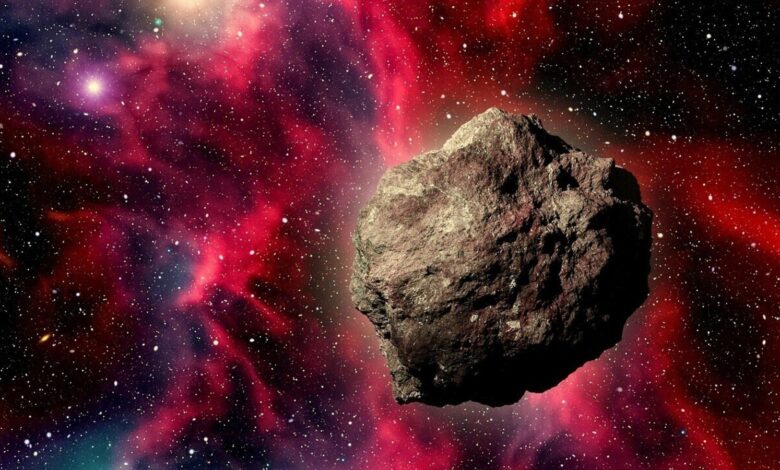

On World Asteroid Day 2025, June 30, space enthusiasts and science lovers around the world can look forward to a special treat. On the 10th anniversary of the observation, a United Nations event will bring real-time views of near-Earth asteroids into people’s homes for free. World Asteroid Day 2025 is on June 30 The UN began observing World Asteroid Day to raise awareness about the scientific value and potential risks of the asteroids. This event is held on the anniversary of the 1908 Tunguska event when a massive meteor explosion over Siberia had flattened over 80 million trees. According to a Space.com report, the Virtual Telescope Project will be hosting a free livestream of near-Earth asteroids beginning at 5 pm EDT on June 30 to mark the occasion. Viewers can tune in via their official YouTube channel. Astronomers will also be discussing the characterics of asteroids and the ongoing efforts to defend Earth from possible future impacts. Why do asteroids matter?Earth has been struck asteroids multiple times through the years. Some impacts, like the Chicxulub impactor, led to mass extinction events including that of the dinosaurs. The Space.com report further cited NASA’s Center for Near-Earth Object Studies stating that over 30,000 near-Earth objects (NEOs) have been identified. Fortunately, no major asteroid poses a risk of colliding with Earth in the next century. How are NASA and global partners working to prevent asteroid threats?According to the report, every year, global space agencies like NASA and the European Space Agency (ESA) participate in the Planetary Defence Conference, where they simulate asteroid impact scenarios and refine response strategies. In 2022, NASA successfully conducted the Double Asteroid Redirection Test (DART) intentionally crashing a spacecraft into Dimorphos, a moonlet of asteroid Didymos, The NASA intended to test whether a collision could alter its trajectory and the test confirmed kinetic impact was a viable method for planetary defense. ESA’s Hera mission will be revisiting the Didymos system in December 2026 to study the aftermath of the DART impact. Meanwhile, efforts to detect potentially hazardous asteroids are ramping up with the introduction of the Vera Rubin Observatory in Chile. During initial scans, the observatory detected over 2,100 new near-Earth objects within days. Željko Ivezić, deputy director of Rubin’s Legacy Survey of Space and Time, was quoted as saying that two centuries’ worth of effort can be outdone in just a couple of years. The observatory is expected to discover up to five million new asteroids in the coming years, revolutionising our ability to monitor space threats. FAQs:1. What is World Asteroid Day?World Asteroid Day is a UN-backed annual event held on June 30 to raise awareness about asteroids and space safety. 2. How can I watch the asteroid livestream?The Virtual Telescope Project will stream it live on their YouTube channel starting at 5 pm EDT on June 30. 3. Is Earth at risk from asteroids?According to NASA, no large asteroid is projected to hit Earth in the next 100 years. 4. What is the DART mission?NASA’s DART mission tested whether crashing a spacecraft into an asteroid could deflect its path. It succeeded in altering Dimorphos’s orbit.