

What US Presidents from Truman to Trump get wrong about war
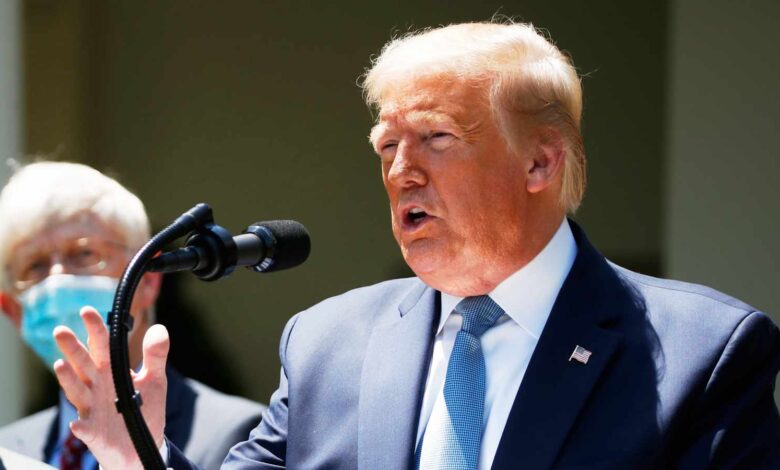

When Donald Trump returned to the White House this January, he came armed with a pledge: under his leadership, the wars in Gaza and Ukraine would end. “If I’m president-elect, I’ll get it [Russia-Ukraine war] done before even becoming president,” he said on the campaign trail with characteric bravado.Now, eight months into his second term, those promises are facing the same test as so many made before: the messy, drawn-out nature of modern warfare and the limits of presidential power. The Gaza war has also only deepened, and the Trump adminration’s approach — pressuring Israel while conditioning aid — has done little to halt the bloodshed.This is not new territory.From Harry S Truman to Barack Obama, US presidents have campaigned on peace, only to find themselves mired in the same conflicts they promised to end, or worse, escalate them.
Story continues below this ad
The Vietnam War
Lyndon B Johnson, elected in 1964 as the “peace candidate,” inherited John F Kennedy’s early troop deployments in Vietnam. After the Gulf of Tonkin incident in 1964 — a disputed naval confrontation used to justify escalation — Johnson committed over five lakh American troops. What began as a limited advisory presence turned into one of the longest and deadliest wars in US hory.
Richard Nixon followed suit in 1968, capitalising on public discontent suggesting he had a strategy to end the Vietnam War. He never explicitly claimed a “secret plan,” but the phrase stuck after a reporter coined it to summarise Nixon’s ambiguous rhetoric. He did little to correct the impression.
Once in office, Nixon expanded the Vietnam War into Cambodia and Laos, sanctioned bombings, and promised “an honourable peace”, later rebranded as “peace with honour.” The Paris Peace Accords weren’t signed until 1973, and even then, the war dragged on.
The fall of Saigon
Two years after American troops left Vietnam, the peace Nixon had touted collapsed. the spring of 1975, North Vietnamese forces were rapidly advancing on Saigon, facing little resance. The US-backed South Vietnamese army, without American military support, was overwhelmed.Story continues below this ad
On April 29 and 30, Saigon descended into chaos. Helicopters roared overhead in what became one of the most dramatic evacuations in modern hory — Operation Frequent Wind. US Marines airlifted thousands of Americans and at-risk South Vietnamese from rooftops, including the now-iconic evacuation from the US Embassy. Crowds surged toward the compound, desperate to escape. North Vietnamese tanks breached the city’s defences, and the afternoon of April 30, 1975, a tank crashed through the gates of the Presidential Palace. The war was over.
For America, the fall of Saigon was a symbolic collapse of decades of foreign policy and a shattering of public trust in presidential assurances about war and peace.
The Gulf War
While some wars have dragged on, the Gulf War of 1991 stands out for its brevity. President George H W Bush framed the war as a mission to push Iraqi forces out of Kuwait. Operation Desert Storm lasted just over a month, with an overwhelming US-led coalition assault that forced Saddam Hussein to retreat.
The war was widely seen as a success and Bush’s approval ratings soared. But that military triumph did not end the broader conflict. Hussein remained in power, and Iraq remained under US sanctions and no-fly zones, which sparked periodic airstrikes throughout the 1990s. Critics argued that the war’s unresolved endgame contributed to the invasion of Iraq a decade later under his son George W Bush.Story continues below this ad
Obama’s red line that wasn’t
Barack Obama, too, promised change. “I pledge to bring the war in Iraq to a responsible end,” he said in 2008 as a presidential candidate. the time he took office, the George W Bush adminration had already negotiated a Status of Forces Agreement that outlined a path for withdrawal. Obama mostly followed that plan. While US combat troops formally left Iraq in 2011, the rise of ISIS a few years later forced Obama to re-engage militarily in the region. His presidency ended with thousands of US troops still deployed across the Middle East.
Obama also made a promise he struggled to uphold. In August 2012, he warned that the use of chemical weapons Syria’s Bashar al-Assad would be a “red line” – a threshold that would trigger US military action. When the Assad regime carried out a chemical attack in 2013 that killed hundreds of its people, Obama hesitated. Instead of ordering strikes, he pursued a diplomatic deal with Russia to dismantle Assad’s chemical arsenal.
While the agreement did remove some weapons, critics saw it as a retreat that weakened US credibility. Syria’s war raged on for years, drawing in global powers and creating a deepening refugee crisis. Obama, on the other hand, was awarded the Nobel Peace Prize in 2009, much before he dealt with the crisis.
Biden, Afghanan, and the echo of Saigon
Trump’s predecessor Joe Biden, who oversaw the US withdrawal from Afghanan in 2021, also faced a bitter reckoning. After two decades, trillions of dollars, and thousands of American and Afghan lives lost, Biden declared the war over. But the end came with chaos.Story continues below this ad
As the Taliban regained control in August 2021, the US-trained Afghan army collapsed with stunning speed. Provincial capitals fell like dominoes. mid-August, Taliban fighters entered Kabul, and the government and then President Ashraf Ghani fled.
At the Afghan capital’s airport, a humanitarian disaster unfolded. Thousands of civilians crowded the tarmac, some clinging to aircraft in desperation. Some fell to their deaths. Inside the gates, US Marines carried out a frantic evacuation – images of babies being handed over razor-wire fences, people wading through sewage-filled canals, and soldiers guarding packed military planes.
While over a lakh were evacuated, tens of thousands were left behind. For many Americans, the images from Kabul — bodies packed into military cargo planes, tearful goodes, and the haunting silhouette of a C-17 lifting off at dusk — became a haunting echo of Saigon and another desperate scramble marking the end of another American war.
The promise versus the problem
This pattern is not unique to recent presidents.Story continues below this ad
Harry S Truman, horically credited with ending World War II, did it with the atomic bombing of Hiroshima and Nagasaki, while setting the stage for the Cold War, a subsequent arms race, and eventually diving into the Korean War.
Dwight Eisenhower, who inherited the Korean War from Truman, was elected in 1952 and pledged to “go to Korea” and end the conflict. He did eventually secure a ceasefire 1953, but that armice remains in place today, technically leaving North and South Korea still at war.
More recently, George W Bush initially ran on a rather restrained foreign policy in 2000. But after 9/11, he launched wars in Afghanan and Iraq. His adminration claimed it aimed to “disarm” Iraq, “free its people,” and protect the world from “grave danger.” The invasion, however, unleashed years of insurgency, regional instability, and a massive refugee crisis, culminating in the rise of ISIS.
President
War
Promise
Outcome
Woodrow Wilson
WWI
Stay neutral
Entered WWI in 1917
Franklin D Roosevelt
WWII
No US involvement
Entered WWII after Pearl Harbor
Lyndon B Johnson
Vietnam
Peace candidate
Massive escalation
George W Bush
Afghanan/Iraq
Humble foreign policy
Started wars in Afghanan and Iraq
Barack Obama
Iraq/Afghanan
End wars
Partial withdrawal, re-engagement in Iraq
Joe Biden
Afghanan
End ‘forever wars’
Withdrew from Afghanan, chaotic aftermath
Deadline and a stalemate
For Trump, war-ending rhetoric is part of a larger persona – the lone dealmaker, the outsider who can cut through the bureaucracy of global conflict. Trump embraces the outsider label. “Relish the opportunity to be an outsider. Embrace that label…it’s the outsiders who change the world,” he had said during his first term.Story continues below this ad
He claimed credit for defeating ISIS during his first term, though his adminration largely followed the Obama-era strategy of supporting Kurdish fighters on the ground while limiting American troop deployment.
Now, in his second term, Trump faces the complexities of diplomacy once again. Despite promises, Israeli airstrikes in Gaza continue, and the Ukraine war grinds on.
Why Presidents can’t end wars
Promising peace is a political cliché but delivering it has been a horic rarity in the US. The playbook is different this time, but the results are very similar.
The lesson across adminrations in the US is clear: Often leaders most associated with a singular conflict, didn’t initiate but inherited them. The Civil War started before Abraham Lincoln was elected president. Truman was president for only the final months of 1945, inheriting the office and the conflict after the death of his predecessor Franklin Roosevelt. Eisenhower ended the Korean war early into his presidency but American troops were sent to Korea Truman. Nixon inherited Vietnam from Eisenhower, Kennedy and Johnson, withdrawing America from the war a year before his resignation. Most recently, Obama, Trump and Biden inherited American involvement in Afghanan with all three attempting to withdraw before Biden successfully did so.Story continues below this ad
In a report titled “Strategic Change in US Foreign Policy”, published in July last year, Stephen Wertheim, a senior fellow at Carnegie Endowment for International Peace wrote about strategic change in the US policy: “International crises often spur change. 9/11 is a case in point. But the role of crises is not straightforward. Crises often elevate preconceived ideas whose actual connection to the crisis at hand is debatable.”
Ravi Agarwal, the editor-in-chief of Foreign Policy, writes in an essay titled “Trump is ushering in a more transactional world”, published in January this year, that the US President is “commonly described” as transactional.
“What defines (Trump) is his unabashed opportunism, often at the expense of values, alliances, and even treaties. For Trump, who co-wrote the 1987 book The Art of the Deal, every transaction is zero-sum, with a clear winner and loser. More than anything else, Trump likes to be seen as a winner, even when he isn’t,” he writes.
Trump’s pledges to end war, like those of many presidents before him, are colliding with the stubborn realities of modern geopolitics: wars don’t end when presidents say they will.

