

DJ, rapper, climate activ: The many faces of Nepal’s leaderless Gen Z revolt | World News

ONLY THREE days ago, Nepal’s Gen Z protest had scorched Kathmandu — minries, Parliament and the Supreme Court were set on fire and theK P Sharma Oli government was brought down. And yet, in the shadow of this destruction, another image emerged. At dawn on Thursday, September 11, in Kirtipur, 5 km southwest of the capital city, groups of Gen Z volunteers fanned out with gloves and trash bags, sweeping streets and collecting debris. For some, these gestures were proof that the generation leading Nepal’s youth-led uprising was not defined violence alone.
But the contrast cuts deeper than optics, revealing the fracture at the heart of the revolt. Leaderless and decentralised, the movement lacks consensus on who speaks for it or where it should go next. The tension between the movement’s moral core and the violence unleashed in its name was laid bare in a message from Next Gen Nepal. “Gen Z has not appointed a representative through discussion, nor entered into any such process. Yet everyone is claiming to be the representative of Gen Z,” wrote the anonymous adminrators, accusing some of “pulling siblings from their own pockets.”
Story continues below this ad
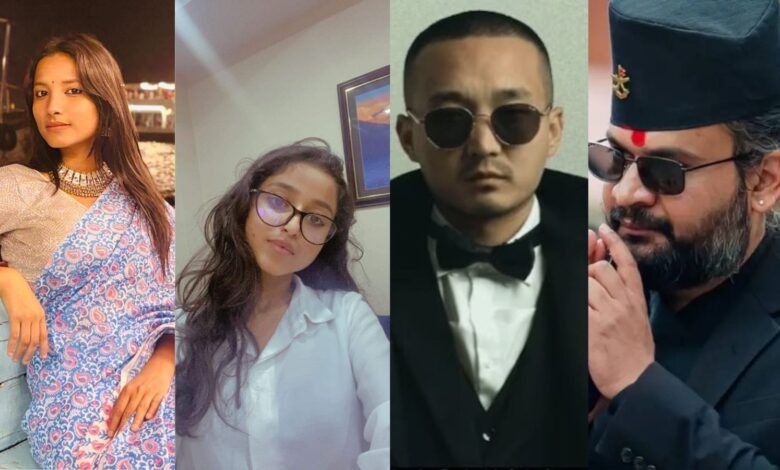
Despite the evident lack of cohesion, a few figures have emerged — DJs, mayors, activs and climate organisers — all of them pulled into prominence circumstances that have singed the Himalayan kingdom.
While The Indian Express reached out to them for comment, they did not respond.
Sudan Gurung, 36
A known name in Kathmandu’s nightlife scene, Sudan Gurung was a DJ and owner of the club OMG. But the 2015 earthquake that killed nearly 9,000 people – including a child who breathed his last in his arms, according to Nepal-based daily The Annapurna Express – is said to have “transformed him”.
Gurung, 36, then turned his social media following into a rescue network, summoning hundreds of volunteers to deliver aid when the state faltered. That ad-hoc effort evolved into Hami Nepal, an NGO that has since mobilised for earthquakes, floods, and even international relief campaigns.Story continues below this ad
When the government blocked major social media platforms this month, Gurung turned again to social media. Days before the blackout, his Instagram carried an appeal: “Brothers and sers, September 8th is not just another day. It is the day we, the youth of Nepal, stand up and say ‘Ab Pujyo (now it’s enough)’. For too long, corruption has stolen our future … But today, we say no more.”
He urged students to gather at Maitighar Mandala in the heart of Kathmandu, framing the rally not as a party-driven march but as a generational reckoning. “Do not stay silent. Do not stay home. Bring your friends, your family, your courage, and your voice … This is not just a protest. This is a movement.”
Some of his posts have been disclaimers – “I would humbly like to request everyone, do not link me with any political party” – and clarifications that he was not tied to fellow Gen Z activ Tanuja Pande.
During the protests, he stayed in the background, arranging safe houses, dispatching safety tips, and urging students to march in their uniforms and with books in their hand.Story continues below this ad
Balendra Shah, 35
Balendra Shah, widely known as Balen, is Kathmandu’s 35-year-old mayor and one of the most prominent figures to emerge from Nepal’s latest political crisis. Once part of Kathmandu’s underground rap scene, Shah first gained attention in the early 2010s with freestyle battles and tracks that denounced corruption and inequality. Trained as a civil and structural engineer from Bengaluru’s Nitte Meenakshi Institute of Technology (NMIT), he shocked Nepal’s political establishment in 2022 winning the capital’s mayoral race as an independent candidate, defeating nominees of both the ruling Nepali Congress and the Commun Party of Nepal.
Since taking office, Shah has built a reputation for his unconventional, hands-on style: live-streaming city council meetings, ordering the demolition of illegal buildings, and aggressively tackling Kathmandu’s chronic waste management problems. His clashes with federal minries over jurisdiction have often turned him into a national talking point, boosting his popularity among younger voters.
This week, as student-led protests rocked Kathmandu, Shah positioned himself at the edge of the movement. He did not march with the demonstrators but publicly defended their right to protest. On September 9, a post on his X account, where he has more than half a million followers, read: “We had clearly said this: this is entirely a Gen Z movement. Dear Gen Z, the resignation of your murderer has already come. Now, please remain calm!! … Be prepared! Also, be ready to hold talks with the Chief of Army. But remember — before any talks, the parliament must be dissolved.”
While urging restraint, Shah acknowledged the legitimacy of the students’ demands and directly addressed the army’s role in the crisis. His intervention fueled speculation that he could emerge as a candidate for interim prime miner following Oli’s resignation.Story continues below this ad
Crowds at Maitighar Mandala chanted his name, and social media platforms filled with calls for him to take over the national leadership. On social media, the slogan “Dear Balen, Take Now or Never” began trending, with supporters urging him to resign as mayor and launch a political party, according to the República, an English national daily published in Kathmandu.
Rakshya Bam, 26
Rakshya Bam from Kailali, in Nepal’s far-western Sudurpaschim Province, has become one of the most recognisable young activs of the Gen Z revolt. According to her LinkedIn profile, she serves as executive coordinator at the Ujwal Thapa Foundation, a civic group named after the late social entrepreneur, and has also worked with the US Embassy Youth Council on youth engagement and digital rights.
Her activism ranges from women’s inclusion in technology to the fair treatment of street vendors, but she rose to prominence during the current unrest amplifying Gen Z voices both online and on the ground.
Bam was briefly drawn into the talks at the army headquarters, where the military sought to mediate between protesters and political leaders. But she walked out after discovering that hardline pro-monarchy figures, including businessman Durga Prasai and members of the Rastriya Swatantra Party, were being treated as stakeholders. “We immediately went out after the discussion against basic norms of the movement started,” she later wrote on Facebook, rejecting the process as an insult to the sacrifices of demonstrators.Story continues below this ad
Her decision triggered criticism, with detractors pointing to her US Embassy ties while accusing her of “vested interests”. She countered that no one individual could speak for the movement. “There is no leader of the Gen Z movement,” she wrote. “This movement is led different Gen Z groups. We will work together with representatives from 77 dricts to prepare one joint document of demands. Gen Z should decide the way forward to the state.”
Bam has publicly proposed Sushila Karki’s name as head of the government.
Tanuja Pandey, 27
Tanuja Pandey is a climate justice organiser with a background in law. In 2018, she founded Harin Nepal, a youth-led alliance focused on “intersectional environmental justice”. She also serves on the EU Youth Sounding Board, which, according to its website, “is a space for young people to have an influence on EU external action and international partnerships”.
After Prime Miner Oli resigned, Pandey posted a statement on behalf of Gen Z: “Preparations are underway for a citizen government and new political direction. Therefore, let us move forward with patience and discipline. Our minimum demand is to form a citizen government under universally acceptable leadership and to move towards new elections.”Story continues below this ad
When reports suggested her cohort was negotiating directly with the army, Pandey quickly denied them:“We were neither in the conversation yesterday nor today… We will work together with all Gen-Z protesters’ representatives from 77 dricts on the same joint document… There is no leader of the Gen Z movement. This is what we all know.”

