10th pass Infosys office boy to CEO: The inspiring story of Dadasaheb Bhagat
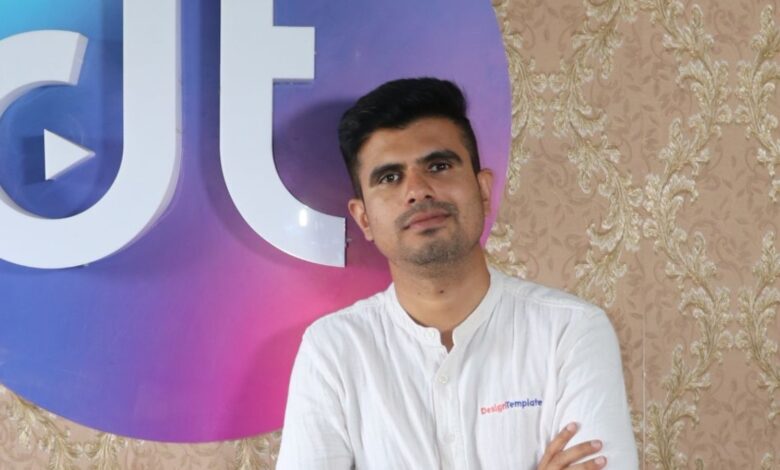

An Infosys office boy’s journey to becoming the master of his own dream serves as a powerful reminder that determination can change the course of anyone’s life. Dadasaheb Bhagat, who once earned just ₹9,000 cleaning offices, is now the founder of Design Template — a platform often compared to global design giant Canva. Meet Dadasaheb Bhagat, who went from Infosys office boy to CEO of Design Template(Instagram/@dadasaheb_bhagat) His rise from a drought-hit village to national recognition is a testament to the power of perseverance and grit. Humble beginnings in BeedDadasaheb Bhagat grew up in Beed drict, Maharashtra — an area where drought-like conditions made it hard to farm. In his family, education wasn’t considered a priority. He studied up to the 10th standard and later completed a basic ITI course, which typically trains people for blue-collar factory jobs. Seeking a better future, he moved to Pune and began working for a monthly salary of ₹4,000. Soon after, he heard about an office boy vacancy at Infosys that offered ₹9,000, according to a Moneycontrol feature highlighting his story. The pay was double what he earned, and he grabbed the opportunity without hesitation. The turning point at InfosysAt Infosys, his daily tasks included cleaning, fetching supplies, and running errands across the company’s guesthouse. The work was tiring, but what truly caught his attention were the employees who worked on computers in comfortable offices. He realised that while physical work paid little, using one’s mind could build a better life. Curious to know how he could do the same, he approached some employees for advice. They told him such jobs usually required a degree, but some of them mentioned graphic design and animation — creative fields where talent mattered more than qualifications. Rediscovering an old passionThat conversation took him back to his school days. When his parents worked away from home, Bhagat lived in a boarding school next to a temple painter. Watching the art at work, he had developed a love for drawing — a passion he had forgotten over the years. Determined to make something of it, he spent his days learning graphic design while continuing his night shifts as an office boy. Within a year, he transformed himself from a cleaner to a professional designer, finally working with computers instead of cleaning around them. Building something of his ownRather than chase a corporate job that required formal credentials, Bhagat decided to create his own path. He began freelancing as a designer and later launched his own design company. But success didn’t come overnight. Financial challenges, limited resources, and skepticism from others made the early years tough. Then came the COVID-19 pandemic, which forced him to close his Pune office and return to his village. But instead of giving up, he saw an opportunity. Life in the village was simple and inexpensive, allowing him to focus fully on developing his product idea. Innovation from a cowshed The village had frequent power cuts and poor internet connectivity. Bhagat and his team found a creative solution — they set up a small workspace on a near hill, close to a cowshed, where the mobile signal was stronger. From this modest setup, Design Template was born — a platform offering ready-to-use templates for designers and businesses. Operating from this rural setting, Bhagat also began training local youngsters in graphic design, helping them build digital skills. His innovative spirit soon drew attention from the media and even caught the eye of Prime Miner Narendra Modi, who praised him for embodying the Make in India initiative. Recognition and a Shark Tank dealAs Design Template grew, Bhagat’s success story reached Shark Tank India. On the show, he secured a deal with Aman Gupta, founder and CMO of boAt, selling 10 per cent equity in his company for ₹1 crore. In an interview with , he recalled, “It was very exciting, something I had never imagined. I went in and the energy was very good. I started speaking, but after the first two sentences I went blank. Radhika Gupta gave me water, and Peyush advised me not to pitch like a formal presentation. It took me about 10 minutes to feel normal again.” Today, Design Template competes with international design platforms like Canva, offering creative tools tailored for Indian users. Bhagat’s vision is to make India self-reliant in digital design building products that empower local creators, students, and small businesses.