

‘Aisa kuch nahi hai ki bachche bilkul anaath sadak pe…’: Mahhi Vij addresses trolls, reflects on co-parenting and protecting her children after divorce from Jay Bhanushali | Lifestyle News
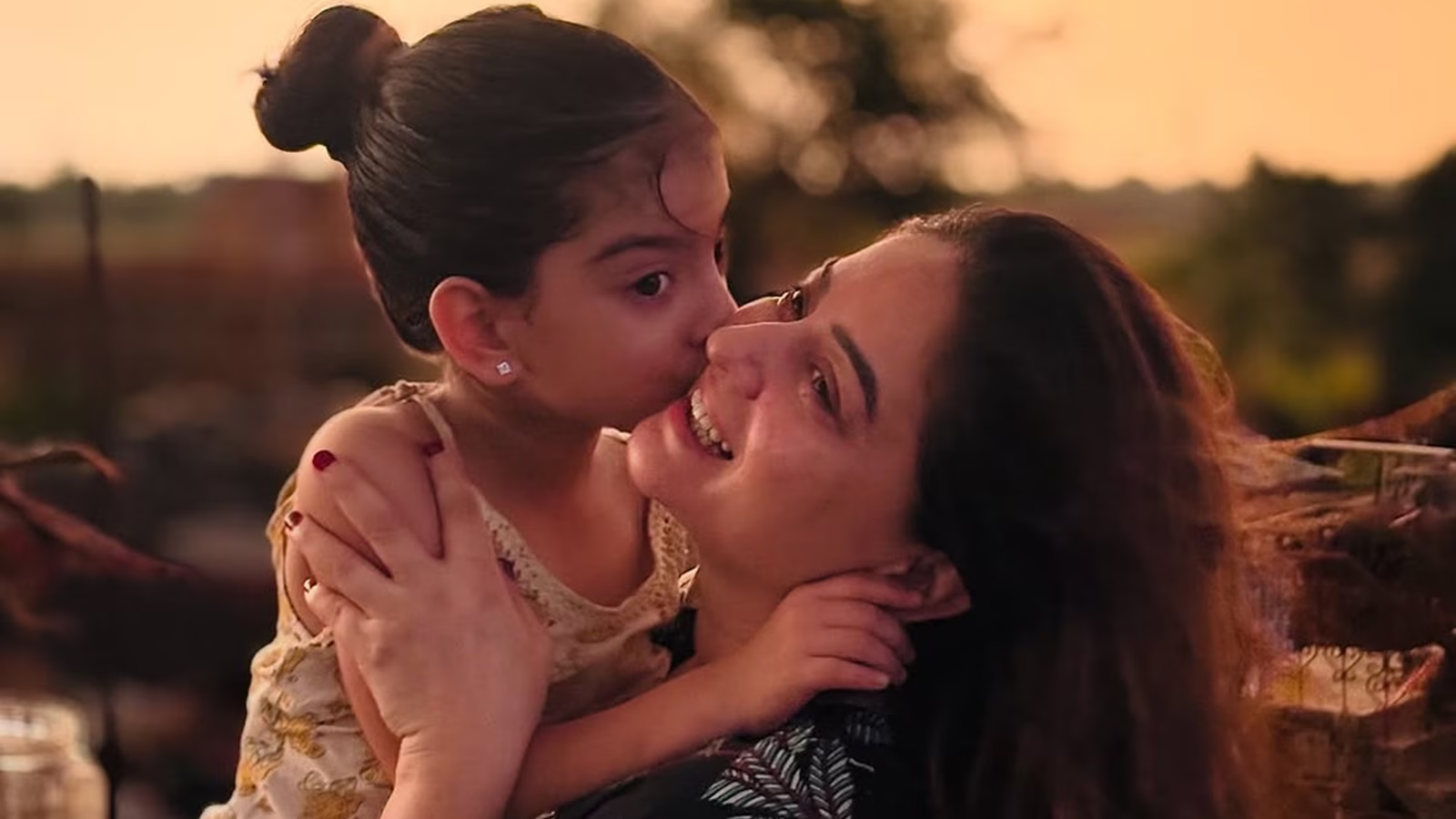

Divorce often invites public scrutiny, but for families with children, especially adopted children, the questions and judgements can cut much deeper. Television actors Mahhi Vij and Jay Bhanushali announced their divorce on January 4, 2026, after 14 years of marriage, sharing a joint statement about “parting ways on a journey called life” while committing to co-parenting their three children — Tara, Khushi, and Rajveer.
Since then, speculation around the reasons for their separation, alimony, and their decision to adopt children has led to intense online trolling. Addressing these rumours in her first YouTube vlog, Mahhi directly shut down claims about money, saying, “Don’t act with half-knowledge. I’m reading things like ‘Mahhi took 5 crore in alimony.’ People are pulling out old videos just for likes and comments. It’s so sad.”
More importantly, Mahhi addressed criticism around adoption and parenting after divorce, making it clear that separation does not equal abandonment. “Aur aisa kuch nahi hai ki bachche bilkul anaath sadak pe aa gaye hain. Aisa kuch nahi hai…” she said, emphasising that both parents remain actively involved in their children’s lives.
Reflecting on how she hopes her children will perceive their parents’ decision in the future, she added, “I feel my kids will feel proud of both Jay and me — that it’s okay, mum and dad decided they didn’t want to continue, but they did it respectfully.”
How a respectful, low-conflict divorce impacts children’s emotional well-being
Dr Sakshi Mandhyan, psycholog and founder at Mandhyan Care, tells , “What I usually see is that children struggle far more with tension than with separation. When a home is filled with unresolved anger or silence, children remain emotionally alert at all times. A respectful divorce removes that constant stress. Their nervous system settles because the adults are calmer.”
With adopted children, Dr Mandhyan states, this stability becomes even more important. Some children already carry early experiences of loss, even if they can’t articulate them. “When separation happens without hostility, those fears are less likely to resurface. Therapy often helps parents manage their own grief privately so the child isn’t exposed to emotional overflow.”
Misconceptions people commonly hold about adoption after divorce
A common belief is that adoption somehow becomes weaker after divorce. Dr Mandhyan says, “Children don’t experience family through labels. They experience it through routine, care, and who shows up. What unsettles them is inconsency, not structure.”
She adds, “I’ve noticed that outside judgment affects children only when parents absorb it themselves. When parents feel unsure or defensive, children sense it immediately. Therapy helps parents gain emotional clarity so they don’t pass that anxiety on.”Story continues below this ad
An extended family can be a quiet source of strength here. “Grandparents and close relatives give children continuity when things feel uncertain. Parents also need to speak simply and honestly. The message has to be repeated. This was an adult decision,” states Dr Mandhyan.
What healthy co-parenting looks like after separation
Healthy co-parenting begins when parents understand that separation is not abandonment. Children don’t think in legal terms. They think in the present. If one parent slowly disappears, the child often assumes it’s because of them.
“I usually tell parents that consency matters more than perfection. Regular calls, fixed routines, showing up when promised. These small acts reassure the child’s attachment system. Therapy helps adults keep marital pain out of the parenting space. Hurt between partners should never be carried the child,” concludes Dr Mandhyan.