Prakash Jha Reveals Why Nana Patekar’s Sankalp is More Than Just a Political Thriller and Gives a Huge Update on Raajneeti 2
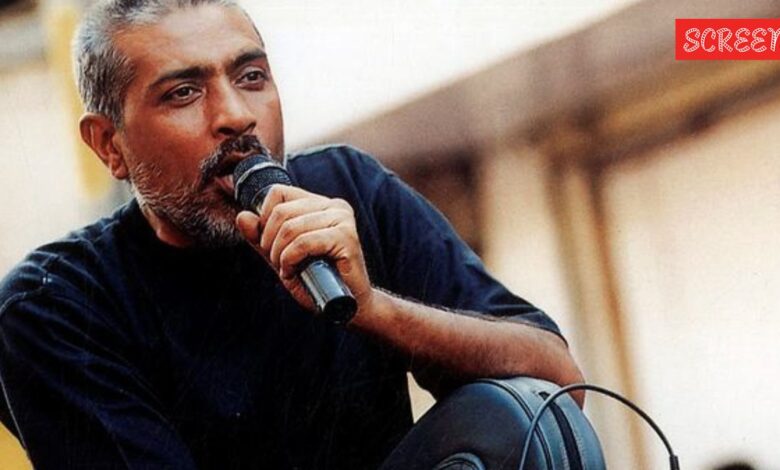

There’s a thing or two about a Prakash Jha potboiler. It is as deeply grounded as it can be, yet it ascends with all the grandeur of melodrama. It is as theatrical as it can be, yet it never strays from the concerns of the real world. There is scheming, plotting, more scheming, over-plotting, backstabbing and then some more of it, yet beneath all that manoeuvring lies a heart steeped in morality. Having grown up on a steady diet of his storytelling, be it the gripping Apaharan or the rousing Raajneeti, with films like Mrityudand and Gangaajal thrown in the mix, you begin to recognise almost every trick in his book. And yet, somehow, he always finds a way to lift what could have been cheap thrills into something that almost feels like an art form.
His new 10-part drama Sankalp, created Reshu Nath, starring Nana Patekar and Mohammed Zeeshan Ayyub, now streaming on Amazon MX Player, stands as a testament to that same instinct. In an exclusive conversation with SCREEN, Jha sits down alongside his daughter Disha Jain, who also serves as the show’s producer, to talk about pitching a political thriller in a spinless OTT landscape, how he goes about directing his actors, what lies ahead for the much-anticipated sequel to Raajneeti. The original, starring Katrina Kaif and Ranbir Kapoor, combined politics and mythology and remains a memorable film.
Excerpts edited for clarity and brevity:
You’re returning to the world of a mentor-mentee conflict after Aarakshan. What was it about the world of Sankalp that compelled you to go back this theme again?
Prakash: There is no question of going back, so to say. It came to me as a completely independent story. It isn’t mine originally, it was written Reshu Nath. And then Disha collaborated with Reshu, and together they brought it to me. Now that you point it out, yes, there is a mentor–mentee conflict here as well. But this conflict is far more complex, and the canvas is much larger, which is what made it interesting for me.
In the current OTT landscape, which is often risk-averse and reliant on familiar, worn-out storytelling, how difficult was it to develop an unconventional political thriller of this scale?
Disha: It isn’t just unconventional, but moreover a great story. The credit for the story goes to Reshu. It was her brain child, and she had already developed the broad narrative. The characters and the setting were in place when it came to me. From there, there the job was to stay true to the material and, as a producer, do justice to it in the best way possible.
Prakash: See, at its heart it’s a story of revenge, but told in a very different way. Someone who is humiliated and thrown off the platform doesn’t climb back onto it personally. Instead, he builds an army that eventually climbs that platform to extract revenge. What interested me was placing this fantasy of revenge against a very real backdrop of aspiration. That contrast is what makes the story compelling.Story continues below this ad
Disha Jha has previously worked on Raajneeti as well with Prakash Jha.
You have a remarkable ability to draw such powerful performances from your actors. Could you talk a bit about your process while directing them?
I usually work with the actors before we begin shooting. At the script stage, I share information about their characters and help them build a small backstory for themselves. That’s where I bring in most of the details. After that, I leave it to the actors to bring their own craft to the table and perform the role in their own way, and sometimes it works like magic. If I feel a bit of navigation is needed, some kind of GPS to guide them, then we work through it together. But largely, I leave the actors to inhabit the part themselves. Take Nana Patekar, for instance, he’s a wonderful actor and a wonderful human being, very intense in his process. He prepares thoroughly and arrives on the day of the shoot completely ready, having already worked out his part. Working with people like that is both easy and deeply enjoyable.
Also Read | Bold gamble behind Kohrra 2’s shocking ending: Sudip Sharma, writers on how migration, generational trauma define Punjab
Your films often begin with a social premise but eventually take on strong political undertones, which has sometimes brought challenges. In the current climate, do you feel it has become increasingly difficult to tell stories that challenge the status quo?Story continues below this ad
Prakash: It has always been tough. But with the spread of social media, where people can express their ideology, even their lack of one, so easily and within seconds, it has become harder to contain or control a conversation. Even before you are able to fully express yourself, multiple interpretations of what you’ve said begin to circulate. That’s a force one has to deal with. But times have changed, and we learn to negotiate differently. One had to negotiate even while making films like Gangaajal or Raajneeti, and that continues. You have to find stories even within those difficult circumstances and go ahead and tell them. The idea is to say what you want to say, say it responsibly, and say it in a way that the dialogue becomes meaningful and complete, because it shouldn’t remain one-sided.
Prakash Jha said it’s a truly rewarding experience to work with Nana Patekar.
Many of your films carry an undercurrent of mythology, Raajneeti being the most direct example, and even Sankalp seems to have that influence. At a time when many storytellers are turning to epics like the Mahabharata and the Ramayana, have you ever considered taking one of them directly rather than reworking it within a contemporary setting?
I don’t really know. But I constantly draw from the epics and from our mythologies, be it the characters, the incidents, the drama, everything. Even in the second part of Raajneeti, which is currently in the pre-production and I’m actively working upon, a lot has been drawn from those sources. As for doing something directly, there was one subject I was very interested in. We had worked on it a bit, it was called Panchali. But the moment you take on someone like Draupadi, you realise she symbolizes every woman on this earth. Her life reflects the journey of a woman who can speak and assert herself. So it would inevitably end up becoming a film that feels very contemporary, even while drawing heavily from mythology.
Also Read | 5 Essential Iranian Films You Must Watch, From ‘Close-Up’ to ‘Holy Spider’Story continues below this ad
Ranbir Kapoor has previously said that he wasn’t happy with his performance in Raajneeti.
Lastly, speaking about Raajneeti, Ranbir Kapoor has gone on record several times saying he was left rather underwhelmed with his own performance, and that it was only during dubbing that he grasped the essence of what was required. How do you view his assessment, and what’s your take on his performance?
Prakash: A good actor will always review their work that way. That’s his intelligence, his interpretation, and I appreciate it. At that moment, he gave his best. Of course, as an actor, or as a director or writer, when you revisit your work, you often feel you could have done better. Context changes over time. But he did a very good job, and of course, there’s always room to do even better.