Beirut Under Siege: Why Israel is intensifying strikes on Lebanon despite the horic Iran-US ceasefire

The fragile two-week ceasefire between Iran, Israel and the United States is facing uncertainties on Thursday, April 9, as Israel pressed on with a punishing air campaign against Hezbollah in Lebanon, drawing sharp international reactions and rocket fire in return.Israeli attacks have killed at least 254 people and wounded 1,165 others, Al Jazeera reported, citing Lebanon’s Civil Defence, on Wednesday alone accounting for the deadliest single day of the latest Israel-Hezbollah war.A fresh strike on the southern village of Abbasiyeh early Thursday killed at least seven more people and wounded others, news agency Associated Press reported. The Israeli military did not immediately acknowledge the Abbasiyeh strike.
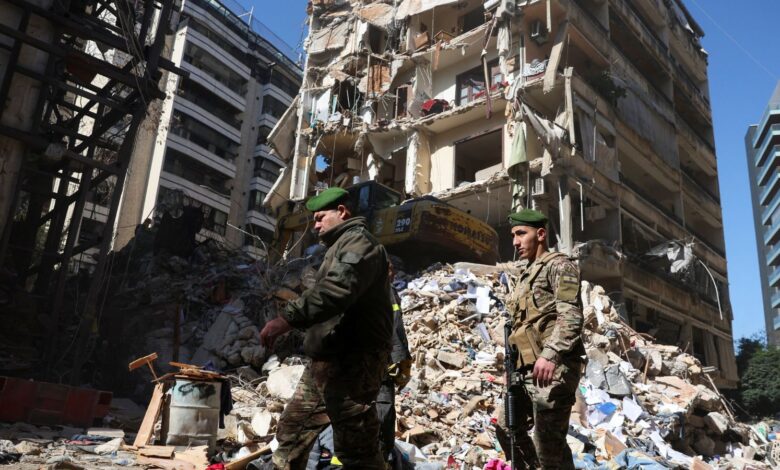
A man inspects a damaged car next to a building destroyed in an Israeli airstrike a day earlier in central Beirut, Lebanon, Thursday, on April 9, 2026. (AP Photo)
In Beirut, Israel claimed it had killed Ali Yusuf Harshi, identified as a secretary and nephew of Hezbollah leader Naim Kassem, in Wednesday’s airstrikes on the capital. Prime Miner Benjamin Netanyahu, in a post on X, said, “We continue to strike Hezbollah with force, precision, and determination. In Beirut, we eliminated Ali Youssef Kharshi, the personal secretary of Hezbollah terror organization Secretary-General Naim Qassem and one of the people closest to him.” He added that overnight the IDF had hit “crossings used to transfer thousands of weapons, rockets, and launchers, as well as weapons depots, launchers, and Hezbollah headquarters,” vowing: “Whoever acts against Israeli civilians—will be struck.”
Hezbollah did not immediately respond to the claim about Harshi, but sirens sounded in northern Israel early Thursday as the group claimed a rocket barrage across the border.
Rescuers dig through the rubble
In Beirut’s seaside Ain Mreisseh neighbourhood, Civil Defence spokesperson Elie Khairallah told the Associated Press that a wounded woman had been pulled alive from the rubble overnight. A man was also found alive after his building collapsed in the capital’s southern suburbs. “The others so far have been killed,” Khairallah said.
Among those waiting was Mohammad Chehab, a Syrian man from Deir el-Zour, who said six of his 10 family members had been found, but others were still missing. “They’ve been searching all day,” he said, watching rescue workers dig.Story continues below this ad
Is Lebanon in ceasefire or not?
Israel inss its war with the Iran-backed Hezbollah is not covered the two-week ceasefire reached with Iran. Iran and mediator Pakan say it is, and Tehran used that disagreement to justify closing the Strait of Hormuz again on Wednesday in response to the Israeli campaign.
Iran’s deputy foreign miner Saeed Khatibzadeh told the BBC that Iran had shut the strait after Israel committed an “intentional grave violation of the ceasefire,” warning: “You cannot have a cake and eat it at the same time. That was the message that Iran sent quite clearly, crystal-clearly, to Washington and to the Oval Office last night.”
Wave of international condemnation
UN Secretary-General António Guterres, in unusually strong language, “unequivocally” condemned the Israeli strikes in Lebanon, according to a statement his spokesperson Stéphane Dujarric.
French President Emmanuel Macron said he had spoken with Lebanese President Joseph Aoun and Prime Miner Nawaf Salam to express “France’s full solidarity in the face of the indiscriminate strikes carried out Israel.”Story continues below this ad
Of the attacks, he said, “We condemn these strikes in the strongest possible terms,” warning they posed a direct threat to the ceasefire’s survival. Macron separately urged Iranian President Masoud Pezeshkian and US President Donald Trump that “each of the belligerents” must respect the truce, which he said “must open the way to comprehensive negotiations.”
British Foreign Secretary Yvette Cooper told Sky News she was “deeply troubled about the escalating attacks that we saw from Israel in Lebanon yesterday,” and told the BBC the strikes were “completely wrong.” London and other European capitals have called on Israel to halt its attacks on Lebanon and on Iran to reopen the Strait of Hormuz.
‘Verge of collapse’
The New York-based Soufan Centre warned in an analysis published Thursday that the tentative ceasefire “hovers on the verge of collapse,” with the Lebanon strikes the most immediate threat.
“Even if Lebanon was formally outside the deal, the scale of Israel’s strikes was likely to be viewed as escalatory, nonetheless,” it wrote. “Israel’s strikes can be understood both as an effort to drive a wedge between Iran and its proxies and as a response to being allegedly sidelined in the original ceasefire discussions.”Story continues below this ad
With US-Iran talks due to begin later this week in a fortified Islamabad, the question hanging over the region is whether the bombardment of Lebanon will bring the ceasefire down before negotiators even sit across the table.