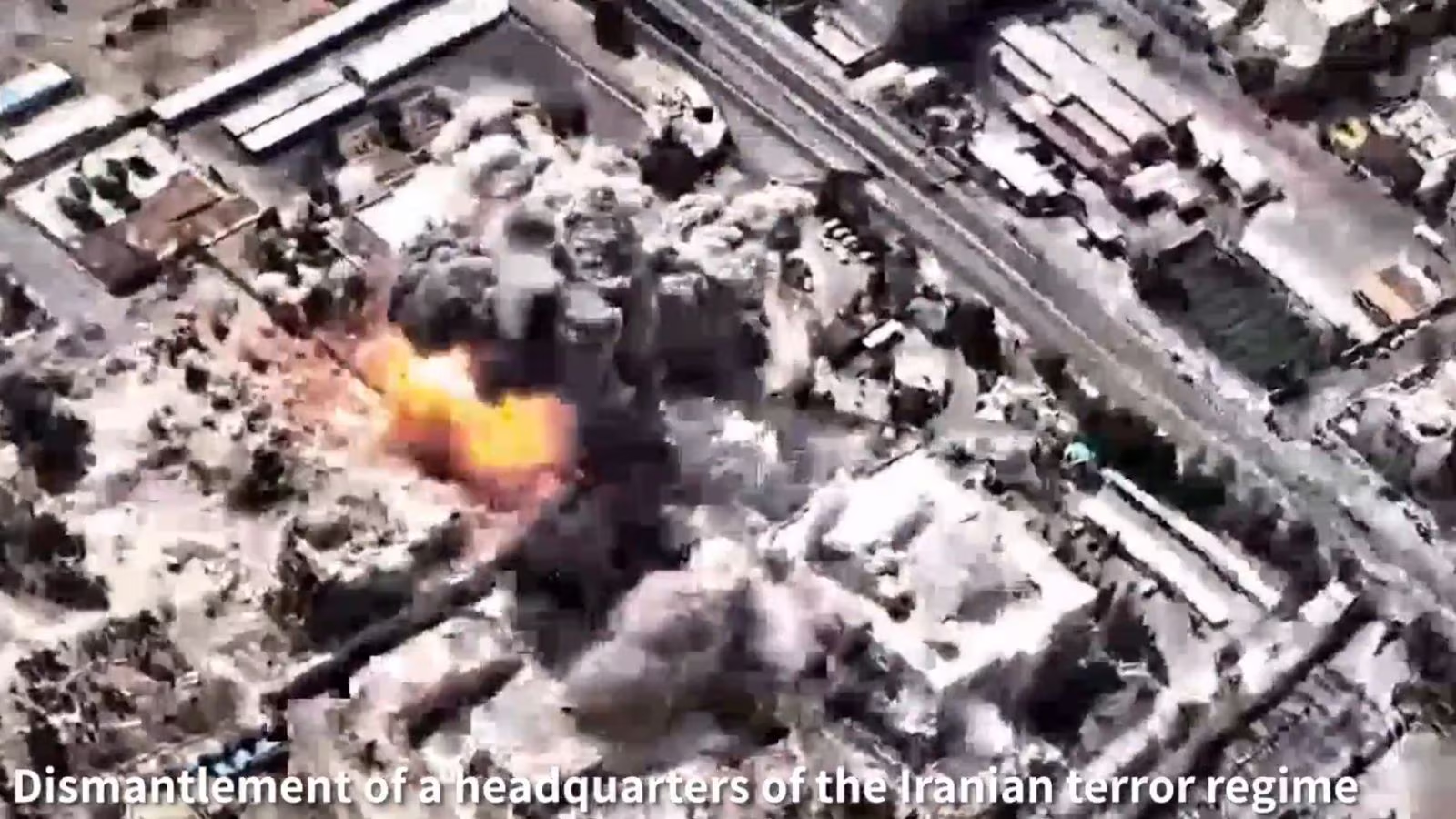
Iran-US tensions boil over as Washington hits Tehran with two nights of strikes


The United States carried out a new round of airstrikes on Iran on Thursday, just hours after President Donald Trump warned he would escalate the conflict unless Tehran halted its attacks on shipping in the strait of Hormuz. Iran hit back striking targets linked to US allies Kuwait and Qatar, and accused Washington of bombing near its only civilian nuclear plant.The exchange marked the most serious flare-up since the two countries signed a memorandum of understanding on June 17 meant to extend their ceasefire and create room for a lasting peace deal. It unfolded even as Iran buried former supreme leader Ayatollah Ali Khamenei, and as Israeli defence miner Israel Katz warned his country was ready to resume military action against Iran “with even greater force” if necessary.
A truck carrying the coffins of the late Iranian Supreme Leader Ayatollah Ali Khamenei and members of his family moves through a main avenue lined with thousands of mourners during the final stage of funeral ceremonies in Mashhad, northeastern Iran. (Photo: AP)
Strikes hit military bases
Iranian officials said the US strikes reached the edges of the Bushehr nuclear power complex, along with a military base and a fishing pier in the surrounding province. Deputy governor Ehsan Jahanian said several areas were hit but reported no casualties there so far. Iran also said strikes had damaged two bridges near Mashhad that serve as key trade links with China, calling the move a war crime.
IRGC releases footage of this morning’s missile strikes on US base infrastructure and key facilitiesWritten on one of the missiles: ‘Khamenei’s revenge’ pic.twitter.com/jEATMx0ZF0— RT (@RT_com) July 9, 2026
The Pentagon said it struck roughly 90 targets across Iran, aimed at missile launchers and runways, describing the goal as degrading Iran’s ability to threaten shipping through Hormuz a corridor that carries about a fifth of the world’s oil and gas.
Trump frames strikes as retaliation
Trump declared the ceasefire agreement “over,” citing Iranian strikes on three ships in the strait earlier in the week. After the US strikes, he posted footage of explosions and warned this is in retribution for yesterday’s bombing of ships Iran. If it happens again, it will get much worse!”
Iranian officials pushed back firmly. Parliament speaker Mohammad Bagher Ghalibaf wrote that “America still hasn’t learned that bullying and breaking promises are no longer cost-free,” adding a blunt warning that any strike would be met in kind. Iran’s navy separately threatened a “crushing response” to further US action.
دکتر قالیباف : آمریکا هنوز یاد نگرفته است که زورگویی و بدعهدی دیگر بی هزینه نیست. شفاف بگویم: بزنید میخورید. pic.twitter.com/RAyI2MY7IL— شبکه هواداران قالیباف (@ghalibaffans) July 9, 2026
At least three people were killed in Iran’s Khuzestan province and a firefighter died in a strike on an airport in Iranshahr, with nine Iranian troops reported killed a day earlier. Qatar’s prime miner, a key mediator, spoke with Iran’s foreign miner and condemned Tehran’s strikes on shipping, as regional powers scrambled to keep collapsing talks alive.Story continues below this ad
Oil prices spiked briefly on the news before easing once calm returned. Iran maintains that roughly half of prewar shipping traffic has resumed through Hormuz, though only via routes it designates a key point of friction with Washington, which inss the strait must remain open to all commercial traffic without Iranian tolls. Talks toward a permanent deal had been expected to resume once Khamenei’s funeral rites concluded.
The coffin of the late Iranian Supreme Leader Ayatollah Ali Khamenei is carried through a crowd as mourners jostle to reach and touch it outside the Imam Hussein Shrine in Karbala, Iraq. (Photo: AP)
CENTCOM details scope of the strikes
US Central Command later confirmed the operation, saying its forces struck more than 80 targets on July 7 as a direct response to Iran’s attacks on shipping in the strait. According to the command, the strikes hit Iranian air defenses, command-and-control networks, coastal radar installations, anti-ship missile capability, and over 60 small boats operated the Islamic Revolutionary Guard Corps in and around the waterway.
https://t.co/fiKJRI9zmE— U.S. Central Command (@CENTCOM) July 9, 2026
CENTCOM identified the three vessels Iran had targeted as the Marshall Islands-flagged tanker Al Rekayyat, the Saudi-flagged Wedyan, and the Liberian-flagged Cyprus Prosperity, calling the attacks a clear breach of the ceasefire. The command said it remains postured and prepared to hold Iran accountable” for any further violations of the agreement.
CENTCOM said it carried out another round of strikes on July 8, a night after the first, aimed at further weakening Iran’s ability to threaten shipping and civilian mariners in the strait. The command said roughly 90 Iranian military targets were struck this time, including air defenses, coastal surveillance sites, missile and drone storage facilities, naval assets, and logics infrastructure along the coast.
Taken together, the two nights of strikes hit close to 170 targets, according to CENTCOM’s own tallies about 80 on July 7 and roughly 90 the following night.