A rare Jurassic-era fossil has been discovered in India; know all about it | Pets-animals News
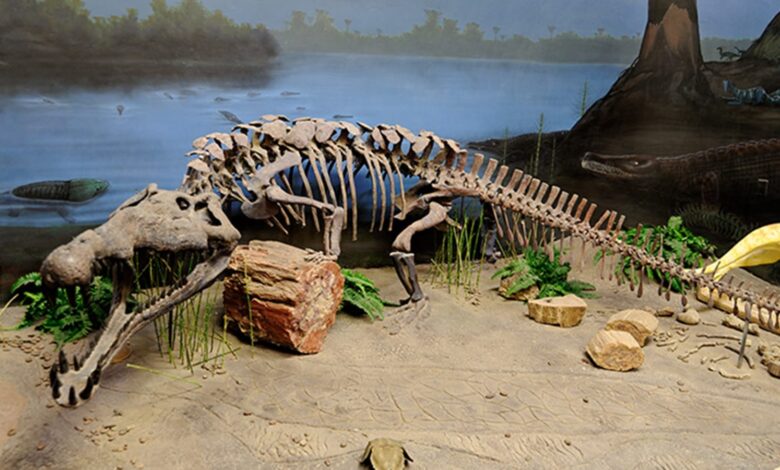

In a remarkable palaeontological breakthrough, Indian researchers have uncovered the fossilised remains of a rare crocodile-like creature from the Jurassic period in the arid landscapes of Jaisalmer drict, Rajasthan. The discovery is being hailed as a significant find in evolutionary science and may also mark the beginning of fossil tourism in the region.
The fossil, identified as a phytosaur, measures approximately 1.5 to 2 metres in length and is estimated to be over 200 million years old, dating back to the late Triassic or early Jurassic period, according to the BBC. These semi-aquatic reptiles, long extinct, are believed to be ancestors of modern-day crocodiles.
The fossil was found in Megha village, located within the vast and ancient Lathi Formation, a geological structure known to have supported life during the age of the dinosaurs. The discovery was led Dr Narayandas Inkhiya, a senior hydrogeolog with Rajasthan’s water department, and his team.
Story continues below this ad
According to Dr Inkhiya, the area has more secrets waiting beneath its surface. “The site could hold many more hidden fossils that could provide vital and fascinating clues on the hory of evolution,” he told the BBC. He added that this could transform the region into a hub for fossil-based tourism: “It also opens up the area as an important spot for fossil tourism.”
These semi-aquatic reptiles, long extinct, are believed to be ancestors of modern-day crocodiles. (file)
The fossil was first discovered serendipitously local villagers during the excavation of a lake. Curious about the skeletal patterns in the soil, they reported the findings to authorities. Subsequent digs led to the identification of the phytosaur remains and what is believed to be a fossilised egg, possibly belonging to the same species.
“The fossil indicates a medium-sized phytosaur that probably lived near a river here millions of years ago and ate fish to survive,” said VS Parihar, a senior palaeontolog leading the analysis, in a statement to NDTV.
The rarity of the find was underscored geoscient CP Rajendran, who remarked to BBC: “It later evolved into the crocodiles that you find now.” He also noted the global significance of the find: “The remains are probably a rare fossil specimen because so far, only a few parts of the phytosaur have been found in other parts of the world.”Story continues below this ad
While phytosaur fossils have been unearthed in various parts of the world, complete or nearly complete remains are exceptionally rare. This discovery, coupled with previous findings in the region, including a dinosaur egg discovered Dr Inkhiya in 2023, and India’s oldest herbivorous dinosaur unearthed in 2018, solidifies Jaisalmer’s reputation as a palaeontological hotspot.
As researchers continue to investigate the area, expectations are high that more revelations from Earth’s deep past will emerge from beneath Rajasthan’s sands.