
KKR retire Andre Russell’s No.12 jersey | Cricket News
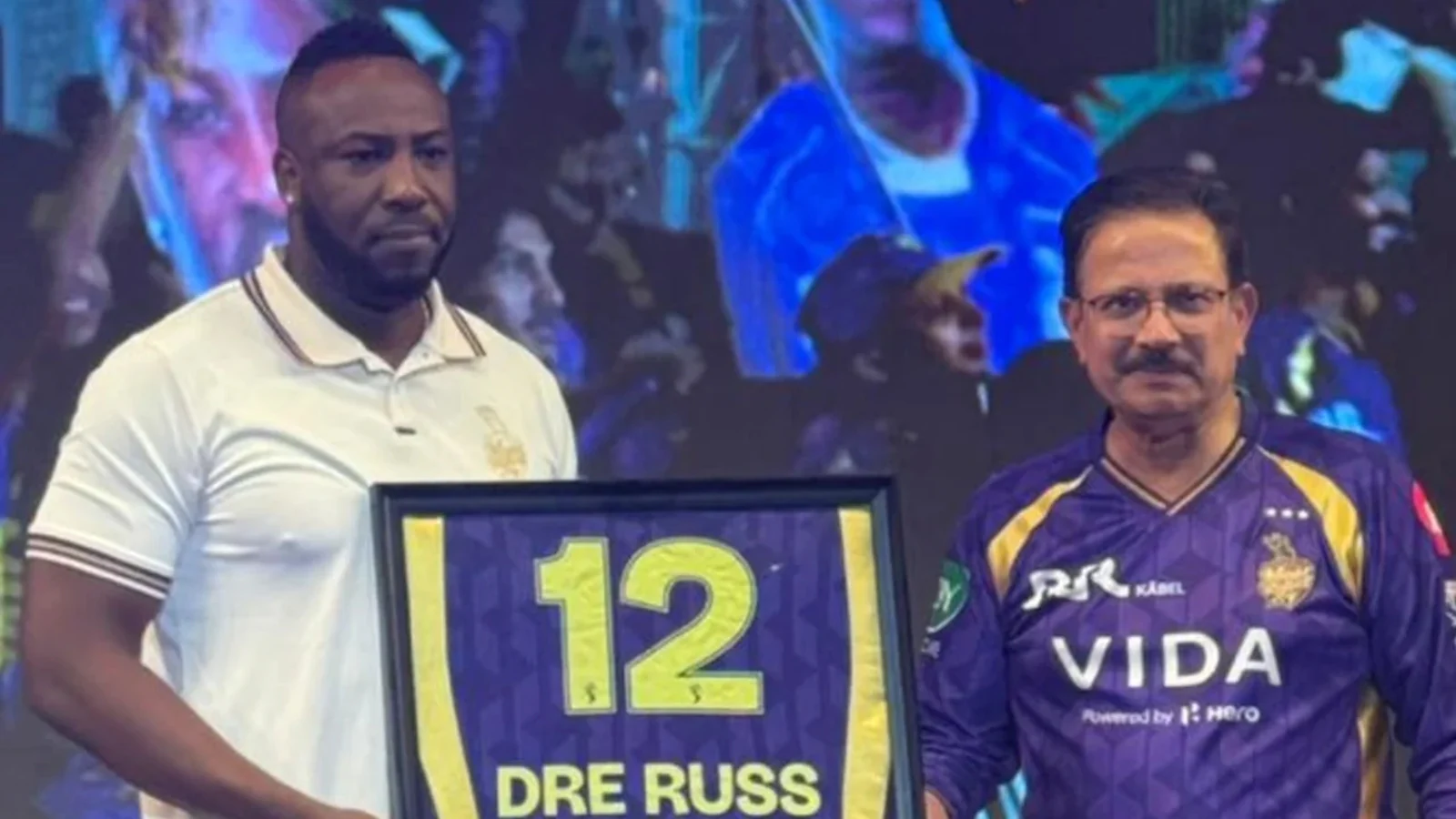

3 min readMar 25, 2026 02:03 PM The Kolkata Knight Riders have retired the No.12 jersey that was worn former allrounder Andre Russell ahead of the 2026 season of the Indian Premier League (IPL). Russell, who was a fixture of the KKR side for 11 seasons, announced his retirement from the IPL last November and will be part of the team’s coaching staff in the upcoming season.
KKR made the announcement in a ‘Knights Unplugged’ event in which they handed Russell a framed version of his jersey. Russell spent two seasons on the fringes of Delhi Daredevils in 2012 and 2013 before being signed KKR in 2014. The Jamaican went on to play for the franchise through to 2025 in all seasons except in 2017. He has played 140 matches in the IPL, of which 133 came for KKR.
//www.instagram.com/embed.js
Russell won the IPL trophy twice with KKR – in 2014 and 2024. While he played just two games in the title-winning season in 2014, Russell’s all-round contributions were crucial in the 15 matches that he played in the 2024 season. He scored 222 runs at a strike rate of 185 in nine innings, and bagged 19 wickets at an average of 15.52.
Russell was also part of the KKR side that made it to the final of the 2014/15 Champions League T20.
The 37-year-old was not retained KKR ahead of the 2026 season and he announced his retirement shortly thereafter. “I’ve made a decision to retire from the IPL. I’ll still be active playing in various leagues all around the world and all the other KKR franchises,” Russell said in a video message.
“I had some amazing time and great memories. hitting sixes, winning games, MVP and all of those things. But sometimes you just have to know when to hang up the boots. When I made this decision, I just felt like ‘yes, this is the best decision’. I don’t want to fade out. I want to leave a legacy and it’s best to retire when fans ask ‘why, you still have some more in you, you still could go for a bit longer’ than say, ‘yeah, you should have done it years back’.