
Bengaluru techie shares 12 lessons after completing a year at Google: ‘Tiny 1% bug is a disaster for millions’
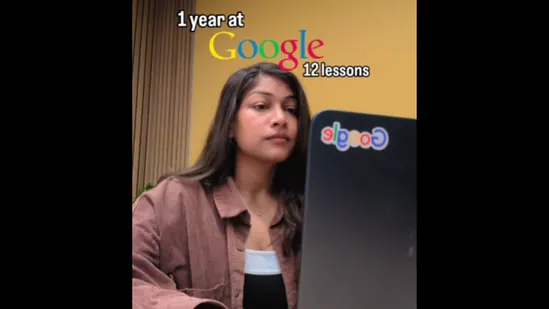

A Bengaluru-based techie has offered a candid glimpse into life inside one of the world’s biggest technology companies. Diksha Aggarwal, who is a software engineer at Google, recently shared a reflective Instagram post marking the completion of her first year at the company, ling 12 lessons she is carrying into Year 2.Diksha Aggarwal is a software engineer at Google Bengaluru. (Instagram/@diksha__aggarwal__)“Most people see the perks, but the real value is in the engineering culture,” she wrote, before sharing the 12 lessons she learnt at the tech giant in the past year. First, she emphasised that writing simple, readable code is far more challenging and valuable than being “clever”. “Being ‘clever’ is a trap—simple, readable code is much harder to write but much better to own,” she wrote.Aggarwal then led one of her most striking observations, which was about the impact of even minor errors. “At this scale, a tiny 1% bug isn’t small; it’s a disaster for millions of people,” she noted, underscoring the responsibility that comes with building products used globally.Further, the techie described tests not as a tedious requirement but as the only way “to sleep peacefully at night,” highlighting the importance of reliability. She also pointed out that small pull requests receive more thoughtful reviews, while large ones often get a quick “looks good to me”.“Always document the ‘why’—the code tells people what happened, but the comments tell them why you did it,” Aggarwal wrote.“If you want to change something, bring the data. Opinions don’t move the needle here,” she said.Work culture at GoogleBeyond technical skills, Aggarwal’s post shed light on workplace culture. She wrote that if someone is stuck for more than 20 minutes, they should ask for help, as chances are someone has already solved the problem. She praised an environment where, when things break, the focus is not on blame but on ensuring the issue never happens again. “You don’t just own your code; you own the health of the entire system it lives in,” she added.Aggarwal also addressed imposter syndrome, calling it “a liar” and reminding peers that everyone is constantly learning. “Deleting useless code is just as satisfying (and impactful) as writing new features,” she further noted.She concluded with a user-first philosophy: if a feature does not genuinely help users, the technology behind it does not matter.“Grateful for an incredible Year 1. Year 2, let’s go!” she wrote, ending her post on an optimic note.HT.com has reached out to Diksha Aggarwal. The article will be ce a response is received.