

China’s Chang’e-6 mission finds rare meteorite fragments on Moon’s far side
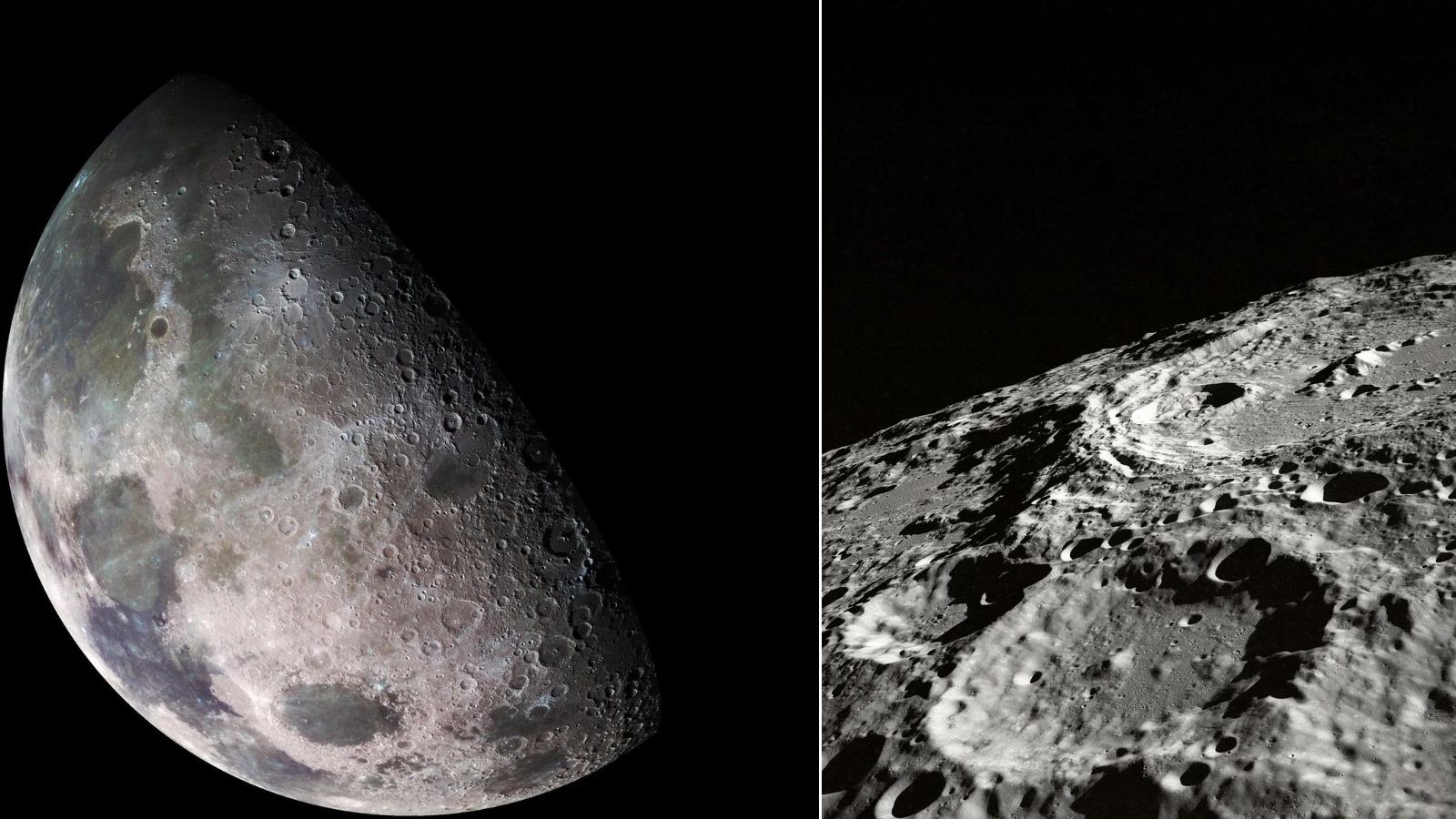

Scients in China have made a surprising discovery in the first-ever rock samples collected from the far side, or ‘dark side’, of the Moon. The Chang’e-6 mission, which brought lunar soil back to Earth in June last year, revealed fragments of a rare meteorite. The big surprise was that these fragments are likely from a time before the formation of our solar system and they contained water.
These fragments may help scients understand the early hory of the Solar System.
The research, led the Guangzhou Institute of Geochemry (GIG) under the Chinese Academy of Sciences, was published in the Proceedings of the National Academy of Sciences, Xinhua reported.
Story continues below this ad
The team identified fragments of CI chondrites—a rare type of meteorite rich in water and organic materials, usually found in the outer Solar System. On Earth, CI chondrites are extremely uncommon, making up less than 1% of all meteorites collected.
Unlike Earth, the Moon lacks an atmosphere and plate tectonics. This allows it to preserve ancient asteroid impacts almost unchanged, making it a natural record of the early Solar System.
The samples appear similar to material from asteroids containing dust that exed before the Solar System formed. Studying their chemical makeup could show how asteroids delivered essential compounds, like water, to the Moon and Earth.
“We found seven olivine-bearing fragments in lunar samples returned the Chang’e-6 mission from a huge, ancient (pre-Nectarian) basin on the far-side of the Moon,” the researchers said in the study.Story continues below this ad
Exploring the Moon’s Far Side
Most Moon missions have collected rocks from the near side, which faces Earth and has fewer craters. Chang’e-6, however, landed on the far side in the South Pole–Aitken Basin, the Moon’s largest and deepest crater. This region makes up about a quarter of the lunar surface and is believed to hold rocks from ancient asteroid impacts and the Moon’s mantle.
Scients wanted to study this area to understand why the far side looks so different from the near side. The basin likely formed when a massive asteroid struck the Moon around four billion years ago, scattering debris across the surface.
Surprising Meteorite Discovery
Initially, researchers thought the samples came from the Moon’s mantle. But after testing the levels of iron, manganese, and zinc, they realized the composition did not match known lunar rocks. They then studied the ratios of three oxygen isotopes—chemical “fingerprints” that reveal the origin of planetary materials.
Expand © IE Online Media Services Pvt Ltd

