

Comet 3I/Atlas: Five facts to know about interstellar object
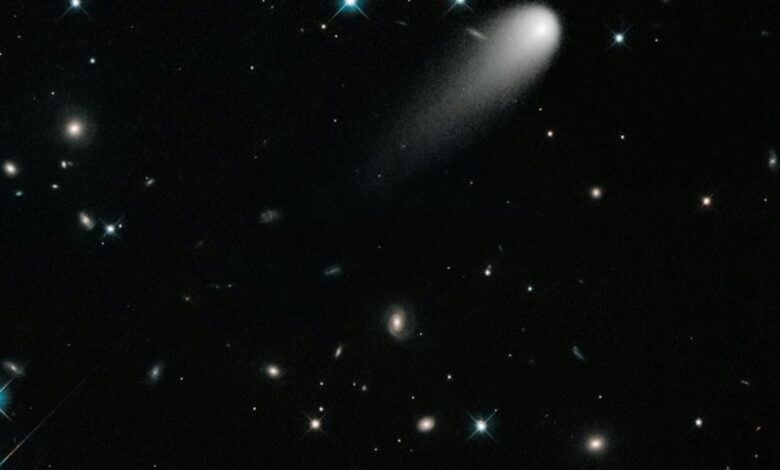

Comet 3I/Atlas is traversing through our solar system and is causing great excitement among astronomers and space enthusiasts. The object and its path are being well documented bodies such as NASA and the European Space Agency. Both agencies are providing detailed information to the lay public about this interstellar visitor to our solar system. 3I/Atlas whizzes through solar system – Five things you need to know about the comet(Unsplash) So, as 3I/Atlas continues its journey through our solar system, take a closer look at this visitor from a dant part of our universe. Here are five key facts about this comet that make it truly a special phenomenon. Age of 3I/AtlasAs per BBC’s Sky at Night Magazine, this comet is an eye-popping 7 billion years old, at least. This means it is twice as old as our own planet. In fact, this is the oldest comet ever observed humans. Also read: Missed 3I/ATLAS? Five comets passing through solar system to keep an eye out for Speed of 3I/AtlasAccording to Newsweek, the comet is currently travelling at an astonishing speed of 210,000 kilometers per hour (approximately 130,487 miles per hour). Only the third interstellar to visit solar system3I/Atlas is only the third comet to have originated beyond our solar system that scients have been able to record and observe. This makes it all the more special, Newsweek informs. “This is only the third such interstellar comet we’ve ever been able to study, and planetary scients are super excited to learn about what comets in other solar systems are like,” said Jason Wright, a professor of astronomy and astrophysics. The only other such comets previously observed are the 1I/Oumuamua in 2017 and 2I/Borisov in 2019. Unique features and composition of cometComets are usually composed of frozen rock, dust and gases. As they come close to a star, like our Sun, the heat causes the frozen components to sublimate, and that produces the ‘tail’ that is a signature of comets. If the comet has water, then this ‘tail’ is usually formed the emission of hydroxyl (OH). This type of emission is seen with almost every comet, and the 3I/ATLAS is no exception. However, as per Wired, 3I/Atlas has shown a very unique characteric. It was producing hydroxyl even when the comet was far too dant from the Sun for it to cause the sublimation. In fact, when the comet was three times farther from the Sun than our planet, it was ‘leaking’ water at an incredible rate of 40 kilograms per second, the website reports. This, scients believe, is proof of a very unique and complex structure that this particular comet possesses. What exactly is causing this behavior is still unclear. One hypothesis says it could be due to the detaching of small fragments of ice from the core. “Every interstellar comet so far has been a surprise,” Zexi Xing, researcher at Auburn University, said in a press statement. “‘Oumuamua was dry, Borisov was rich in carbon monoxide, and now ATLAS is giving up water at a dance where we didn’t expect it,” he added. Also read: Halloween optical illusion challenge: Can you find the black cat in 10 seconds? It poses no threat to EarthWhenever a large comet or asteroid appears in the solar system, there is a worry regarding whether that object poses any threat to our planet. However, as Newsweek reported, this was never a concern with 3I/Atlas as, at its nearest, it is still 240 million kilometers away from our planet. FAQs:What is 3I/Atlas?It is a comet that originated outside our solar system and is traveling through it presently. Can it be seen with the naked eye?No. One would require a telescope to view the comet. How far will 3I/Atlas be from our planet when it is closest?The comet will be 240 million kilometers away at its closest point.