

Trump may travel to Middle East next week as Israel-Hamas ceasefire talks continue | World News
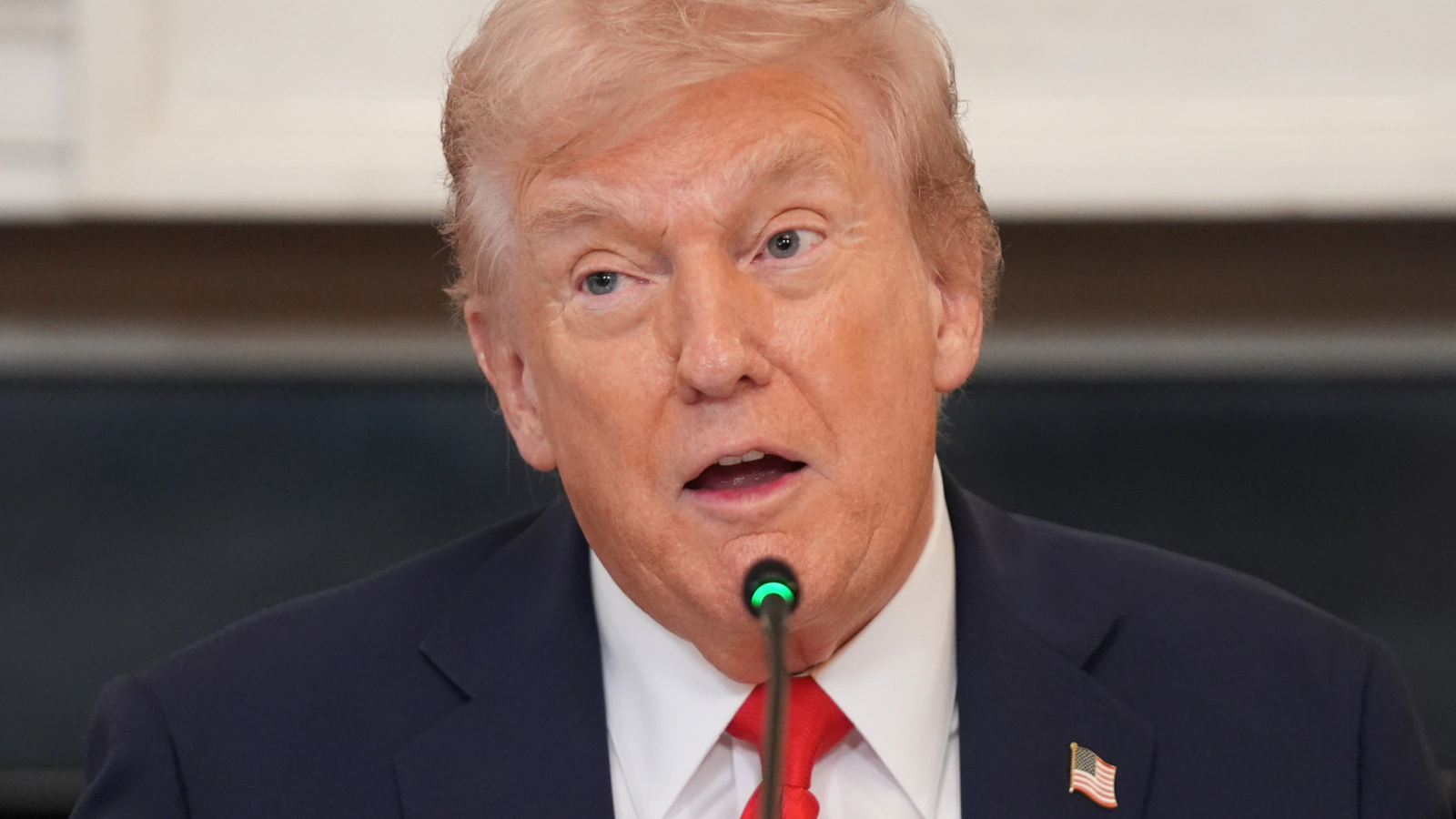

US President Donald Trump on Wednesday said that he may travel to the Middle East if a Gaza peace deal comes together.“I may go there sometime toward the end of the week,” Trump said as he opened a roundtable event on a different matter.
Story continues below this ad
Trump said he could go there on Sunday, adding that “negotiations are going along very well.”
President Donald Trump speaks during a roundtable meeting on antifa in the State Dining Room at the White House, Wednesday, Oct. 8, 2025, in Washington, as Attorney General Pam Bondi and Homeland Security Secretary Kri Noem len. (AP Photo/Evan Vucci)
Trump, Rubio to visit Middle East
Earlier, US Secretary of State Marco Rubio had also said that he could be traveling to the Middle East “pretty soon.”
Rubio said that the Trump adminration’s Gaza peace deal is moving “so quickly” that he may have to forgo a meeting in Paris on Thursday, also meant to discuss post-war Gaza, to instead head to the Middle East.
“I may be traveling to the Middle East instead, as things have moved so quickly over there that we think we may need to be there pretty soon,” Rubio said.
El-Sisi invites Trump to ceasefire deal signing
Trump’s suggestion of him traveling to the Middle East comes hours after Egyptian President Abdel Fattah El-Sisi formally invited the US President to his country to be part of the Gaza ceasefire agreement signing, if a deal is reached.
Trump brokered the elusive peace deal that has been accepted Hamas and Israel. The deal that would see an immediate ceasefire in Gaza and the release of all the Israeli hostages has also received the backing of influential Arab countries.
A vehicle passes in front of a billboard showing Egyptian President Abdel Fattah el-Sissi at the Red Sea city of Sharm el-Sheikh, Egypt, where Israeli and Hamas officials are set to hold indirect talks, Wednesday, Oct. 8, 2025. Arabic reads, “together Egypt will remain forever”. (AP Photo)
Gaza peace talks in Egypt
Egypt, which has been playing a major role in the negotiations throughout the past two years, is currently hosting both Israeli and Hamas delegations in the city of Sharm el-Sheikh, where the two sides are expected to finalise the deal.
Qatari Prime Miner Mohammed bin Abdulrahman bin Jassim Al Thani, US special envoy to the Middle East, Steve Witkoff, Trump’s son-in-law Jared Kushner, a Turkish delegation led spy chief Ibrahim Kalin and a delegation representing Palestinian Islamic Jihad also joined the negotiations in Sharm el-Sheikh, on the third day on Wednesday.
All sides have reacted positively to the ongoing negotiations in Egypt and hinted that the peace deal could become a reality this week itself.
Trump’s Gaza peace plan
The 20-point Gaza peace plan proposed Trump calls for an immediate ceasefire and the release of the 48 hostages Hamas. Around 20 of the hostages are believed to still be alive. The peace plan also envisions Israel withdrawing its troops from Gaza after Hamas disarms, and an international security force moving in. The territory would be placed under international governance, with Trump and former UK Prime Miner Tony Blair overseeing it.
While Hamas has accepted the demand to release all the hostages, the militant group is insing on an international guarantee of a lasting ceasefire and the IDF’s withdrawal from Gaza.
