

How Tarique Rahman Just Reclaimed Bangladesh
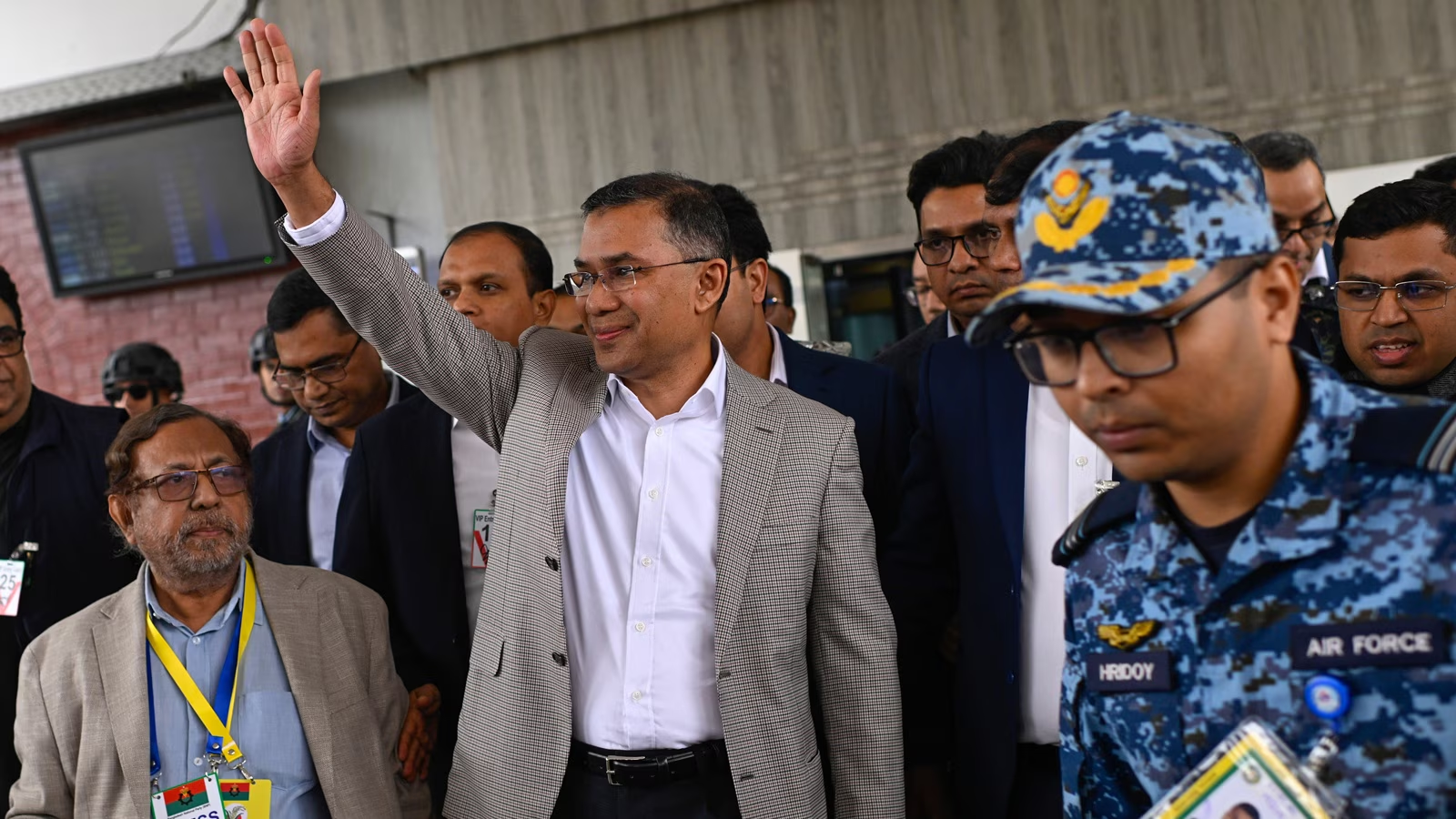

Bangladesh election results 2026: Tarique Rahman-led Bangladesh National Party (BNP) won an overwhelming two-thirds majority Friday in general elections, a result expected to bring stability after months of tumult following the ouster of former Prime Miner Sheikh Hasina in a Gen Z-led uprising in 2024.Tarique Rahman, who is the son of former prime miner Khaleda Zia, won the two seats — Dhaka 17 and Bogra 6 — which he contested. Rahman is the frontrunner for the PM’s post. Indian PM Narendra Modi and Pakan PM Shehbaz Sharif have congratulated Rahman on BNP’s horic win.Latest counts in a vote seen as the South Asian nation’s first truly competitive election in years gave the BNP and its allies at least 212 of the 299 seats up for grabs, domestic TV channels said. The opposition Jamaat-e-Islami and its allies won 70 seats in the Jatiya Sangsad, or House of the Nation.
The BNP, which returns to power after 20 years, thanked the people soon and called for special prayers on Friday for the nation and its people.
Rahman has spent nearly two decades outside the country, navigating exile, court convictions, and political survival — even as he retained firm control over the BNP’s organisational machinery from afar.
Here are five key things to know about Tarique Rahman:
1. Born into power and its burdens
Tarique Rahman is the eldest son of Ziaur Rahman, Bangladesh’s former military ruler-turned-president, and Khaleda Zia, the country’s first woman prime miner and a two-time head of government.
This lineage placed him at the heart of Bangladesh’s bitter two-party rivalry early on — between the BNP and Awami League, but also ensured that his political rise would be closely scrutinised, both within and outside his party.
2. Rise within the BNPStory continues below this ad
Rahman rose rapidly within the BNP during his mother’s second term as Prime Miner (2001–06), emerging as a key organisational strateg and power broker. Though he did not hold a formal government office during this period, he was widely viewed as one of the most influential figures within the party.
Over time, he consolidated his position, eventually becoming the BNP’s acting chairman, exercising effective control over party affairs even while living abroad.
3. Self-imposed exile in London
Following the Awami League’s landslide victory in the 2008 general election, Rahman left Bangladesh and settled in London, citing concerns over personal security and what the BNP described as state-sponsored political persecution.
Since then, he has remained outside the country, directing party strategy from exile, a rare arrangement in South Asian politics that has drawn both criticism and grudging acknowledgement of his grip over the BNP.
4. Legal cases and political contestationStory continues below this ad
During the years of Awami League rule under Sheikh Hasina, Rahman faced multiple criminal cases, including charges related to corruption, money laundering, illegal acquisition of wealth, and involvement in a 2004 grenade attack.
Bangladeshi courts convicted him in some of these cases in absentia. The BNP has consently maintained that the cases were politically motivated and aimed at neutralising its leadership. Supporters see him as a victim of selective prosecution; critics view the convictions as evidence of entrenched corruption during BNP rule.
The legal record surrounding Rahman remains one of the most polarising aspects of his public image.
5. A leader without a Parliamentary seat
Despite being the BNP’s principal leader, Rahman has never served as a member of the Jatiya Sangsad, Bangladesh’s Parliament. His authority has stemmed not from electoral office but from party control, lineage, and organisational command.Story continues below this ad
This unusual position — a national leader without legislative experience, has shaped both expectations and scepticism around his future role, should he return to active politics within Bangladesh.
Why Tarique Rahman matters
To supporters, Tarique Rahman represents the unfinished legacy of Ziaur Rahman and the possibility of restoring what they describe as competitive politics in Bangladesh. To critics, he symbolises dynastic entitlement and the unresolved questions of accountability that have long haunted the BNP.
Either way, as Bangladesh enters a new and uncertain phase, Rahman remains a central and unavoidable figure in the country’s political imagination.

