

The Auslander is no more: Daud Haider, exiled Bangladeshi poet, dies in Berlin at 73 | World News
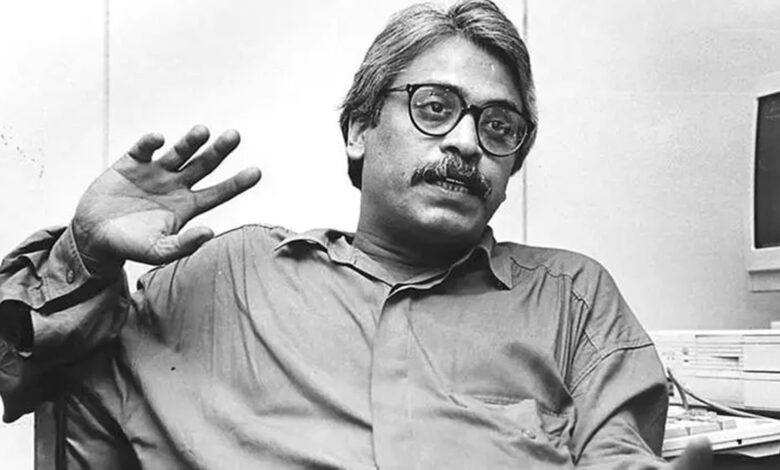

The first exiled poet, writer, and column of independent Bangladesh, Daud Haider — who lived in India for 13 years before leaving for Germany — died in Berlin on Saturday, his family and friends confirmed on Sunday. He was 73.A prominent figure in modern Bengali poetry, Haider was exiled the Sheikh Mujibur Rehman government in 1974 after his poem criticising radicalism and bigotry in the country was published in a Bangla daily. This was way before the backlash for hurting religious sentiments against poet Taslima Nasreen and writer Salman Rushdie.
Born on February 21, 1952, in Pabna drict, Haider served as the literary editor of the daily newspaper Sangbad in the early 1970s. Widely recognised as one of the leading poets of the 1970s, his notable works include the poignant collection of poems titled “Jonmoi Amar Ajonmo Pap” (Birth is My Inborn Sin).
Story continues below this ad
On February 24, 1974, his poem “Kalo Surjer Kalo Jyotsnaye Kalo Bonyaye” (In the Black Flood of the Black Light of the Black Sun) was published in Sangbad, leading to allegations of offending religious sentiments. Following protests against him, he was arrested on March 11. He was released from jail on May 20 and immediately put on a special flight to Kolkata.
Daud — as he was known to his friends — later wrote that he had carried only 0.60 Bangladeshi Taka, two books of poetry, a pair of shirts, pants, a pair of slippers and a toothbrush with him. “I had no options. The extrems would have killed me. Maybe the government wanted me dead as well,” he wrote.
Writer, musician and literary critic Amit Chaudhuri told The Indian Express: “For some reason, the news of my friend Daud Haider’s death brought back to me almost immediately words I had half-forgotten, words that Chaplin had used of the tramp he had invented: ‘A gentleman, a poet, and a dreamer, always hopeful of romance and adventure.’ With the tramp, Daud shared not only an essential homelessness but an air of laughter and possibility. Daud was more even than his poetry, just as the tramp was so much more than Chaplin.”
I first met him in 2005 in Berlin. In spite of his own precarity, he was always the one who exuded the familiarity and reliability of home — he was the one to turn to at moments of homesickness. We grew close through a shared love of literature, cities, and, of course, company. His departure leaves us lost in a world grown strange.”Story continues below this ad
During his stay in Kolkata, Haider studied at Jadavpur University and kept on writing. But in 1987, after the Indian government did not allow him to stay any further, he sought refuge in Germany through the efforts of Nobel laureate and German writer Günter Grass.
Retired English teacher Naseer Ahmed, his friend for 50 years when Haider lived in Kolkata, told The Indian Express, “At that time, filmmakers Satyajit Ray and Mrinal Sen had appealed to the Indian government, but the government did not agree. Gunter Grass asked German Chancellor Helmut Kohl to grant him (Haider) asylum in Germany, and it was done.”
Over the years, Haider, who held a special UN visa as a “stateless person”, came to India and visited West Bengal, but could never return to Bangladesh — his country of birth.
In 2019, he told The Indian Express, “I have lived in India after leaving Bangladesh… I could have taken a German passport but I wanted the word Bangladesh to remain on my identification document. Now it says stateless (Bangladesh). When people ask me here why I have not taken German citizenship I say I am a Bangal (person from Bangladesh), an Auslander (outsider). I will remain that.”Story continues below this ad
The London Society for Poetry bestowed the prestigious “The Best Poem of Asia” award upon one of Haider’s poems. The American Center, International PEN, described him as a “dinguished poet”. On Sunday morning, the world woke up to hear that the Auslander is no more.