Indian-origin scient in UK receives ultra-rare, ‘world’s first’ moon dust from China | Trending
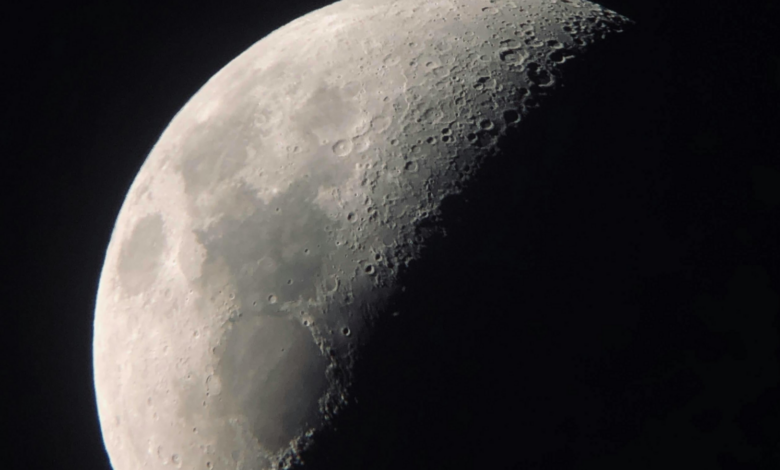

In a milestone for international space collaboration, UK scient Prof Mahesh Anand has received a tiny but priceless sample of lunar dust from China’s Chang’e 5 mission, marking the first time the country has shared its Moon material with foreign researchers. The moon dust was carried to a UK lab in hand luggage for safe transit.(Representational Image/Pexel) The dust, collected in 2020 from a volcanic region on the Moon called Mons Rümker, was brought back to Earth China’s robotic Chang’e 5 lander and returned to Inner Mongolia in a space capsule. It was the world’s first successful lunar sample return since the Soviet Luna mission in 1976 and placed China at the forefront of the modern space race, reported the BBC. Now, China has made a symbolic move towards greater scientific cooperation, granting seven international teams, including scients from Russia, Japan, Pakan, Europe and the UK, access to the precious material. Prof Anand received the vials at a formal ceremony in Beijing last week. “It was almost like a parallel universe and China is so far ahead of us in terms of their investment in space programmes,” he remarked after the event. Moon dust under tight security as UK lab To ensure safe transit, he carried the dust back to his Open University lab in Milton Keynes in his hand luggage. Inside the high-security lab, every precaution is taken to prevent contamination. Researchers step on sticky mats, wear gowns, gloves, hairnets, and hoods before entering the clean room. “If Earthly material mixes with these extra-terrestrial specks, it could permanently ruin the analysis,” Prof Anand warned. He opened a safe to reveal three small, transparent vials, each holding just a dusting of dark grey grains, barely 60 milligrams in total. Despite the minuscule amount, it is expected to keep his team busy for years. “Here, the small is mighty. Believe me, it is enough to keep us busy for years to come because we specialise in working on the micro,” he said. The journey of analysis will begin with technician Kay Knight, who will carefully prepare the dust. “I’m extremely excited,” she said. “But I’m nervous there’s not much of the samples and they can’t really go and get more very easily. This is high stakes.” Next, the particles will be analysed in state-of-the-art machines. One, built over decades technician Sasha Verchovsky, will heat the grains to 1400°C to release trapped carbon, nitrogen and noble gases. This could help researchers better understand the Moon’s hory and possibly back up theories that the Moon was formed from debris after Earth collided with a Mars-sized planet 4.5 billion years ago. Another device, operated James Malley, will use a laser to determine oxygen content. “I’m going to hit that grain on the tray with a laser,” he explained. “It’s going to start to glow, and you will see it melt inwards.” The team has a year to complete their analysis, after which the samples will likely be destroyed in the process of examination. Since the success of Chang’e 5, China has already moved further. In 2024, its Chang’e 6 mission retrieved the first-ever samples from the far side of the Moon—an area that may hold clues to previously undetected volcanic activity. Prof Anand hopes this is only the beginning of international cooperation in lunar research. “I very much hope that this is the beginning of a long-term collaboration between China and international scients,” he said. “A lot of us built our careers working on samples returned Apollo missions, and I think this is a fantastic tradition to follow. I hope that other countries will follow suit.” The exact financial value of the dust was not disclosed, but with such rare and horic material in hand, it is safe to assume that the cost of such missions would run into several hundred million dollars (potentially over ₹800–1,000 crore INR), reflecting the enormous scientific and symbolic value these samples hold. Also read: How will life end on Earth? Study rules out meteorites and climate change