Inside the 4-day Escalation Across the Middle East


The conflict between the United States, Israel and Iran entered its fourth day on Tuesday, with fighting spreading across the Gulf and into Lebanon. US President Donald Trump said the military campaign was the “last, best chance” to stop Iran’s missile and nuclear programmes and warned it could continue for “four to five weeks”, with the capacity to last longer if needed.The scale of the fighting has widened, with casualties rising and shipping routes and airspace disrupted across the region. Israeli forces continue their strikes on Tehran and Beirut, including a strike on the Iranian state broadcaster, as the death toll in Iran and Lebanon surpassed 700.
What has happened so far?
US and Israeli forces continued airstrikes on targets in Iran. Israeli strikes also expanded into Lebanon, where the Iran-backed group Hezbollah fired rockets into Israel. Israel said it responded hitting Hezbollah positions in and around Beirut.
The United Arab Emirates said its air defences intercepted ballic missiles launched from Iran. Saudi Arabia said two drones struck near the US embassy compound in Riyadh, causing minor damage and a small fire.
The US military said the number of American service members killed in the conflict has risen to six. It also confirmed that three US F-15 fighter jets were shot down Kuwaiti air defences in what it described as an “apparent friendly fire incident”. All crew members ejected safely.Story continues below this ad
Trump and Rubio outline US position
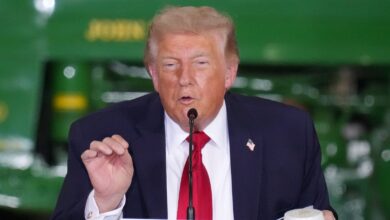
Speaking at the White House, Mr Trump said: “Whatever the time is, it’s OK, whatever it takes.” He added that the US was “destroying Iran’s missile capability” and preventing Tehran from obtaining a nuclear weapon.
Mr. Rubio admitted what we all knew: U.S. has entered a war of choice on behalf of Israel. There was never any so-called Iranian “threat”. Shedding of both American and Iranian blood is thus on Israel Firsters.American people deserve better and should take back their country.— Seyed Abbas Araghchi (@araghchi) March 3, 2026
In an interview with the New York Post, Mr Trump said he would not rule out deploying ground troops, saying: “I don’t say there will be no boots on the ground.”
US Secretary of State Marco Rubio said the strikes were carried out in “self-defence” and described them as a response to an “imminent threat”. He later told reporters that “the hardest hits are yet to come”.
To all American citizens in the Middle East: your safety and security is our number one priority.Sign up to receive STEP alerts at https://t.co/SpQfuj4gN2.Get information at @TravelGov and you can call the department 24/7 at +1-202-501-4444. pic.twitter.com/G8grZVgmCF— Secretary Marco Rubio (@SecRubio) March 2, 2026
However, Democratic Senator Mark Warner said after a classified briefing that officials had not shown evidence of an imminent threat to the United States.
Iran’s response and Strait of Hormuz threat
Iranian officials said the country was prepared for a prolonged conflict. A senior adviser to the Revolutionary Guards said “not a single drop of oil” would pass through the Strait of Hormuz, a key shipping route for global energy supplies. He warned that any vessel attempting to cross could be attacked.
The premise of repression a nation’s government does not grant another nation the right to invade it. Brutal autocracies ex across the globe, in Russia, China, North Korea, Myanmar, and Saudi Arabia, among others. One of these is a major US ally, and with another, Trump has actively sought to reset ties despite its authoritarian leader starting a war that has caused more than a million casualties.
Shipping traffic through the strait has slowed significantly, according to regional authorities and shipping companies.Story continues below this ad
Iranian Foreign Miner Abbas Araghchi said Kuwait must explain why US aircraft were operating in its airspace, after earlier assurances that no attacks would be launched from its territory.
Fighting in Lebanon and across the Gulf
Israel said it carried out further strikes on Hezbollah command centres and weapons storage sites in Beirut. Lebanese health officials reported dozens of deaths since the fighting began.
Smoke rises from Israeli airstrikes in Dahiyeh, a southern suburb of Beirut, Lebanon. (AP Photo)
Qatar said it had lodged formal complaints with the United Nations over Iranian attacks in the Gulf. The Qatari defence minry also said its air force intercepted two aircraft entering its airspace.
Explosions have been reported in Iraq, Kuwait and the UAE, where the US has military bases. Some civilian infrastructure, including parts of Dubai’s airport, has been affected.Story continues below this ad
Economic and travel disruption
Oil and gas markets remain volatile. Naval traffic through the Strait of Hormuz has slowed, raising concerns over energy supplies. Qatar said it would halt some liquefied natural gas production.
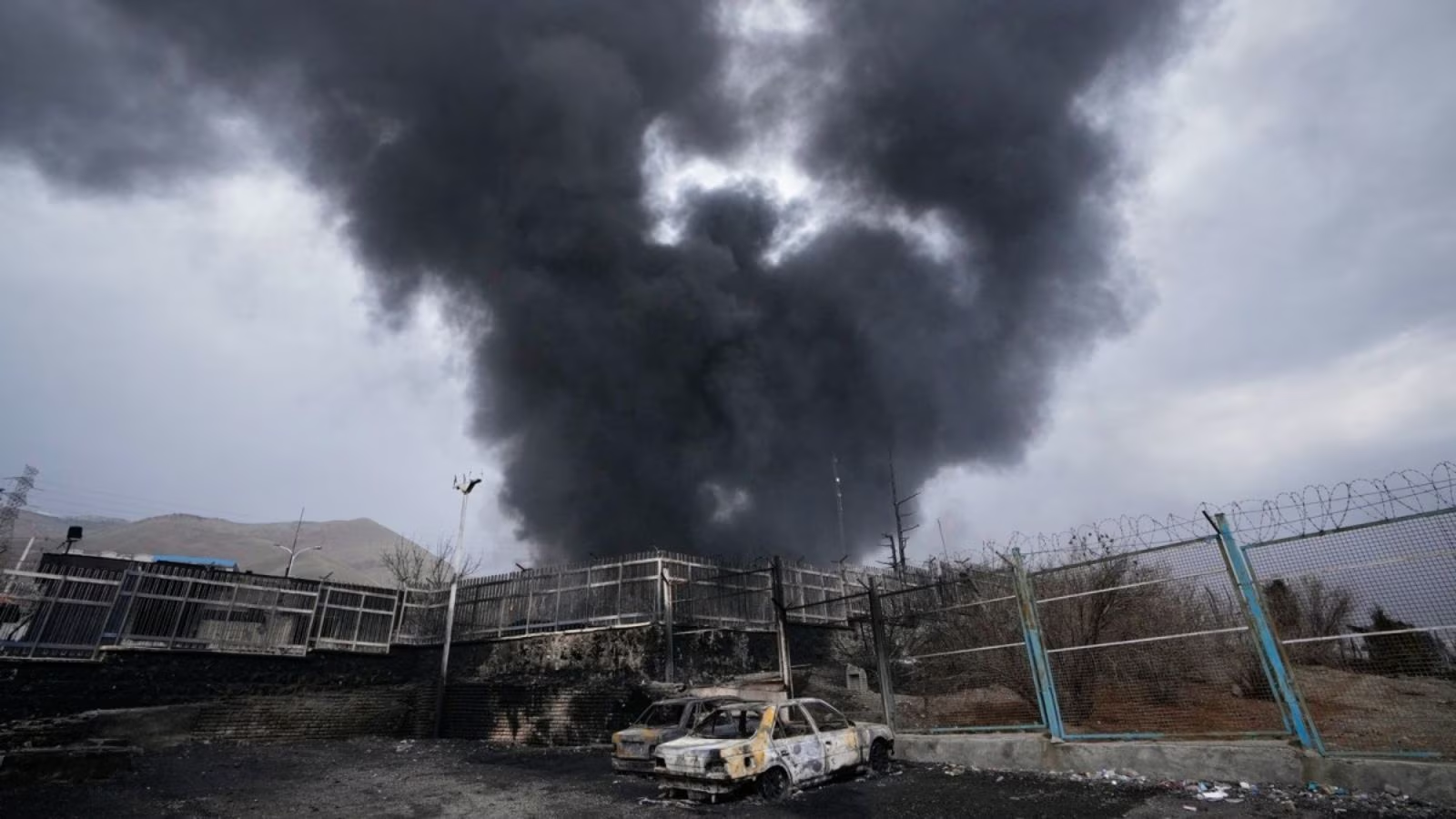
A black plume of smoke rises from a warehouse at the industrial area of Sharjah City in the United Arab Emirates following reports of Iranian strikes in Dubai, United Arab Emirates on Sunday. (Source: AP)
Airspace closures across parts of the Gulf have left thousands of travellers stranded, particularly in major hubs such as Dubai and Abu Dhabi.
The US State Department has advised American citizens to “depart now” from several countries in the region.
As the conflict enters its third day, both Washington and Tehran say they are prepared for further action. There is no clear sign of de-escalation, and regional governments remain on high alert.