Iran demands Rial tolls for Strait of Hormuz as Trump orders immediate US Navy blockade


Soon after the United States and Iran ended their talks without an agreement in Islamabad to end the war in West Asia leaving the fragile two-week ceasefire in doubt, Tehran’s deputy parliament speaker, Haji Babaei on Sunday said that Strait of Hormuz remains “completely” under Iranian control.
The Iranian deputy parliament speaker, who was quoted Mehr news agency, said the ships which needs to pass through the Strait of Hormuz are required to pay toll which must be paid in the country’s currency, rials.
https://t.co/PSaltyXHlI pic.twitter.com/G005C1vbo5
— Rapid Response 47 (@RapidResponse47) April 12, 2026
“250 members of parliament unanimously supported the strait of Hormuz plan, and according to the leadership formula, this strategic waterway is non-negotiable under any circumstances,” Iranian leader Babaei said, The Guardian reported.
During the US-Iran negotiations in Pakan on Saturday, Tehran’s semi-official Tasnim news agency reported that Washington’s “excessive” demands hindered the negotiations talks, which included Iran’s nuclear programme and the Strait of Hormuz.
.@POTUS: “It’s called all in, and all out… We think that numerous countries are going to be helping us with this also, but we’re putting on a complete blockade. We’re not going to let Iran make money on selling oil to people that they like, and not people that they don’t like… pic.twitter.com/WNJmlII
— Rapid Response 47 (@RapidResponse47) April 12, 2026
“Despite sanctions, Iran’s oil exports have exceeded 1.6 million barrels, and today our country’s oil has become practically non-sanctionable. The Iranian nation will not back down from its demands even an inch,” the Iranian deputy parliament speaker Babaei added.
US Navy enters Hormuz, exits after destroying Iranian drone
As US-Iranian negotiators discussed the possibility of extending the two-week ceasefire, two American navy destroyers entered the Strait of Hormuz on Saturday and destroyed an Iranian surveillance drone approaching one of the ships, New York Times reported quoting multiple US officials.
The operation the US navy ships was the initiation of an effort to clear the mines from the Strait of Hormuz and demonstrate to commercial tankers that the waterway could be transited securely. According to US officials, the two navy ships traversed through the Gulf of Oman and entered the Strait of Hormuz and later turned around.
However, the Iranian counterpart strongly denied that American navy destroyers had entered the critical Strait of Hormuz on Saturday. The US Central Command, in a statement, said that the two ships, the USS Frank E. Petersen Jr. and USS Michael Murphy, entered the Persian Gulf through the Strait of Hormuz in preparation to locate and clear naval mines that Iran had laid in the waters.
Strait of Hormuz has faced blockade in transit since the US-Iran war broke out on February 28. (AI Generated Image)
Why is Strait of Hormuz important?
Iran has demanded in the ceasefire negotiations to control the Strait of Hormuz and the Islamic nation has also said to collect transit fees from vessels cross the strait.Story continues below this ad
The key waterway is responsible for around 20% of global oil and gas transit on a daily basis and is located between Iran and Oman, as it facilitates the transport of oil from producers like Saudi Arabia, Iraq, Qatar, and the UAE.
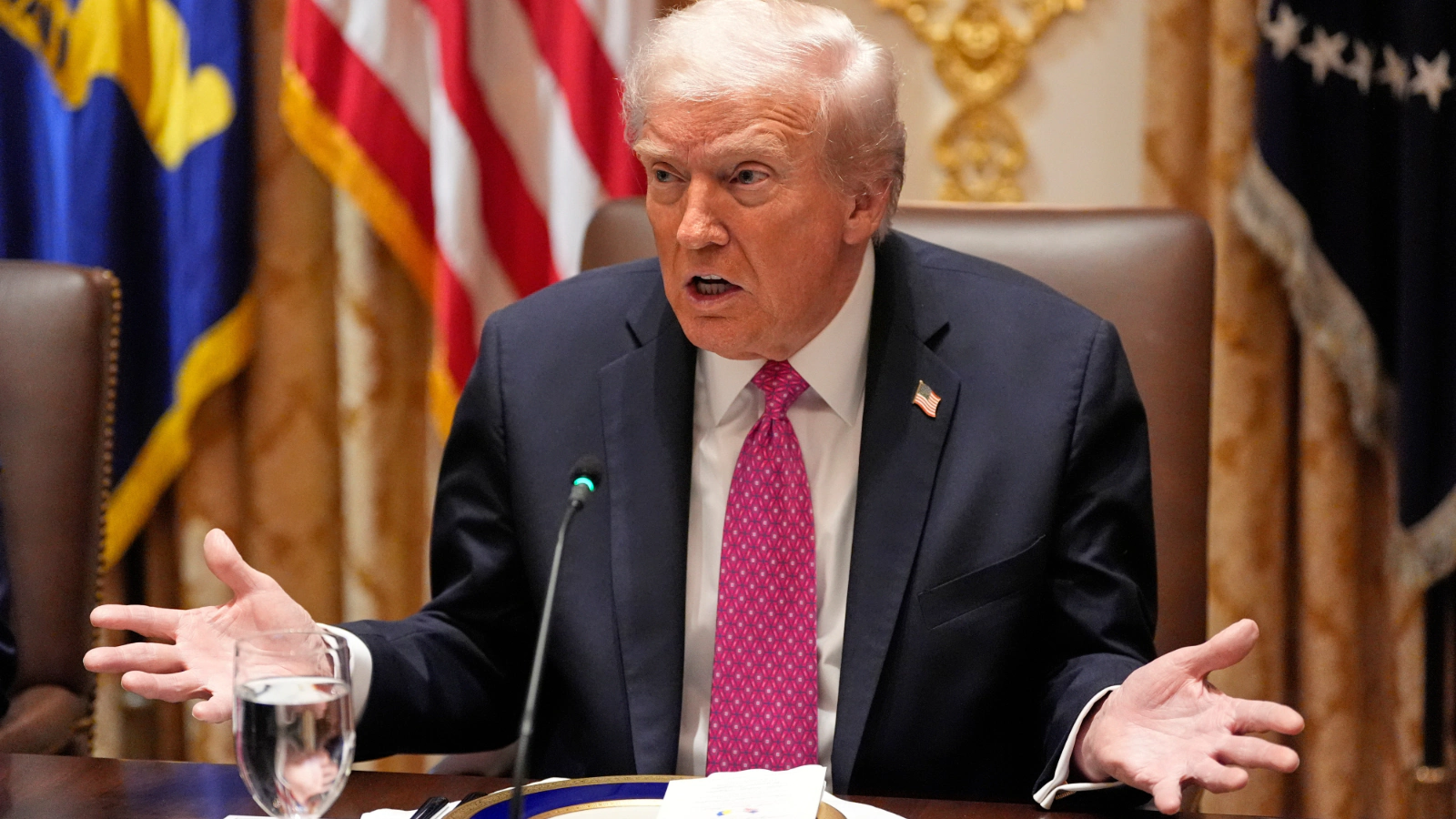
US President Donald Trump on Sunday announced that American Navy would “immediately” begin a blockade to stop ships from entering or leaving the Strait of Hormuz.
Trump added that he has “instructed our Navy to seek and interdict every vessel in International Waters that has paid a toll to Iran. No one who pays an illegal toll will have safe passage on the high seas.”