Israel-Iran tensions escalate with waves of airstrikes overnight: What we know so far | World News
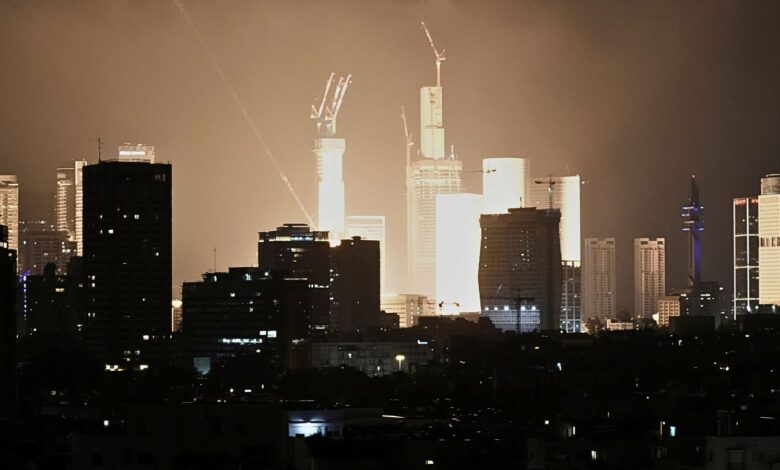

Air raid sirens blared across Tel Aviv and Jerusalem — Israel’s two largest cities — as Iran launched retaliatory airstrikes on the intervening night of Friday and Saturday, leading to several waves of attacks against the two countries caught in a longstanding conflict. The ongoing series of offensives marks a sharp escalation in the spiralling tensions in West Asia.“In the last hour, dozens of missiles have been launched at the state of Israel from Iran, some of which were intercepted,” the Israeli military said early Saturday, adding that rescue teams were responding at various impact sites.
Iran, in its first response, fired more than 100 drones in response to Israel’s early Friday morning attack on Iran’s top military officers as well as its key nuclear and missile sites — the biggest-ever barrage as part of an operation ‘Rising Lion’ to prevent Tehran from building an atomic weapon. Later, the retaliatory strikes were carried out in at least three waves overnight.
Story continues below this ad
Here’s a round-up of what we know so far amid the evolving situation:
The escalation
The Islamic Revolutionary Guard Corps (IRGC) claimed responsibility for the barrage from Tehran. Iranian media including the Fars news agency said one of the waves targeted Tel Aviv before dawn on Saturday, with explosions heard in the capital and Jerusalem, according to witnesses who spoke to Reuters.
Israeli military said of fewer than 100 missiles fired Iran on Friday night, most were intercepted or fell short. Ground-based air-defense systems of the US in the region assed Israel in blocking Iranian missiles, US officials said, as per AP.
In Tehran, explosions were reported early Saturday. Two projectiles reportedly hit Mehrabad International Airport, near key leadership sites. On social media, The Islamic Republic News Agency (IRNA) shared videos of smoke and flames after explosions lit up the sky.Story continues below this ad
As the air defense systems remained active in central Tehran, Iran’s Supreme Leader Ayatollah Ali Khamenei, in a recorded message, said the military was prepared to counterattack. “Don’t think that they (Israel) hit and it’s over. No. They started the work and started the war. We will not allow them to escape safely from this great crime they committed,” he said.
Casualty count
In Israel, one death was reported after its ambulance service said 34 people were injured on Friday night in the Tel Aviv area, most with minor injuries. Authorities also confirmed damages to a high-rise building in the area, and an apartment block in Ramat Gan.
On the other side, the Israeli attacks against Iran’s nuclear establishments killed 78 people and wounded more that 320 on Friday, Iran’s ambassador to the United Nations was quoted as saying news agency AP. The strikes killed generals and scients, but the ambassador told the UN Security Council that the overwhelming majority of victims were civilians.
People view remnants of a missile fallen on a field between Najaf and Karbala, Iraq. (AP Photo)
What is Operation Rising Lion
Earlier on Friday, Israel’s Operation Rising Lion kicked off a full-scale aerial and cyber campaign aimed at crippling Iran’s nuclear capabilities and leadership infrastructure. The Israeli military said around 200 aircraft struck 100 targets, including Iran’s Natanz and Fordow enrichment sites, Isfahan nuclear-research center, and missile production facilities.Story continues below this ad
According to AP, black smoke rose over Natanz, and Iranian media confirmed explosions near Fordow. Iran acknowledged damage at Isfahan. Israeli military spokesperson Brig. Gen. Effie Defrin said Natanz was “significantly damaged” and the operation was “still in the beginning.”
An explosion is seen during a missile attack in Tel Aviv, Israel. (AP Photo)
Senior Iranian officials killed in Israeli strike
Among those reportedly killed in the Israeli operation were:
Hossein Salami, IRGC chief
Mohammad Bagheri, Iranian Armed Forces Chief
Fereydoun Abbasi-Davani, nuclear scient and former head of Iran’s Atomic Energy Organization
Tehran has labelled the strikes as “state terrorism.” Iran inss its nuclear program is for peaceful purposes.
Israeli security forces run to take cover while missiles were launched from Iran towards Israel, in Tel Aviv, Israel. (AP Photo)
UN’s emergency meeting
UN nuclear chief Rafael Grossi told the Security Council that the above-ground section of the Natanz facility was destroyed, along with electrical infrastructure and power generators. The main underground centrifuge facility was not directly hit but may be damaged due to loss of power.Story continues below this ad
Israel’s Mossad was reportedly behind pre-positioned explosive drones and precision weapons that neutralised radar and air defense systems, according to AP sources.
The UN Security Council held an emergency meeting on Friday at Iran’s request.
Israel’s UN envoy Danny Danon claimed intelligence showed Iran was days away from producing enough fissile material for multiple bombs. He defended the strikes as “an act of national preservation.”
US stance and global reaction
The United States, which was reportedly informed in advance, assed in intercepting incoming Iranian missiles but has not confirmed any operational role in the Israeli strikes.Story continues below this ad
President Donald Trump said on Friday it was not too late for Iran to reach a deal to curb its nuclear program. He said Tehran could still avoid prolonged bombing engaging in talks and urged the country to reach a deal with the US on its nuclear programme, warning on his Truth Social platform that Israel’s attacks “will only get worse”.
People react next to a building struck a missile fired from Iran, in Tel Aviv. (AP Photo)
US Secretary of State Marco Rubio clarified Washington’s position: “We are not involved in strikes against Iran and our top priority is protecting American forces in the region… Let me be clear: Iran should not target US interests or personnel.”
Countries across the world, including India, condemned Israel’s attacks. India, maintaining ties with both Iran and Israel, called for de-escalation: “Exing channels of dialogue and diplomacy should be utilised to resolve underlying issues,” said the Minry of External Affairs in a statement.
Global leaders urged both sides to de-escalate immediately to prevent a full-scale regional war.Story continues below this ad
Tensions escalated after the UN’s atomic watchdog censured Iran on Thursday for failing to comply with non-proliferation obligations. Israel had long warned of a preemptive strike if diplomatic measures failed. Iran rejected the most recent US proposal to renew the nuclear deal that Trump had abandoned in 2018.
(With inputs from AP, Reuters, PTI)