JD Vance defends US strikes on nuclear sites: ‘We’re not at war with Iran’ | World News
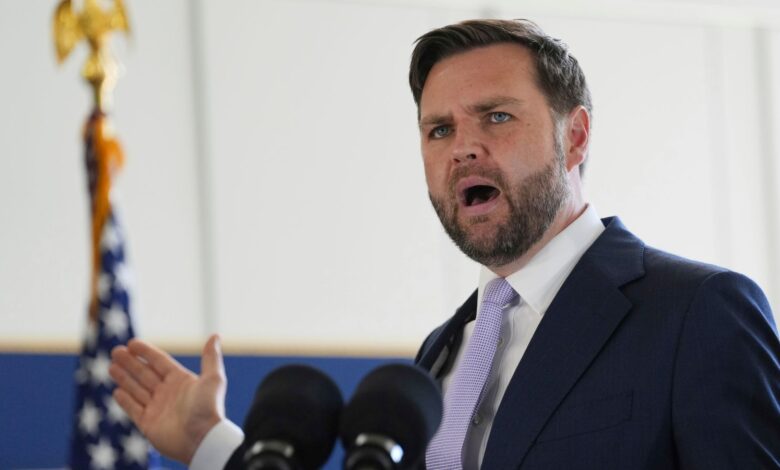

US Vice President JD Vance Sunday defended the US airstrikes on Iranian nuclear facilities ordered President Donald Trump. “We’re not at war with Iran,” Vance said in an interview with NBC News. “We’re at war with Iran’s nuclear programme.”
He added: “I feel very confident that we’ve substantially delayed their development of a nuclear weapon, and that was the goal of this attack.”
Trump had said the overnight strikes have “completely and totally obliterated” Iran’s enrichment facilities. However, Vance declined to confirm the extent of the damage with certainty, saying instead that the operation has “substantially delayed” Iran’s ability to develop nuclear weapons.
Story continues below this ad
What JD Vance said: Key points from the Vice President’s interviews
In interviews with NBC News and ABC News, Vance outlined the adminration’s rationale, messaging, and red lines.
Here’s what he said:
On the war itself: “We’re not at war with Iran. We’re at war with Iran’s nuclear programme.”
On the damage: “I feel very confident that we’ve substantially delayed their development of a nuclear weapon… That was the goal of this attack.”
On Trump’s claim of ‘obliteration’: Asked whether Iran’s nuclear sites were completely destroyed, Vance replied, “Severely damaged versus obliterated — I’m not exactly sure what the difference is. What we know is we set their nuclear programme back substantially.”
On diplomacy: He blamed Tehran for derailing talks. He argued that the US did not “blow up” diplomacy. “The Iranians are clearly not very good at war. Perhaps they should follow President Trump’s lead and give peace a chance.”
On potential retaliation: “If they want to destroy their own economy and cause disruptions in the world [ blocking the Strait of Hormuz], that would be their decision. But why would they do that?”
On legal authority: Responding to critics in Congress, Vance said Trump had “clear authority to act to prevent the proliferation of weapons of mass destruction”.
On Iranian messages: He confirmed the US had received “some indirect messages from the Iranians” since the strike.
Extent of damage still unclear
Independent assessments of the Iranian nuclear sites suggest the damage might be less severe that what US officials claim.
According to The Guardian, Satellite images reviewed Maxar Technologies showed surface-level craters and potential tunnel collapses at the Fordow and Natanz sites, but no conclusive evidence that the heavily fortified facilities were fully destroyed.
An Iranian lawmaker also claimed Fordow was not seriously damaged.Story continues below this ad
Iran warns retaliation
Hours after the US strikes, Iran launched retaliatory attacks against Israel, damaging infrastructure in Tel Aviv. Iranian Foreign Miner Abbas Araghchi warned that Iran “reserves all options” in its response. He is expected to visit Moscow for consultations with Russian President Vladimir Putin.
After the strikes, Trump, in an all-caps post on Truth Social warned against “any retaliation Iran”.
Iran has also warned that its military will determine the “timing, nature, and scale” of its response to the US airstrikes targeting its nuclear facilities. Addressing an emergency meeting of the UN Security Council in New York after the US strikes, Iran’s Ambassador to the UN, Amir Saeid Iravani said, “The United States decided to destroy diplomacy.”
(With inputs from NBC News, Reuters, The Guardian)