

JWST maps the universe’s vast cosmic web in unprecedented detail | Technology News
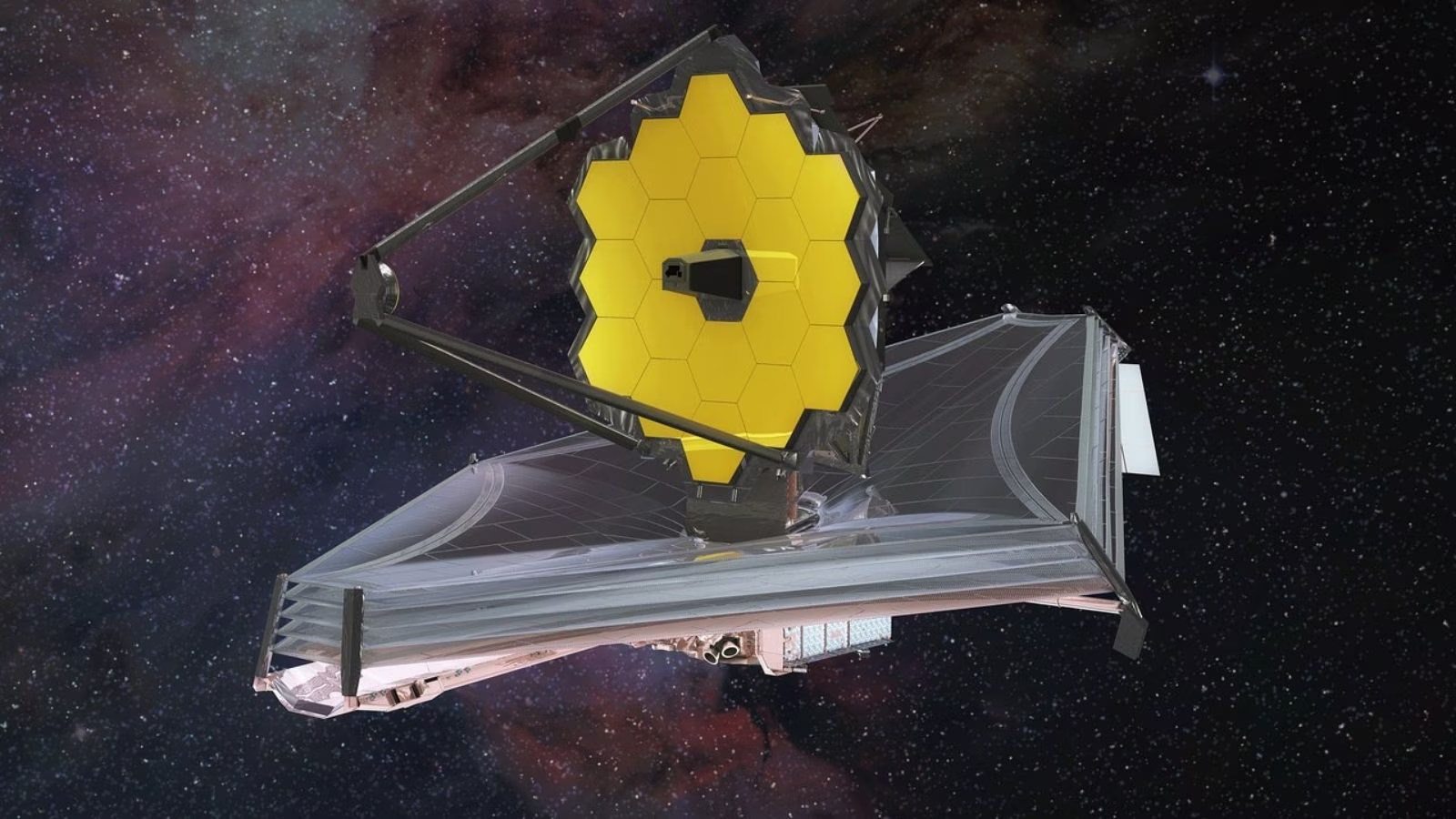

2 min readMay 16, 2026 08:34 PM Astronomers using the James Webb Space Telescope (JWST) have created the most detailed map yet of the universe’s vast “cosmic web,” revealing how galaxies assembled across nearly 14 billion years of cosmic hory.
The breakthrough comes from the COSMOS-Web survey, the largest survey conducted JWST so far. The project maps enormous filaments and clusters of galaxies stretching across the universe, tracing cosmic structures back to when the universe was only around one billion years old.
Scients describe the cosmic web as the universe’s large-scale skeleton, an immense network of dark matter, gas, galaxy clusters and filaments separated enormous empty voids. Galaxies gather and evolve along these filaments over billions of years, forming the architecture of the cosmos itself.
Researchers say the new map provides a dramatically clearer picture of these structures than previous observations from the Hubble Space Telescope.
According to the research team, many structures that once appeared blurred or merged in Hubble observations can now be resolved into intricate networks of galaxies and filaments.
Hossein Hatamnia of the University of California, Riverside, said JWST has fundamentally transformed astronomers’ understanding of the universe combining deep sensitivity with highly accurate galaxy dance measurements.
The telescope can detect extremely faint galaxies and precisely place them within different eras of cosmic time, allowing scients to construct a sharper three-dimensional map of the universe’s evolution.Story continues below this ad
The COSMOS-Web survey stretches from the near universe to regions over 13 billion light-years away, effectively allowing astronomers to look back toward the universe’s earliest epochs shortly after the Big Bang.
Also Read: China picks 2 Pakani candidates for Tiangong space programme
Researchers say the findings could help scients better understand how galaxies formed, how dark matter shaped large-scale structures, and how the universe evolved over billions of years.
The research team noted that the unprecedented detail offered JWST demonstrates the telescope’s growing role in refining and in some cases reshaping modern cosmology. The study describing the findings was recently published in The Astrophysical Journal.
Expand © IE Online Media Services Pvt Ltd
