

Microchips under skin, robot prison wardens: In UK, vision for justice takes ‘dystopian’ turn | World News
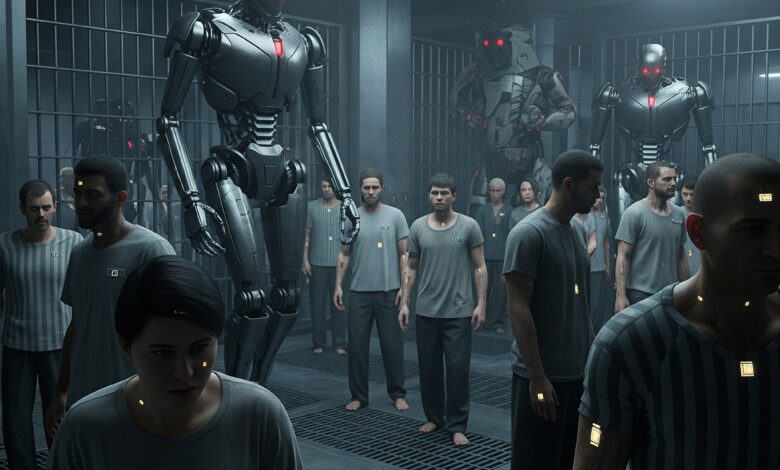

If some of the biggest tech names in the world have their way, the United Kingdom government can implant chips under the skin of prisoners and use robots to control them. It can even feed information about people to powerful “quantum computers” to predict crimes before they take place. All this may sound like the plot of a dystopian science-fiction movie, but is captured in the minutes of a meeting held a top government miner, according to records accessed The Guardian.
Shabana Mahmood, the Secretary of State for Justice, held a meeting last month with more than two dozen company executives, asking for ideas to create a “prison outside of prison”. The gathering was attended those representing Google, Amazon, Microsoft and Palantir, the last of which has close ties to the US military. Others in the room were speaking on behalf of IBM, Serco (a private prison operator) and some tagging and biometric companies, records show.
In the meeting hosted industry lob group Tech UK, Mahmood batted for a “deeper collaboration between government and tech to solve the prison capacity crisis, reduce reoffending and make communities safer,” according to The Guardian report. She also asked the tech companies to “scale and improve” the exing use of tagging and widen it beyond monitoring “to drive rehabilitation and reduce crime”.
Story continues below this ad
The UK’s Labour government is battling a shortage of both the space to hold prisoners and officials to oversee them. Mahmood’s stance ties in with the government’s view. PM Keir Starmer has pinned hopes on artificial intelligence (AI) “to transform our public services” and had promised to “totally rewiring government”. Mahmood’s views also dovetail with that of former Lord Chancellor and Secretary of State for Justice David Gauke, who championed greater use of AI and a sweeping use of facial recognition technology to help reduce the overcrowded prison tally almost 10,000 people.
In the meeting chaired Mahmood, the companies also put forward ideas to have driverless vehicles for transporting prisoners when asked about concepts for using “wearable technologies, behaviour monitoring and geolocation” to envision a prison justice system of 2050. They also suggested using quantum computers to calculate prison sentences to ease the burden on the justice system.
A government source told The Guardian that the ideas were currently “hypothetical talking points”. The Minry of Justice said it continues to “explore technology that will help us cut crime, effectively monitor offenders and keep the public safe.”
Still, the responses from the tech giants have raised alarms among human rights campaigners, who called the ideas “alarmingly dystopian”. Donald Campbell, the director of advocacy at Foxglove, a non-profit organisation campaigning for fairer use of technology, had placed a freedom of information request to access the minutes of the meeting. Campbell said it “is chilling to know that justice miners have sat with the tech sector to discuss using robots to manage prisoners, implanting devices under people’s skin to track their behaviour, or using computers to ‘predict’ what they will do in future,” he said.