‘Midnight Hammer’ to Strait of Hormuz: 10 new developments after US bombs Iran’s nuclear facilities | World News
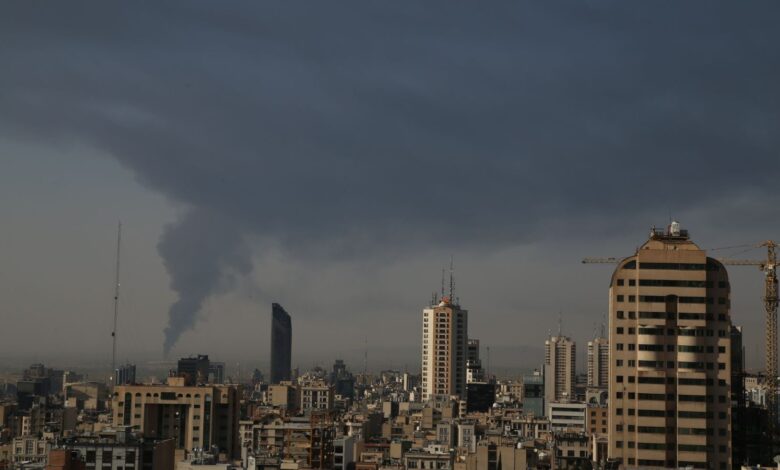

Tensions between the United States, Iran, and Israel escalated dramatically on Sunday after US airstrikes on Iran’s nuclear facilities, which President Donald Trump claimed had “completely and fully obliterated” key sites. The attacks have triggered a deadly wave of retaliatory strikes, international condemnation, and fears of a wider regional war.
Here are 10 new developments from Sunday:
01’Midnight Hammer’: Pentagon briefs on US strike on Iran’s nuclear sitesOn Saturday night, US President Donald Trump confirmed that the US military had struck three of Iran’s nuclear sites—Fordow, Natanz, and Isfahan. Trump declared the facilities “completely and fully obliterated.”
Senior Pentagon officials on Sunday detailed a highly secretive and coordinated military operation against Iran, calling it a demonstration of American air and naval power at its most effective.
Defense Secretary Pete Hegseth and Gen. Dan Caine, chairman of the Joint Chiefs of Staff, could not confirm whether Iran retained the ability to produce a nuclear weapon. Hegseth reiterated President Trump’s claim from the previous night that the nuclear sites had been “obliterated.” General Caine did not.
Caine said a final battle damage assessment was still pending, but initial reports indicated that all three targeted Iranian nuclear sites had sustained “severe damage and destruction.”
02IAEA says extent of damage not knownThe head of the International Atomic Energy Agency, the UN nuclear watchdog, says he does not know the extent of damage at the facility but there were “clear indications” of impact.
“But as for the assessment for the degree of damage underground, on this we cannot pronounce ourselves,” IAEA chief Rafael Grossi told CNN. “No one could tell you how much it has been damaged,” he added.
03Iranian leaders vow retaliationA representative of Iran’s Supreme Leader said it is now Iran’s turn to respond. He called for missile strikes on US naval forces in Bahrain and closure of the Strait of Hormuz to Western vessels. Foreign Miner Abbas Araghchi warned, “They crossed a very big red line… We have to respond based on our legitimate right for self-defence.”
04Iran launches retaliatory strikes on IsraelSeveral areas in central and northern Israel, including Nes Ziona, Rishon Lezion, Haifa, and a neighbourhood in Tel Aviv, were struck Iranian missiles, according to Israeli state media and Fars News Agency. Videos show significant destruction in Tel Aviv. Iran’s Islamic Revolutionary Guard Corps warned the US to “expect regrettable responses” in response to its strikes on Tehran’s nuclear sites, state TV reported.
05Global reactions mixed, UN Chief alarmedIsraeli PM Benjamin Netanyahu praised Trump, calling the strike “a pivot of hory.” UN Secretary-General António Guterres warned of “a dangerous escalation,” and Pakan condemned the US strike. Oman, previously mediating talks, called the attack a “serious violation of international law.
Iran’s ambassador to the UN, Amir Saeid Iravani, has also called for an emergency Security Council meeting. In a letter to the UN, he described the US strikes as “heinous attacks and illegal use of force.”
Russia has “strongly condemned” bombings, calling the attacks “irresponsible” and a “gross violation of international law”.
Iran’s Foreign Miner Abbas Araghchi announced on Sunday that he will travel to Moscow later in the day to meet Russian President Vladimir Putin on Monday morning. In a post on X, Araghchi condemned the United States, accusing it of a grave violation of the UN Charter, international law, and the Nuclear Non-Proliferation Treaty (NPT) attacking Iran’s nuclear facilities.
06Iran Parliament approves shutting Strait of HormuzIran’s Parliament has approved the closing of the Strait of Hormuz, though the final decision will be taken the Supreme National Security Council, Iran’s Press TV reported. The Strait is in the territorial waters of Iran and Oman, and accounts for a big bulk of the world’s oil trade.
07Will Iran shut the Strait and how it affects IndiaIran has in the past threatened to close the Strait of Hormuz on multiple occasions, but has never actually done it. The heightened risk of the closure is bound to raise concerns globally, including in India, particularly with regard to oil and gas supply security, and could lead to a jump in energy prices.
India is the world’s third-largest consumer of crude oil and depends on imports to meet over 85 per cent of its requirement.
08Israel closes its airspaceIsrael closed its airspace as a precaution after the US strikes, though land crossings into Egypt and Jordan remain open, according to the Israel Airports Authority.
09Trump warns of future strikesTrump, speaking Sunday, said no military “could have done what the US military has done.” He warned Iran of “far greater” future attacks if it does not choose peace. “There will either be peace or tragedy for Iran,” he said, adding that he acted “as a team” with Netanyahu.
10‘Bunker-buster’ MOP and B-2: Bombs that US used for strike Iran’s nuclear facilitiesA US official has confirmed that B-2 bombers flew non-stop for 37 hours from Missouri to carry out the strikes.
The “bunker buster” MOP is designed to attack “deeply-buried facilities and hardened bunkers and tunnels” and is meant to destroy targets in well-protected facilities. Israel, or any country other than the US, does not have any non-nuclear weapon systems that can penetrate a site as deep as Fordow.
A never-before-used American bomb — the GBU-57 Massive Ordnance Penetrator, or MOP — which is extremely heavy and can only be dropped using the B-2 Spirit stealth bomber aircraft of the US Air Force was used for the bombing. The latest strike seems to have achieved that target, even though the extent of damage at Fordow is still under speculation, primarily because of the depth of the enrichment site.