

Mother of boy grabbed octopus says aquarium account is ‘false, defamatory’ | Trending
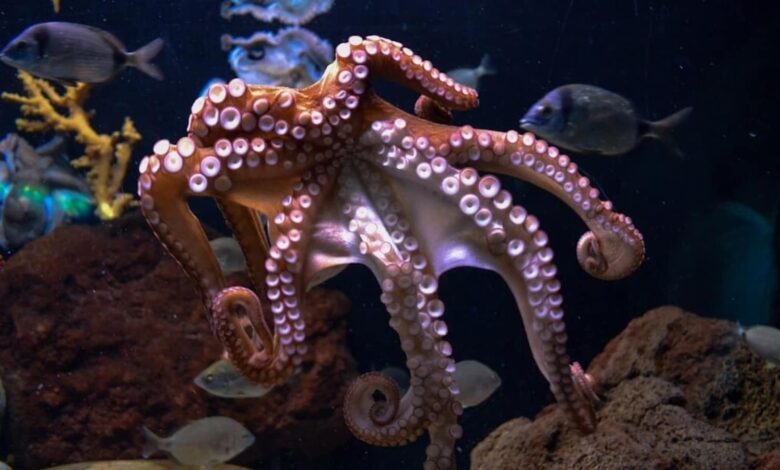

A mother in Texas is raising concerns after a Giant Pacific Octopus at the San Antonio Aquarium latched onto her 6-year-old son’s arm and refused to let go, leaving behind visible bruises. The incident, which occurred on July 14, has gone viral on TikTok and sparked debate over animal interactions in public aquariums. An octopus reportedly attacked a six-year-old boy during an interactive exhibit last month at the San Antonio Aquarium,(Representative image/Unsplash) Long-time visitor, familiar octopusBritney Taryn, the mother of the child, said in her TikTok video that her son Leo has been visiting the aquarium regularly for over four years. He’s also interacted with the same octopus, named Cthulhu, many times. According to her, guests have always been allowed to touch the animal, and Leo had developed a bond with it. “They’re allowed to touch them, and it’s welcomed,” Taryn said in her TikTok video, which has garnered over 3 million views. She also shared an older photo of Leo gently petting the octopus in November 2024. ‘It’s not letting me go’During their most recent visit, Taryn noticed the octopus had grown significantly and was behaving differently. While Cthulhu usually placed its tentacles on Leo before releasing him, this time was different. “Mom, it’s not letting me go,” Leo reportedly said as the octopus tightened its grip. (Also read: TikToker details how her 6-year-old was ‘attacked Octopus’ at San Antonio Aquarium | Watch) Taryn described the moment as alarming. She tried to help Leo pull away, but the animal didn’t let go and even began rising out of the tank. “We start freaking out because that octopus is now bigger than my 6-year-old,” she said. “Is it going to engulf him and In her video, Taryn showed the series of bruises that the octopus left on her 6-year-old’s arm. “My son has visited the same octopus every week for 3 years. She always loved him until today, when she tried to pull him into the tank. It took 3 aquarium employees to get her off,” she wrote on TikTok. “We thought it was a sweet animal bond… until it left bruises. And when we walked back later, she changed color the second she saw him,” the Texas mum added. Aquarium defends octopusIn response to the viral video, the San Antonio Aquarium issued a statement to local outlet KSAT, claiming Taryn “leaned her child over the exhibit barrier, allowing him to reach into the habitat without staff supervision.” The aquarium also said Leo remained calm and that medical assance was offered, though declined. The aquarium noted that an incident report had been completed and signed the mother. Taryn strongly disputed the statement, calling it “false” and “defamatory.” She said she was never offered medical help, nor asked to sign any report, and pointed out that multiple adults were present with her and could confirm this. Full statement from aquarium”At the San Antonio Aquarium, the safety and well-being of our guests, staff, and animals are our top priorities. We are aware of recent statements regarding an interaction between a guest and our Giant Pacific Octopus during a visit to our facility. We would like to provide clarity on the incident and address any concerns. During the visit, a guest and her child engaged with our octopus exhibit. The octopus exhibit is a 1,000+ gallon habitat intentionally designed with a tall barrier to provide safety for both guests and the animal. Reaching the octopus requires a person to lean fully over the wall of the enclosure and reach approximately 24 inches down from the top edge. Feeding interactions are strictly allowed only with staff supervision, as indicated posted signage on the exhibit which states guests must follow all rules and instructions. In this instance, the guest leaned her child over the exhibit barrier, allowing him to reach into the habitat without staff supervision. The octopus displayed typical, curious behavior touching and holding the child’s arm. At no point was the octopus aggressive or attempting to harm the child. Our staff responded promptly to ass, ensuring the child was safely removed from the interaction. The child remained calm throughout, and medical assance was offered but declined the mother. An incident report was completed and signed the mother at the time of the event. We want to emphasize that our Giant Pacific Octopus is a healthy, well-cared-for animal that thrives in its habitat and does not exhibit harmful behavior toward guests or staff. Octopuses are highly intelligent and curious creatures, and their interactions with humans are often playful and exploratory. However, as with any animal encounter, there are inherent risks, which is why we have strict protocols in place to ensure safety for all. The San Antonio Aquarium remains committed to providing safe, educational, and memorable experiences for all visitors while maintaining the highest standards of care for our animals. We encourage all guests to follow posted guidelines and staff instructions to ensure a safe and enjoyable visit.” What the mother claimsTaryn said interactions like these are not supervised, and the only signage on the tank has to do with feeding instructions, not safety. “The San Antonio Aquarium’s response is not only false; it is defamatory and appears to be a deliberate attempt to divert attention from the serious issues at hand,” she said in a written statement to KSAT. “Contrary to the aquarium’s claims, no medical attention was offered for my son, and I was not asked to sign an incident report. Several other adults were with me at the time and can attest to this. “Because blame was never my intent, I only later sent an email solely to formally document the incident out of concern for the animal and the safety of others, but I received no response. “Typically, contact with the octopus in that exhibit would only be possible lifting a child over the glass, something we have done in the past under direct staff instruction. This tank is never staffed, and the public is often left to interact with the animals unsupervised. The only signage provides instructions for a feeding encounter. “However, during this incident, the octopus was already near the glass, which I have documented on video. My son was able to reach it without assance. This interaction revealed behaviors we had not witnessed before. “With the guidance of multiple experts, we have since learned that these behaviors are consent with senescence, the natural decline that occurs near the end of an octopus’s life, and that neither the tank setup nor the nature of public interaction aligns with the AZA’s standards for Giant Pacific octopus care,” said Taryn.



