

NASA’s Curiosity Rover captures breathtaking video of colourful twilight clouds on Mars | Trending
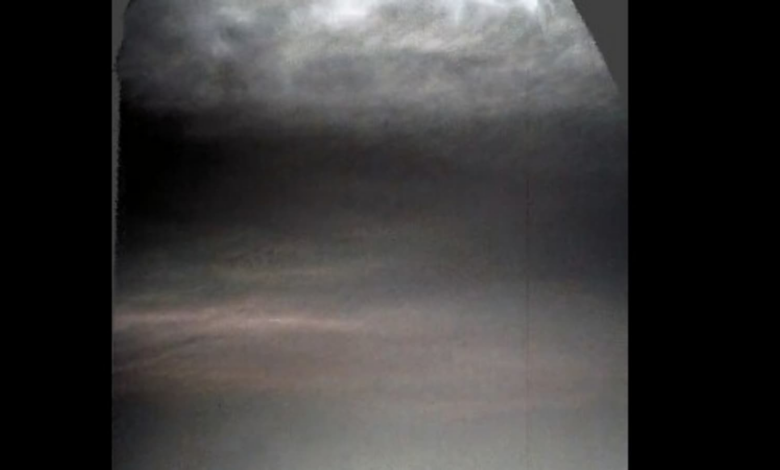

The National Aeronautics and Space Adminration (NASA) has released a mesmerising video showcasing vibrant clouds drifting across the Martian sky. Captured the Curiosity Rover, which has been exploring the Red Planet since 2012, the footage was recorded using its Mastcam. The clip reveals a stunning display of colours illuminating the planet’s atmosphere. NASA’s Curiosity Rover recorded vibrant clouds over Mars.(X/@NASA) (Also read: Sunita Williams captures ‘the ultimate selfie’ during her 9th spacewalk: Incredible NASA pic wows internet) Mars’ seasonal weather patternsAlthough Mars has a vastly different atmospheric composition from Earth, it experiences seasonal weather cycles of its own. According to NASA, the clouds seen in the video are composed of dry ice, or frozen carbon dioxide, rather than the water vapour that forms clouds on Earth. These clouds, known as twilight clouds or noctilucent clouds (Latin for “night shining”), are illuminated the setting sun, creating breathtaking red and green hues due to light scattering. Check out the post here: Iridescent ‘mother-of-pearl’ cloudsNASA also noted that, under certain conditions, Martian clouds can display a rare phenomenon known as iridescence or “mother-of-pearl” clouds. These colourful formations occur only at high altitudes and become visible in the evening when the sun is low on the horizon. The space agency explained that Martian clouds form from either water ice or carbon dioxide ice. Given that Mars’ atmosphere conss of over 95% carbon dioxide, many clouds are composed of this frozen gas. These clouds can appear at altitudes of approximately 50 kilometres (31 miles) before gradually evaporating as temperatures rise. The phenomenon of twilight clouds was first observed on Mars in 1997 during NASA’s Pathfinder mission. However, it wasn’t until 2019 that the Curiosity Rover captured the first-ever images of iridescence in Martian clouds. Mark Lemmon, an atmospheric scient at the Space Science Institute in Boulder, Colorado, suggested that specific regions of Mars may be more prone to cloud formation. He further explained that gravity waves—atmospheric durbances that cool the air—could play a significant role in their development. (Also read: ‘World’s tallest building from space’: Burj Khalifa’s gorgeous view captured NASA astronaut) The mission of CuriositySince its landing in 2012, the Curiosity Rover has been conducting groundbreaking research on Mars’ soil, rocks, and atmosphere. Its primary objective is to determine whether life could have ever exed on the Red Planet, while also helping scients understand its climate and geological hory.