
58 countries now visa-free for Indians: What the Indian passport’s rise means | Lifestyle News
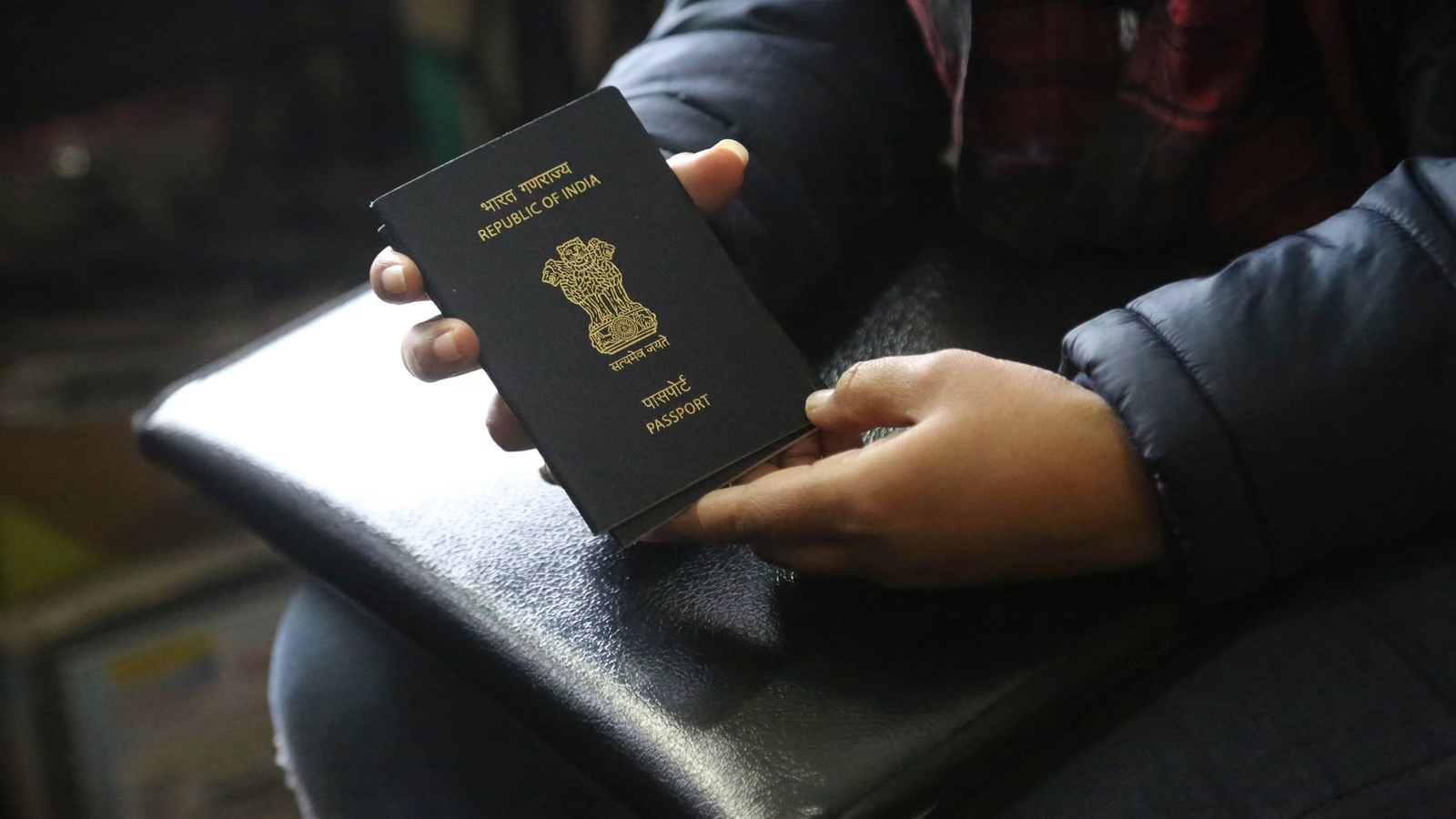

For Indian travellers, the world is gradually opening up. According to the latest Henley Passport Index for 2025, Indian passport holders can now enter 58–59 countries without a visa in advance — either visa-free, via a visa-on-arrival, or via an Electronic Travel Authorisation (ETA).
Key Developments & Highlights
Improved Global Ranking
India has climbed in the Henley Passport Index — now around 77th place globally, up from lower rankings in recent years. The index ranks passports the number of international destinations holders can reach without prior visas. India now shares its rank with several countries — underscoring how passport strength is a comparative, not absolute, metric.
Broader Geographic Reach
The l of visa-free/VOA/ETA destinations spans multiple continents. Some of the regions and countries now accessible include:
Story continues below this ad
Asia & neighbouring countries: Bhutan, Nepal, Sri Lanka, Malaysia, Thailand, Indonesia, Kazakhstan, Macao, Timor-Leste and others.
Africa: Kenya, Madagascar, Malawi, Mauritius, Mozambique, Namibia, Rwanda, Senegal, Seychelles, Zimbabwe, among others.
Oceania / Pacific Islands: Fiji, Cook Islands, Vanuatu, Micronesia, Niue, Palau Islands, Samoa, Kiribati.
Caribbean & small island territories: Barbados, Grenada, British Virgin Islands, Dominican, St. Kitts and Nevis, St. Lucia etc.
Easing Travel for More Purposes
The visa-free access primarily covers tour travel, but for many countries, options such as visa-on-arrival or ETA further reduce the hurdles. These agreements mean fewer documents, less planning, and often cheaper and more spontaneous travel.
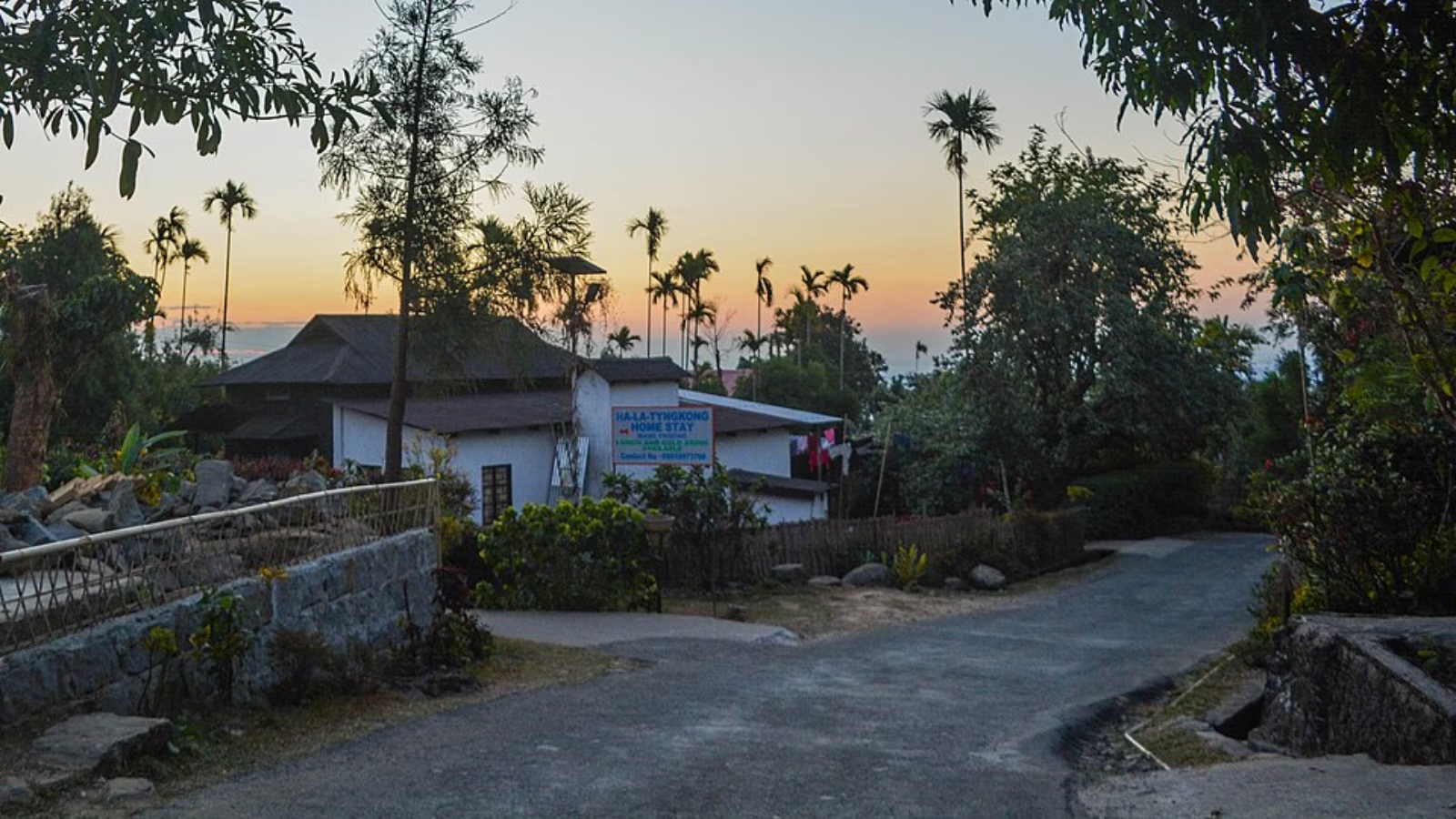
Take a look at countries where Indians can travel visa-free. (Source: Freepik)
Boost to Tourism, Cultural Exchange, Economy
Easier travel encourages Indians to explore new destinations, boosting outbound tourism. For inbound relations, it signals stronger diplomatic or trade ties, as visa liberalisation is often mutual or part of broader bilateral cooperation. There may also be economic returns from Indian tours’ spending in foreign economies.Story continues below this ad
What Still Limits the Gain
While this is progress, there remain caveats and limitations:
Not everywhere is visa-free: Many high-income countries, major tour draws, and advanced economies still require visas or more stringent entry requirements.
Length of stay and entry rules vary: Visa-free or VOA doesn’t always mean long stays — many countries allow short stays (e.g., 14 or 30 days). Some require permits or digital pre-authorisation.
Validity and passport strength matter: Travellers need valid passports (often with 6 months’ validity), and sometimes proof of onward travel or funds, which can still be hurdles.Story continues below this ad
Diplomatic reciprocity & policy changes: Entry rules can change with political shifts, diplomatic tensions, or security concerns. A visa-free status today isn’t guaranteed tomorrow.
The Bigger Picture
India’s growing share of visa-free access reflects several trends:
Soft power and diplomacy: As India strengthens its ties with Southeast Asian countries, African nations, and Pacific and Caribbean islands, travel liberalisation follows.
Global migration of tours: With rising middle-class incomes, more Indians are travelling abroad. Destination countries are eager to tap this market.