
Ikkis: Sriram Raghavan examines war through the lens of a 21-year-old who believed his duty was more important than his questions | Bollywood News


Paul Tibbets was 30 years old when he was tasked with the responsibility of dropping a nuclear bomb on Hiroshima in 1945. This, as we now know, was a pivotal moment in the hory of humankind, as wars would never be the same again. The threat of a nuclear bomb would always loom upon us, as it continues to do so in 2026. But at the time, Paul, perhaps, was not aware of the catastrophe that would happen. He was a soldier who was just following orders, and was asked to be proud of his country’s actions. He was, and he proved it naming the nuclear bomb carrying aircraft after his mother, Enola Gay. The idea that he named the carrier of such destruction after his mother explains that for him, this was a brave, heroic act. But on the other side were countless civilians, who suffered for decades. Living in a world where brutal wars are killing thousands (maybe more) every day, one cannot help but think that much like Paul, soldiers all over the world are told to perform their duty, regardless of the consequences. But what happens when these soldiers reflect on their actions? Sriram Raghavan’s Ikkis examines this idea of war through the lens of a 21-year-old, Second Lieutenant Arun Khetarpal, who fought for the country in the 1971 war against Pakan, and sacrificed himself.
Arun’s bravery has been written about in great detail; he was also honoured with the Param Vir Chakra for his bravery and sacrifice. Ikkis, which is based on his life, has certainly taken some dramatic liberties as Sriram puts Arun, played Agastya Nanda, in the driver’s seat, and makes the audience examine the idea of war through his eyes. Outside of the context of war, it is difficult to imagine how a 21-year-old would be excited to kill another human being, but even in that construct, there is a psychological toll of combat and the dissonance between duty and the human cost of violence.
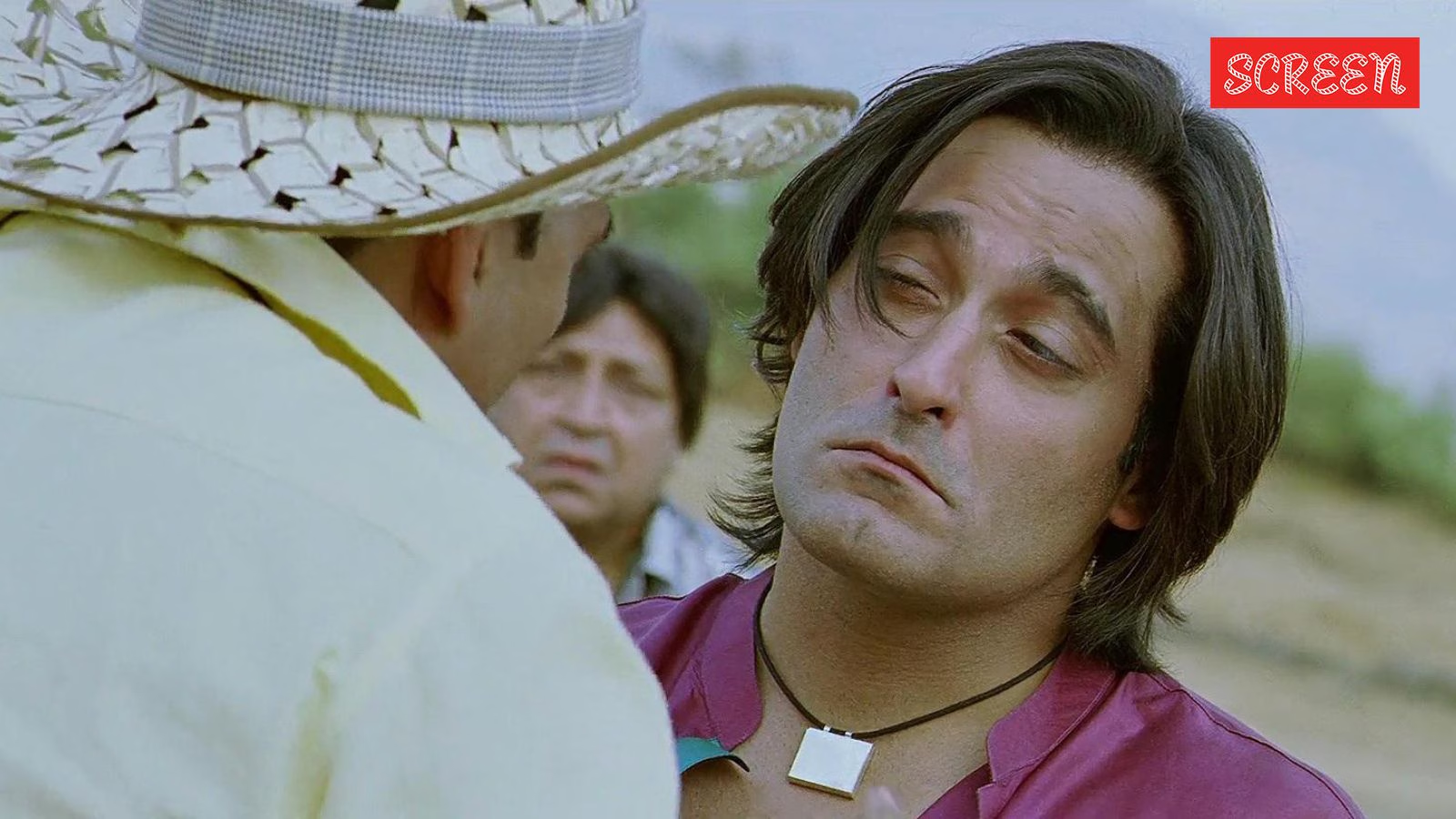
Agstya Nanda in Ikkis.
Arun’s first encounter with killing a living being leaves him in discomfort
Arun, who we are told was always certain about joining the army, has a glee on his face when he learns that he is about to head into war. “Mom, I am going to war,” he tells his mother, who responds saying, “Khana kha ke jana (Eat before you leave).” As Sriram’s Arun trains, you witness his dedication, his zeal and his enthusiasm to do the best he can. He knows what a war is all about, but he has never experienced one. At 21, he is yet to experience life.
His first encounter with killing happens when he is asked to sacrifice a goat, as an act of initiation, and it is in this moment you get an insight into his personality. He squirms and hesitates with his sword, and can’t get the job done. The disbelief on his face is obvious but as soon as another officer slathers the dead goat’s blood on his forehead, Arun composes himself, but the discomfort lingers.
ALSO READ | Dilwale Dulhania Le Jayenge: Aditya Chopra told us not to rebel and question authority figures; 30 years later, we’re still doing the same
Dushman desh or ancestral land?
As Arun eventually heads into war and crosses into Pakani territory, he excitedly announces he is in Pakan but in the same breath, he observes that he can’t tell the difference between his home country and the ‘dushman desh’. Minutes later, he crosses his ancestral land, the village where his father was born, which is now on the other side of the border. In a matter of a few days, the excitement and glee that once lit up Arun’s face, has disappeared. As he starts losing his fellow army men, Arun is witnessing the true cost of war.
In a poignant scene, an animated reporter, who is reporting from the frontlines asks Arun, “How excited are you about the war?” And Arun is shocked as to how ‘excitement’ and ‘war’ could appear in the same sentence. The 21-year-old has experienced personal loss and perhaps, for the first time in his life, he is at a place where he can tell the difference between the idea of war, and what it actually entails. Something that the reporter, or many members of the audience, would never know. Even with the call for ceasefire, Arun sees other soldiers celebrating but he is having an almost out-of-body experience as he is wrestling with his unanswered questions. He just mutters, “Jung khatam?”Story continues below this ad
ALSO READ | Why Sudip Sharma’s Kohrra 2 is a chilling warning about Punjab’s next generation
Arun’s duty was bigger than his questions
As Sriram delves deep into Arun’s psyche here, he reminds the audience that despite a moment of doubt that might have clouded his thoughts, nothing was more important to him than following orders. The entire episode where his fellows get upset with him for ratting them out, and him breaking up with Kiran, is shown only to highlight that even though Arun might not be elated with his decisions, he still follows the rules, which is what he did at the battlefield.
Arun joined the army to serve his country and on December 16, 1971, hours before ceasefire was called, Arun performed his duty to the best of his ability and managed to blast many of the Pakani tanks, before he sacrificed his life.
Much like that reporter who questioned Arun about his “excitement for war”, the world is currently going through a violent storm, but unlike Arun, we aren’t examining the actual cost of those wars.