

Scients stumped: Is this a hybrid or a new species?

3 min readNew DelhiMay 5, 2026 09:00 PM Discovering a new species is usually about spotting clear differences. But what happens when a creature seems to look like multiple species at once? That’s exactly what has left scients scratching their heads after a surprising “snake” find in Myanmar.
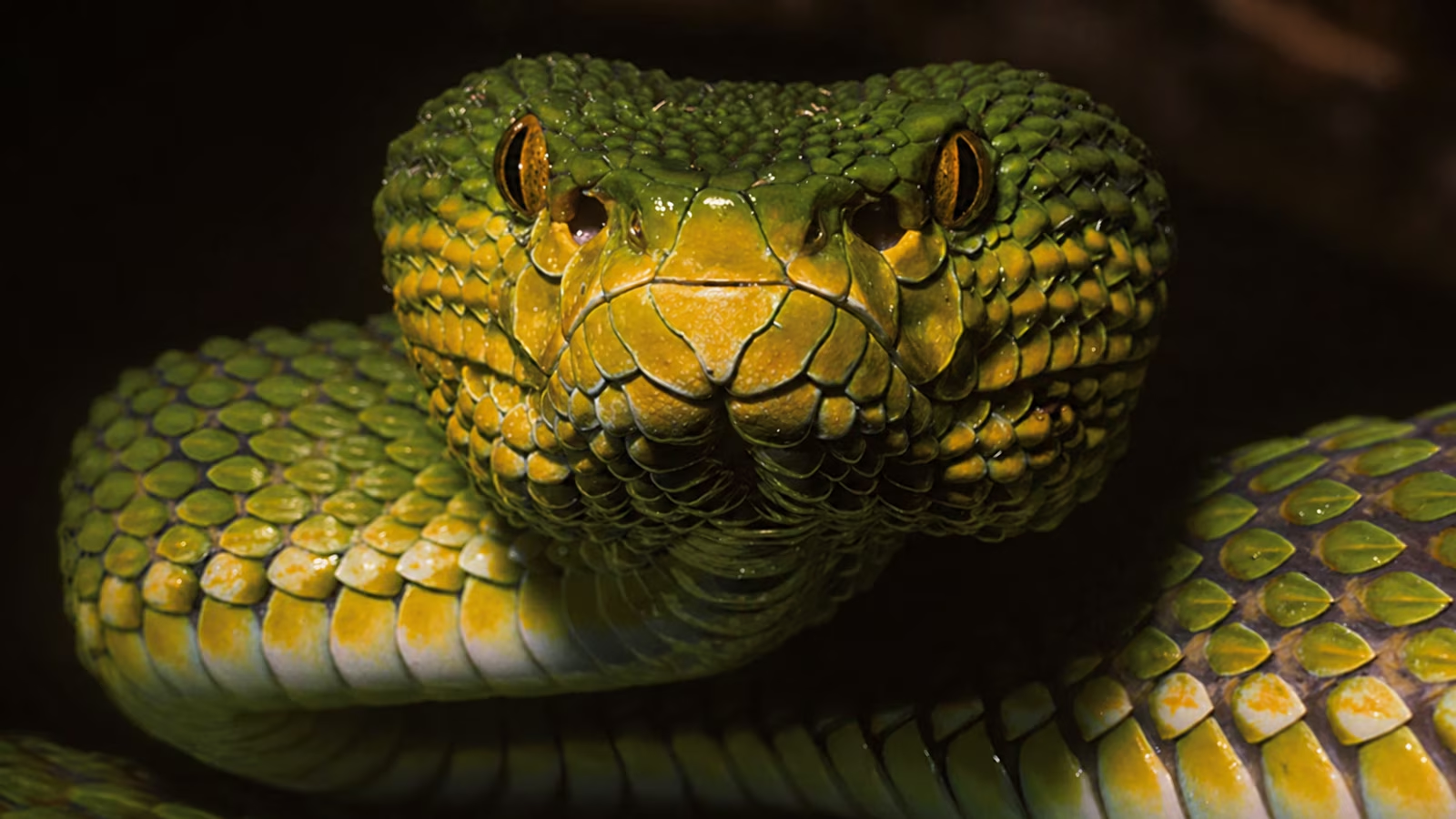
Researchers have identified a new species of pit viper—now named the Ayeyarwady pit viper—that doesn’t neatly fit into exing categories. At first glance, it appears to be a mix of two known snakes, making it unusually tricky to classify.
A snake that refuses to fit in
The new species belongs to the Trimeresurus group, a genus already known for being difficult to dinguish. It has been named after the Ayeyarwady River — one of Myanmar’s most important waterways, where it was first discovered.
Lead researcher Chan Kin Onn explains that these snakes “run the gamut of variation”—meaning some look nearly identical despite being different species, while others look very different but are actually the same. This newly discovered snake seemed to blur those lines even further.
The snake was found in central Myanmar, between the habitats of two relatives: The redtail pit viper (bright green, no markings) and The mangrove pit viper (usually blotched, in shades like brown or grey)
The new population showed mixed features—some snakes were green and spotless, others had blotches, and many looked like something in between.
“This mysterious population… baffled us,” researchers said, adding that they initially suspected it could be a hybrid.
When scients analysed its genetic makeup, the results were unexpected. The snake wasn’t a hybrid at all, but a dinct species in its own right.Story continues below this ad
This finding builds on earlier genetic research that had already hinted the population was part of a separate evolutionary line.
One species, many looks
What makes the Ayeyarwady pit viper especially fascinating is how much it can vary in appearance.
Some individuals are dark green with clear markings, making them easier to dinguish. Others are bright green and nearly identical to their relatives—so much so that even experts could struggle to tell them apart.
Researchers believe this could be due to past gene exchange with neighbouring species, adding to its confusing appearance.Story continues below this ad
Nevertheless, this challenges the core principle of relying on physical traits to identify species, necessitating genetic analysis even more.