Halloween 2024: Selena Gomez as Alice in Wonderland to Paris Hilton as Britney Spears, the best celeb costumes this year
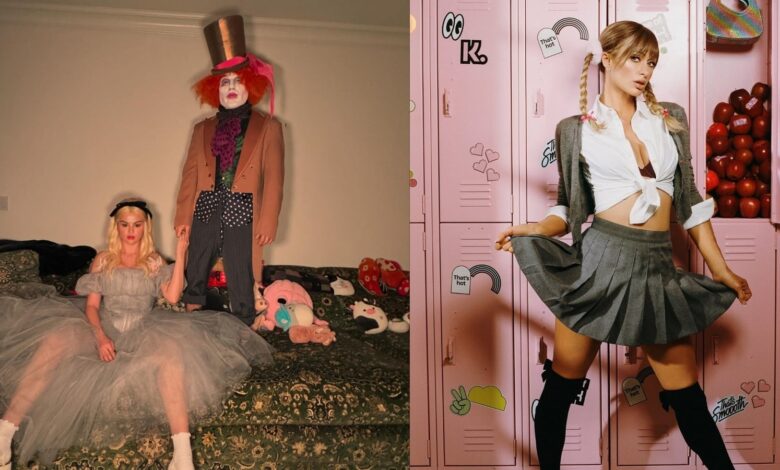

It’s that time of the year! Though spooky season vibes start swirling strong the second the calendar switches to October, the main event of the month only comes knocking on the night of 31st for Halloween. And like clockwork, celebrities pull out their meticulously planned look(s!) to tap into their dark (and might we say, rather creative) side. From demure, to nostalgic to delightfully outrageous, here’s taking a look at some of the best celebrity Halloween looks this year. Selena Gomez as Alice in Wonderland to Paris Hilton as Britney Spears: The most exciting Halloween 2024 celebrity fits(Photos: Instagram) Selena Gomez and Benny BlancoWe love a good couple fit for Halloween and Selena Gomez and beau Benny Blanco have absolutely nailed it this year! Selena traded her raven black hair for some gold locks and a poofy, tulle dress. The black bow hairband sealed Selena’s identity for the night as Alice, post-rabbit hole fall, beyond a reasonable doubt. Her biggest prop? Boyfriend Benny who went all out as the Mad Hatter. We approve. Paris HiltonLet’s be real, it’s everybody’s dream to committedly cosplay as as 90s hall of fame fictional character and among many other dreams, Paris Hilton lived this one out to. The multifaceted mother of two, put on a chic French bob wig and turned into Mia Wallace, also going as far as to recreate the iconic Pulp Fiction poster. Side note: Her second look this year was equally convincing as Paris embodied pop icon Britney Spears in her nascent prime — the …Ba One More Time music video to be exact. We honestly, can’t pick between which of these two was a bigger win. Sophie TurnerSophie Turner is thriving in every which way and she isn’t going to shy away from owning it. After a rather tumultuous few months, the Game of Thrones alum appears to be finally letting her hair lose as she revels in her new romance and very exciting career moves. Sophie took some time off though, to curate her Halloween look. The latex-bound catsuit and retro glasses was a very, chic and sultry take on Trinity from Matrix. Not to say, this is easily one of the most easily replicable looks if you have some last minute Halloween cheer left in you. Maitreyi RamakrishnanIs it really Halloween if somebody doesn’t pull out a Tim Burton classic character from their wardrobe? The Corpse Bride has to be an all-time Halloween favourite and leading the charge this year is Maitreyi Ramakrishnan. We don’t know about Victor but the dying flowers, the frozen-frame hue dunk and the rib-revealing ripped corset definitely had our hearts stopped for a second. No notes. Heidi KlumHalloween is very, very serious business for Heidi Klum and she has more than proven her commitment to some undying Halloween spirit over the years. A Heidi Halloween fit typically involves hours and hours of prep, a heavy hand of prosthetics with a jaw drop or two from the onlookers for good measure. Her larger-than-life, and slightly disconcerting turn as ET this year fits the bill, almost reminiscent of the time she chose to be a life-size worm for the evening. (yes, that’s Heidi) Barbara Palvin and Dylan SprousePhantom of the Opera? Say no more. Barabara Palvin and Dylan Sprouse went the demure route with Barbara looking dainty and beautifully fragile as Chrine in a satiny ballgown and Dylan pulling out the cloak and the broken mask as The Phantom. Their biggest prop of course was their never-ending well of chemry. Jennifer GarnerWe saved the best for the last. Jennifer Garner caught the time travel train back to 2004, dressing up as her own beloved character, Jenna Rink, from 13 going on 30. That film is evergreen, and so is Jennifer’s smile and deer-akin energy. Which was your favourite celebrity look from Halloween this year?