

Spotify’s Prompted Playl lets users manage algorithm using their lening hory | Technology News
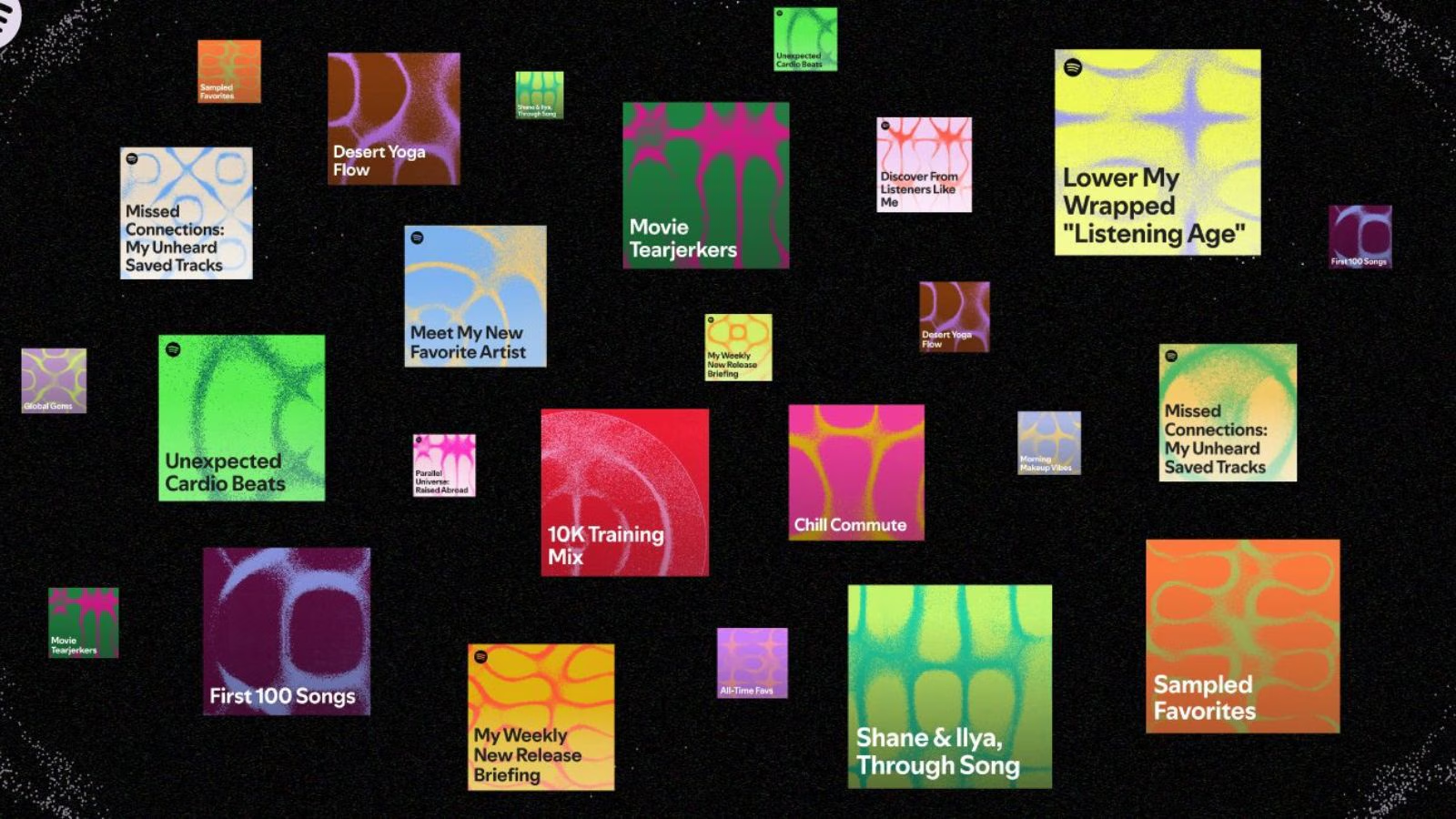

For a long time, Spotify’s recommendations have seemed almost effortless. As users len, skip, or select songs, the app quietly gathers data through its interface. It then uses these signals to curate playls such as Discover Weekly and Release Radar, which appear as ready-made selections that often feel like the app “just knew” what the lener wanted to hear next.
Now, with the introduction of a new feature called Prompted Playl, Spotify is taking it a step further, offering a more interactive and engaged lening experience.
Prompted Playl, currently being rolled out to Spotify users in the US and Canada, aims to make playl creation feel more personal and deliberate. Instead of relying solely on automated suggestions or building a playl from scratch, users can simply describe what they are in the mood for. Spotify then combines that description with the user’s lening hory to create a playl that matches both the request and their preferences.
“We believe that technology is only as good as the humans behind it. That’s why we created Prompted Playl, which lets you describe exactly what you want to len to using your own words, then generates a playl informed your lening hory and what’s happening in music right now. It’s a new way to put meaningful control of the algorithm directly in your hands, with your ideas, your logic, and your creativity. Think of it more as collaboration, not automation: You set the rules, and Spotify works from there,” Spotify on its website.
“You’re not just asking for music, you’re shaping how Spotify goes about discovering it for you. That might mean fresher tracks and emerging arts only, deeper cuts based on what you already love, specific genres to include or exclude, or playls shaped around cultural moments. In other words, you can design discovery around exactly what you’re in the mood for, from your own take on Discover Weekly to something entirely new,” it added.
Features of Prompted Playl
Using the feature is simple. Inside the app, users can select the option to create a new playl and choose Prompted Playl. Spotify then asks for a written prompt, which could be as straightforward as music for studying or working out, or as creative as songs for a rainy afternoon or a specific cultural vibe. Once the prompt is submitted, the playl begins to take shape almost instantly.
What makes Prompted Playl feel different from other tools is the depth of information it uses. There’s a different approach to deciding which songs are featured, as opposed to the one seen when users select based solely on recent leners and trending songs. For their Discover Weekly playl, Spotify draws from a user’s entire lening hory, meaning their musical tastes from several years back could feed into their playls rather than their recent activities.Story continues below this ad
Another useful feature is that it allows the visitor to change their playl daily or weekly, and to add new music as it’s released. This does not make the music repetitive.
Prompted Playl vs AI Playl
Prompted Playl is different from Spotify’s AI Playl feature, even though both accept written prompts.
AI Playl focuses on quickly generating a l based on a single request. Prompted Playl, on the other hand, is built to grow and change. It also shows brief notes during creation that hint at how Spotify is interpreting the prompt, such as identifying moods, cultural influences, or preferred sound types.
The feature can also handle more personal or experimental requests. For example, users can ask Spotify to create a playl based on songs they lened to when they first joined the platform, or to organise tracks in a specific order tied to their lening hory.Story continues below this ad
Once the playl is created, it works like any other Spotify playl. Songs can be unselected, rearranged, or saved, which helps fine-tune updates in the future.
Here’s how Prompted Playl can change how Spotify delicately balances its powerful algorithms and user input. In other words, instead of making all those calculations and guesses on its own, the new version of the app is lening in a little more to what users actually request.