

Tarique Rahman Reveals How New BNP Govt Will Handle Relations With India
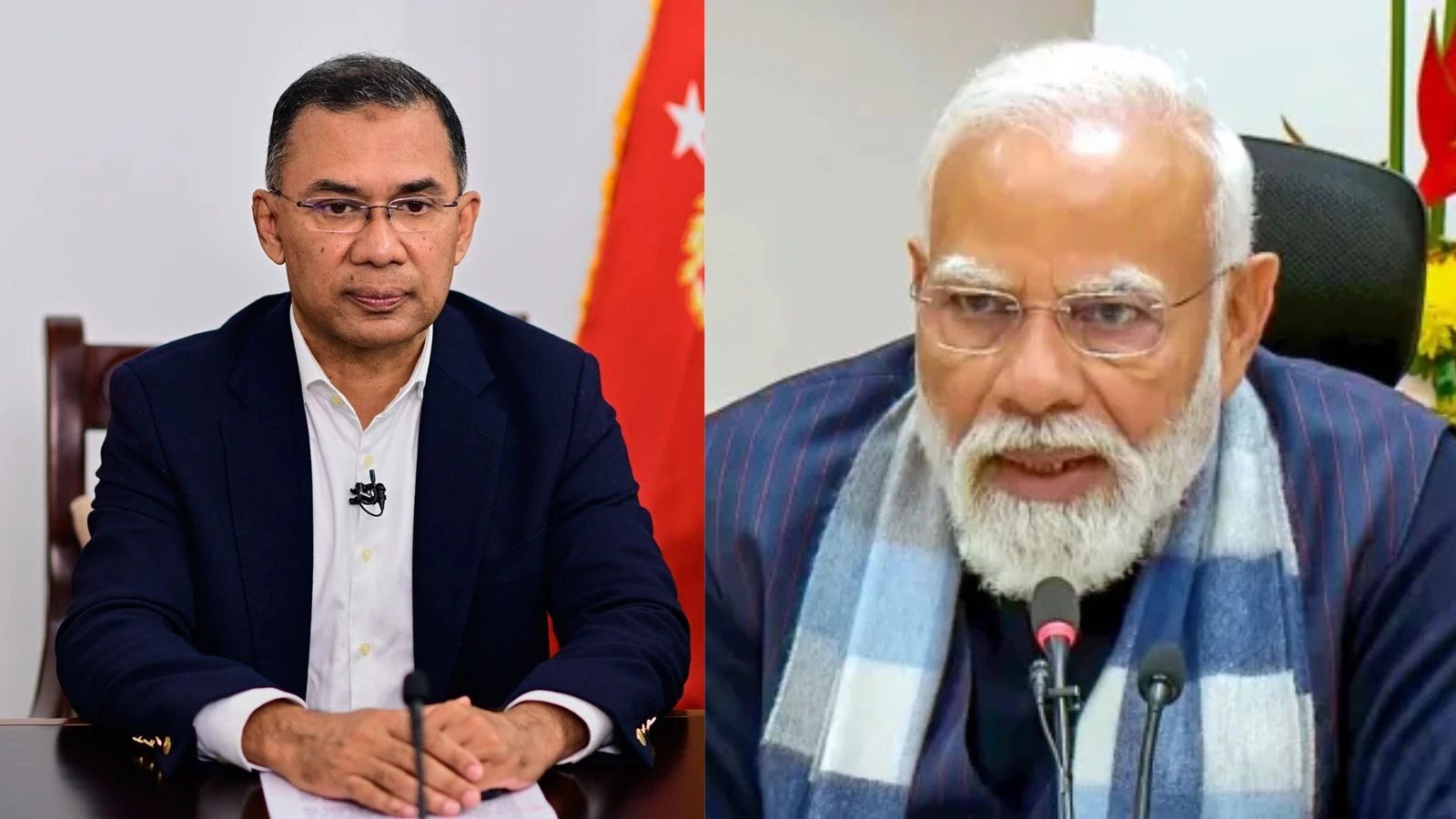

Tarique Rahman Saturday said his government’s foreign policy would be guided national interest, asserting that Bangladesh would “keep the interest of Bangladesh first” in its relations with India and other countries.
Addressing his first press conference after the landslide victory of the Bangladesh National Party (BNP) in the 13th Parliamentary Election, Rahman responded to a question on India–Bangladesh ties stating, “Will keep the interest of Bangladesh first.”
Elaborating on his position, he said, “We have cleared ourselves regarding the foreign policy, which is the interest of Bangladesh and the interest of the Bangladeshi people comes first. protecting the interests of Bangladesh and the people of Bangladesh, we will decide our foreign policy.”
Rahman hails election outcome as ‘democratic mandate’
The foreign policy remarks were part of a wider speech in which Rahman hailed the election outcome as a democratic mandate and outlined key challenges ahead, including restoring the economy, strengthening institutions and improving law and order.
“This victory belongs to Bangladesh. This victory belongs to democracy. This victory belongs to the people who aspire to and have sacrificed for democracy,” he said earlier during the press conference.
With the BNP set to return to power after nearly two decades, attention will now turn to how Rahman’s stated principles translate into concrete policy, particularly in managing relations with India, Bangladesh’s largest neighbour and a key economic and strategic partner.
‘We must remain united’
“Our paths and opinions may differ, but in the interest of the country, we must remain united,” he said. “I firmly believe that national unity is a collective strength, while division is a weakness,” he added, linking unity to the responsibilities facing the country after the polls.Story continues below this ad
The appeal came after elections held on Thursday, the first national vote since the violent 2024 uprising that led to the removal of former prime miner Sheikh Hasina.
Figures released the Election Commission showed the BNP-led alliance securing 212 seats, while the Jamaat-e-Islami-led bloc won 77. The Bangladesh Awami League, led Sheikh Hasina, was barred from contesting.
Opening his speech thanking supporters, Rahman said, “Freedom loving pro-democracy people of the country have once again brought victory to the Bangladesh National Party.”
“This victory belongs to Bangladesh, belongs to democracy, this victory belongs to people who aspired to and have sacrificed for democracy,” he added.Story continues below this ad
Challenges ahead
Even as he celebrated the sweeping mandate, Rahman cautioned that the incoming adminration would inherit serious structural challenges.
“We have paved the way for the establishment of democracy in the country,” he said.
Highlighting the road ahead, he added, “We are about to begin our journey in a situation marked a fragile economy left behind an authoritarian regime, weakening constitutional and structural institutions and destroying law and order.”
Rahman’s return to power marks a significant political resurgence for the 60-year-old leader, who returned to Bangladesh in December after 17 years in exile in Britain and re-entered national politics at a critical juncture.Story continues below this ad
He is the son of former president Ziaur Rahman, who was assassinated in 1981, and former prime miner Khaleda Zia, a three-time officeholder and one of the most influential figures in the country’s political hory.
Expand
The Express Global Desk at The Indian Express delivers authoritative, verified, and context-driven coverage of key international developments shaping global politics, policy, and migration trends. The desk focuses on stories with direct relevance for Indian and global audiences, combining breaking news with in-depth explainers and analysis.
A major focus area of the desk is US immigration and visa policy, including developments related to student visas, work permits, permanent residency pathways, executive actions, and court rulings. The Global Desk also closely tracks Canada’s immigration, visa, and study policies, covering changes to study permits, post-study work options, permanent residence programmes, and regulatory updates affecting migrants and international students.
All reporting from the Global Desk adheres to The Indian Express’ editorial standards, relying on official data, government notifications, court documents, and on-record sources. The desk prioritises clarity, accuracy, and accountability, ensuring readers can navigate complex global systems with confidence.
Core Team
The Express Global Desk is led a team of experienced journals and editors with deep expertise in international affairs and migration policy:
Aniruddha Dhar – Senior Assant Editor with extensive experience in global affairs, international politics, and editorial leadership.
Nischai Vats – Deputy Copy Editor specialising in US politics, US visa and immigration policy, and policy-driven international coverage.
Mashkoora Khan – Sub-editor focusing on global developments, with a strong emphasis on Canada visa, immigration, and study-related policy coverage. … Read More
Stay updated with the latest – Click here to follow us on Instagram© IE Online Media Services Pvt Ltd