

Tehran Demands ‘War Reparations’ and Full Control of Strait of Hormuz to End Conflict

4 min readUpdated: Mar 25, 2026 08:58 PM Iran on Wednesday rejected the United States’ 15-point peace proposal to end the war in West Asia and instead issued its own five-point ceasefire proposal, calling for war reparations and sovereignty over Strait of Hormuz, Tehran’s state media reported.
Iran’s Press TV, quoting a senior political-security official on Wednesday, reported that Tehran is insing the end of conflict will only occur on Tehran’s own terms and timeline. “Iran will end the war when it decides to do so and when its own conditions are met,” the official was quoted as saying.
The report comes after Pakan transmitted American proposal to Iran.
#Iran sets conditions for a ceasefire, rejecting recent U.S. proposals.
Key demands include:Complete end to aggressionGuaranteed war reparationsRegion-wide ceasefire for all frontsSovereignty over the Strait of #HormuzFull details in the attached image.#Ceasefire pic.twitter.com/fvcNI1FJQG
— Consulate General of the I.R. Iran in Mumbai (@IRANinMumbai) March 25, 2026
5 conditions laid out Iran to end the war
Guaranteed payment for war damage and reparations.
End to aggression and assassinations.
Concrete guarantees preventing the reoccurrence of war against Tehran.
End of war on Iran and against all resance groups across the region.
International recognition of Iran’s sovereignty over the Strait of Hormuz.
Tehran weighs peace overtures
Iran had earlier said it received a US peace proposal delivered Pakan, Reuters reported, with an official from Tehran saying separately that “friendly countries” were working towards laying the groundwork for dialogue.
Pakan or Turkey are likely venues for discussions to de-escalate the war in the Gulf that has killed thousands of people and devastated vast swathes of land and buildings, a senior Iranian official told Reuters on Wednesday.
The comments, on condition of anonymity, were among rare signs that Tehran might consider diplomatic proposals, despite insing in public that no talks were under way and it would make no deal with the adminration of President Donald Trump.
Iran’s military scoffed at the diplomatic efforts and launched more attacks on Wednesday on Israel and the Persian Gulf region, including an assault that sparked a huge fire at Kuwait International Airport, AP reported.
The proposal was sent as Washington began to move paratroopers to West Asia to back a contingent of Marines already heading there. Earlier in the week, US President Donald Trump told reporters that the US was “talking to the right people” in Iran to reach a deal, a statement Tehran has denied.Story continues below this ad
US’ 15-point plan
Pakani officials, speaking on condition of anonymity, described the 15-point plan broadly as:
Touching on sanctions relief
Civilian nuclear cooperation
Rollback of Iran’s nuclear program
Monitoring the International Atomic Energy Agency
Missile limits
Access for shipping through the Strait of Hormuz
Wide-scale attacks
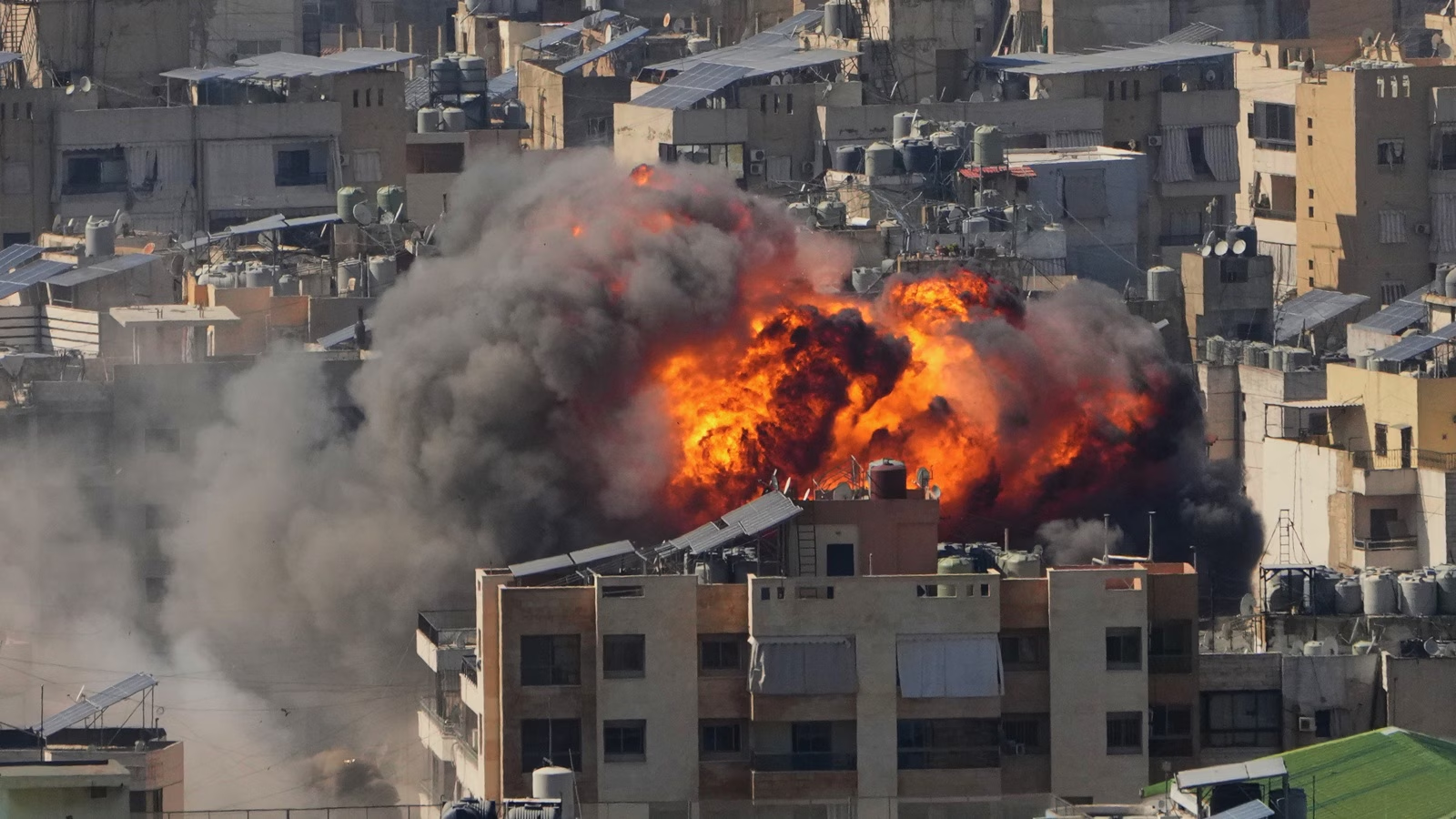
The Israeli military announced it had begun new wide-scale attacks early Wednesday on Iran targeting government infrastructure, and witnesses reported airstrikes in the northwestern city of Qazvin.
Iran also kept up the pressure on its Arab neighbours, with Saudi Arabia’s Defence Minry saying it had destroyed at least eight drones in the kingdom’s oil-rich Eastern Province, and missile alert sirens sounding in Bahrain. Kuwait said it shot down multiple drones but one hit a fuel tank at Kuwait International Airport, sparking a fire, the General Civil Aviation Authority said. Firefighters were working to contain the blaze.
Expand
The Express Global Desk at The Indian Express delivers authoritative, verified, and context-driven coverage of key international developments shaping global politics, policy, and migration trends. The desk focuses on stories with direct relevance for Indian and global audiences, combining breaking news with in-depth explainers and analysis.
A major focus area of the desk is US immigration and visa policy, including developments related to student visas, work permits, permanent residency pathways, executive actions, and court rulings. The Global Desk also closely tracks Canada’s immigration, visa, and study policies, covering changes to study permits, post-study work options, permanent residence programmes, and regulatory updates affecting migrants and international students.
All reporting from the Global Desk adheres to The Indian Express’ editorial standards, relying on official data, government notifications, court documents, and on-record sources. The desk prioritises clarity, accuracy, and accountability, ensuring readers can navigate complex global systems with confidence.
Core Team
The Express Global Desk is led a team of experienced journals and editors with deep expertise in international affairs and migration policy:
Aniruddha Dhar – Senior Assant Editor with extensive experience in global affairs, international politics, and editorial leadership.
Nischai Vats – Deputy Copy Editor specialising in US politics, US visa and immigration policy, and policy-driven international coverage.
Mashkoora Khan – Sub-editor focusing on global developments, with a strong emphasis on Canada visa, immigration, and study-related policy coverage. … Read More
Stay updated with the latest – Click here to follow us on Instagram© IE Online Media Services Pvt Ltd