Trump’s $13 Billion Supercarrier is Heading to War—But Its Toilets Won’t Stop Breaking
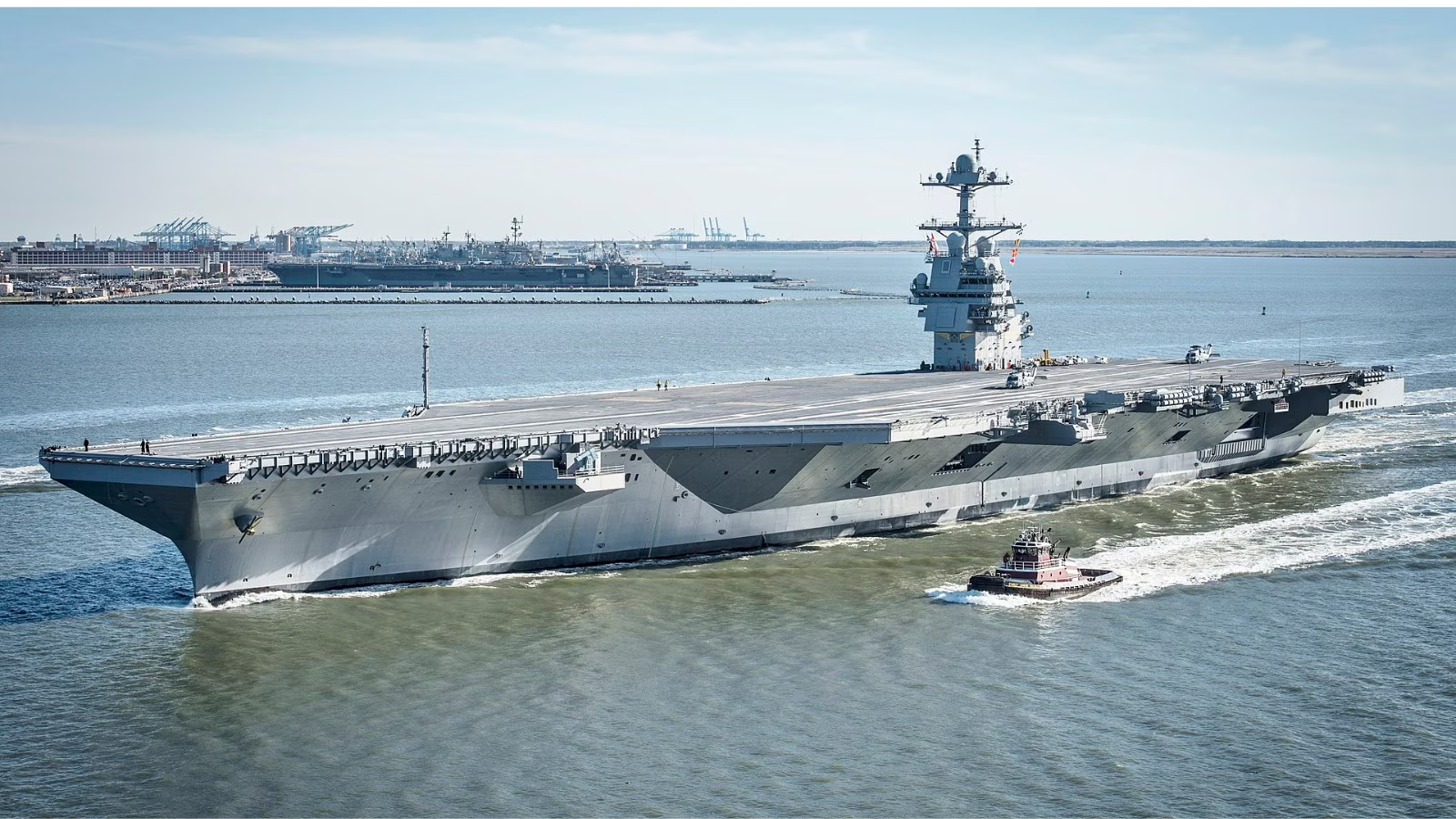

4 min readUpdated: Feb 25, 2026 08:37 PM US President Donald Trump’s decision to extend the deployment of the aircraft carrier USS Gerald R. Ford for a second time, sending it toward the Middle East amid escalating tensions with Iran, is reportedly taking a growing toll on sailors and their families.
The Ford, the Navy’s newest and most expensive aircraft carrier, has been at sea since June last year. Originally scheduled for a Mediterranean mission, it was rerouted in October to the Caribbean to support oil-tanker seizures and US operations targeting Venezuelan leader Nicolás Maduro, The Wall Street Journal reported.
Earlier this year, sailors were informed their deployment would be extended again, this time sending the carrier back across the Atlantic to support potential American airstrikes on Iran. The ship transited the Strait of Gibraltar heading east, according to satellite imagery cited WSJ.
The Ford’s redeployment comes as the Pentagon assembles the largest US naval and air buildup in the Middle East in decades. (AI-generated graphic)
Missed milestones, family strain
The repeated extensions have left families struggling. One sailor missed the death of his great-grandfather. Another is considering leaving the Navy after nearly a year away from her toddler daughter, according to interviews cited the Journal. Sailors and their relatives described emotional exhaustion and uncertainty over when the ship would finally return home.
With nearly 4,600 sailors aboard, extended deployments ripple far beyond the flight deck, affecting spouses, children and parents waiting in Norfolk, Virginia.
$13 billion ship with plumbing problems
Compounding morale issues are persent sanitation failures aboard the $13 billion carrier.
According to NPR, which obtained internal Navy emails, the Ford’s vacuum-based sewage system has suffered recurring breakdowns during the deployment. The system, adapted in part from cruise ship technology, has struggled under the demands of a warship environment.Story continues below this ad
Steve Walsh of WHRO, speaking on NPR, reported that sailors were working up to 19 hours a day at one point to track leaks and clogs. An internal March email referenced 205 maintenance calls in less than four days. When one toilet malfunctions in the vacuum system, entire sections can lose suction, making repairs complex and time-consuming.
Crews have reportedly discovered everything from T-shirts to a four-foot rope clogging pipes, though the most common issue involves a component at the back of the toilet coming loose. Since 2023, the Navy has used an acid flush procedure, costing roughly $400,000 each time, at least 10 times to clear the system, according to documents cited NPR. The procedure cannot be performed while deployed.
The Navy said in a statement that issues have decreased as the deployment continues, though a permanent fix is expected to be costly and years away.
Part of largest Middle East buildup in decades
The Ford’s redeployment comes as the Pentagon assembles what The Associated Press describes as the largest U.S. naval and air buildup in the Middle East in decades.Story continues below this ad
According to AP reporters Konstantin Toropin and Ben Finley, the U.S. now has two aircraft carrier strike groups in the region, including the USS Abraham Lincoln, alongside destroyers and additional warships. More than 100 fighter jets — including F-35s, F-22s, F-15s and F-16s — as well as fuel tankers and cargo aircraft have been tracked heading toward the Middle East and European bases.
Trump has warned that if nuclear negotiations with Iran fail, “bad things happen,” signalling potential military action.
Experts caution that any strike on Iran could trigger significant retaliation. Ali Vaez of the International Crisis Group told AP that it would be “very hard” to conduct a limited, one-off attack without escalating into broader conflict. Michael O’Hanlon of the Brookings Institution said the forces currently positioned are designed both for strikes inside Iran and for defending against expected retaliation.
(With inputs from WSJ, NPR and AP)