Whose T20 blueprint will succeed? Tall madcap pack of Aussies or India with one daredevil Abhishek Sharma and a classical Shubman Gill? | Cricket News
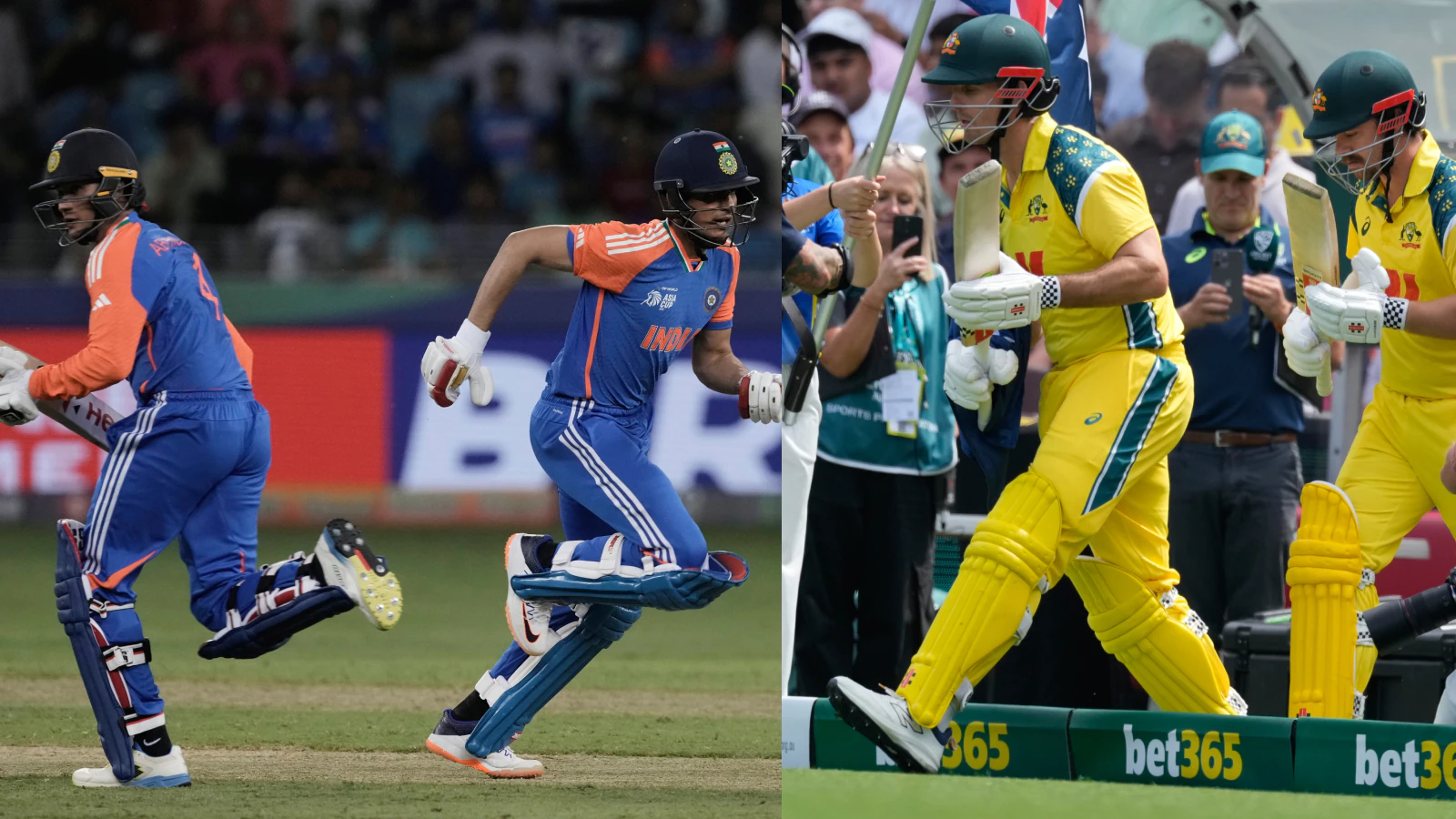

“I believe the future of T20 cricket is going to be having tall batters with long levers and a strong build. They are going to rule the roost if there are no changes brought to the wide line.”India spin legend R Ashwin was raving about the Australian giant Tim David’s Caribbean massacre in August 2025 when he partly veered into the ever-expanding world of T20 dynamics.
On Wednesday evening in chilly Canberra, the Australians will be armed to flaunt a prototype of Ashwin’s prophecy to a wider audience when they take on India, the defending world champions.
Story continues below this ad
In the probable Aussie batting order that will line up at the Manuka Oval, five of the top seven batters stand towering over six feet. A little under 6’0”, Travis Head and Josh Inglis’ pyrotechnics have also been well documented.
The five-match series Down Under will be a cursory indicator of what to expect when the next World Cup rolls around in three months in the Indian subcontinent. It may also turn out to be an antithesis for all high-scoring activities in the build-up.
In the 15 months since the Super 8s exit at the hands of India in the 2024 T20 World Cup, Australia’s rewired batting system has pulverised the charts with a brazen disregard for bowlers, conditions, and phases of the game. India and England have also joined Australia up top in this period as they have in the T20I world rankings.
But here are the interesting facets that have propelled Australia and England into the lead, with India now playing catch-up after a subtle change of guard in the return of Shubman Gill to the top of the batting order, along with the explosive Abhishek Sharma.Story continues below this ad
Since July 2024, Australia’s top seven batters possess a collective 164.31 strike rate in 19 T20Is – the highest in the world and about 10 runs higher than India’s 154.80 in 27 games.
Australia’s top-7 have also hit sixes quicker than England (12.26 balls per six) and India (11.82 bp6), smoking 170 sixes with a maximum every 9.9 deliveries.
Opening factor: How AUS intent trumps India
Firing a warning to India on the eve of the contest that no score will be safe in the series, Australia opener Head vividly embodies the vital spirit of this T20I rekindling – the Powerplays. Interestingly, the 36-ball phase with bounteous field restrictions and two new balls has produced a heavier chunk of team runs than one might expect.
Since July 2024, Australia’s batters have racked up nearly 40 percent (1,119) of all top-7 runs (2790) within the first six overs that cover only 30 percent of a T20 innings. Much of the gung-ho Powerplay relies on the simple but brutal association of Head and captain Mitchell Marsh at the top and their lucid approach to the frenetic environment.
Highest T20I Powerplay SR since July 2024
Team
Inns
Runs
Avg
SR
HS
4s
6s
Balls/6
England
20
1,218
34.8
170.59
100
143
58
12.3
Australia
19
1,119
31.08
169.29
113
134
63
10.43
India
27
1,510
31.46
156.8
95
180
75
12.8
In this period, Head (188 SR) and Marsh (169 SR) have combined for 523 Powerplay runs with devastating effect. With both batters collecting over 80 percent of their runs in boundaries, the Head-Marsh template is nearly hitting the acme of Powerplay batting excellence. Employing a seven-batter-four-bowler template in recent times, these blazing starts from the openers are sufficient for Australia to sustain depth for 20 overs most often, with a cartel of “long-lever” hulks to follow.
“When you’ve got the power that we’ve got behind us, we’ve got to get a move on,” Head told cricket.com.au. “You don’t want to be chewing balls up at the start when you’ve got (Tim) David, (Marcus) Stoinis, (Josh) Inglis, (Cameron) Green and (Glenn) Maxwell behind you. It’s huge power,” he added.Story continues below this ad
Even better is the right-handed opening salvo of Jos Buttler and Phil Salt of England, scoring with strike rates north of 175 in the Powerplay.
Both Australia and England’s line-ups have grown out of the importance of the first-wicket partnership and rather rely on a band of like-minded individuals pressed on maximising the initial phase. India, though, not as much.
England’s top-order leads in this regard with a 170.59 Powerplay strike rate, nudged closely Australia’s 169.29. Curiously, India’s combined top-order stands much lower at 156.80 in the 27 matches in the current World Cup cycle.
What may be of concern for India is the diluting effects of the opening and top-order exploits, their overreliance on opener Abhishek Sharma to power the side to world-leading standards. Since his T20I debut, Superman Sharma’s fusillades single-handedly match up to Salt-Buttler and Head-Marsh in Powerplay returns, leading all batters with an otherworldly 193 strike rate for 536 runs.Story continues below this ad
India Powerplay batting since July 2024
Player
Inns
Runs
Avg
SR
4s/6s
BP6
Bdry%
Abhishek Sharma
22
536
41.2
193
59/34
8.2
82.00%
Shubman Gill
14
229
32.7
141
34/4
40.8
69.80%
Sanju Samson
17
205
20.5
135
24/10
15.2
76.00%
Suryakumar Yadav
15
172
17.2
145
19/10
11.9
79.00%
Yashasvi Jaiswal
6
166
55.3
179
21/8
11.6
79.50%
Tilak Varma
10
123
123
141
13/7
12.4
76.40%
Credit: Cricket-21
Taking out the Punjab southpaw early would almost certainly dwindle India to middling standards, with the remaining batters only producing 974 Powerplay runs at a passable 141.13. Gill and Sanju Samson, Abhishek’s opening partners in the period, have not been entirely kinetic in the phase. Even during his majestic run as opener last season, Samson only collected 205 runs at a 135 strike rate in the Powerplay before exploding in the middle-overs and beyond.
The Gill equation
Samson’s stark variance between high and low scores may have urged the management to call for more a steady hand at the top in Gill, a step backwards from India’s high-intent mantra under Suryakumar Yadav.
Powerplay batting lengths since July 2024
Strike Rate v Select Lengths
Full (4-6m)
Length (6-8m)
Back of Length (8m-halfway)
Short
Australia
176
148
199
197
England
170
165
149
196
India
157
150
121
221
Credit: Cricket-21
Story continues below this ad
While Australia and England have managed to take ‘lengths’ out of the equation, holding 150-plus strike rates for every 2-metre demarcation on the 22 yards, Indian batters struggle to attack back-of-length deliveries. Between the usual 8-9 metre mark on the strips, India’s batters have reeled in PP runs at a paltry 121 strike rate, the hard lengths inflicting 14 dismissals too. It will be a challenge for the batters in the mould of Abhishek and Samson, whose exaggerated back-lifts become susceptible to the nagging in-between lengths.
INDIA’S BACK-OF-LENGTH WEAKNESS
121 SR
Powerplay SR vs hard lengths (8-9m) | 14 dismissals | Critical vulnerability exposed
Australia SR
199
vs back-of-length deliveries
England SR
149
vs back-of-length deliveries
Gill PP SR
141
Steadier hand | 229 runs | 14 innings
Samson Variance
135 SR
Stark high-low inconsency
The Anchor Philosophy: Freddie Wilde’s Analysis
“It lowers a batting side’s ceiling but also reduces the chance of collapse”
RCB’s head analyst on defensive nature of T20 anchors in modern cricket. India values Gill quotient for high-stakes environments, similar to how Virat Kohli thrives for RCB. Weight of tighter contests between top bowling teams could neutralise staggeringly high-scoring Powerplays.
Indian Express InfoGenIE
Despite his run-scoring rates falling on the lower side, this is likely where a sturdier Gill steps in for India – the weight of tighter contests between top bowling teams could neutralise the chances of staggeringly high-scoring Powerplays. India, therefore, values merit in the Gill quotient, much like how Virat Kohli thrives in the IPL for the Royal Challengers Bengaluru.
RCB’s head analyst Freddie Wilde would vouch for the defensive nature of opting for a T20 anchor in modern times. “It lowers a batting side’s ceiling but also reduces the chance of collapse,” he would say, expecting them to play a pivotal role in high-stakes environments.
Australia and India will therefore begin the series on dinct footings of T20 batting, with one relying on a battalion of madcap bats while the other revolves on the strict union of a daredevil and a classic up top.