

Why birds always fly in a V formation | Pets-animals News
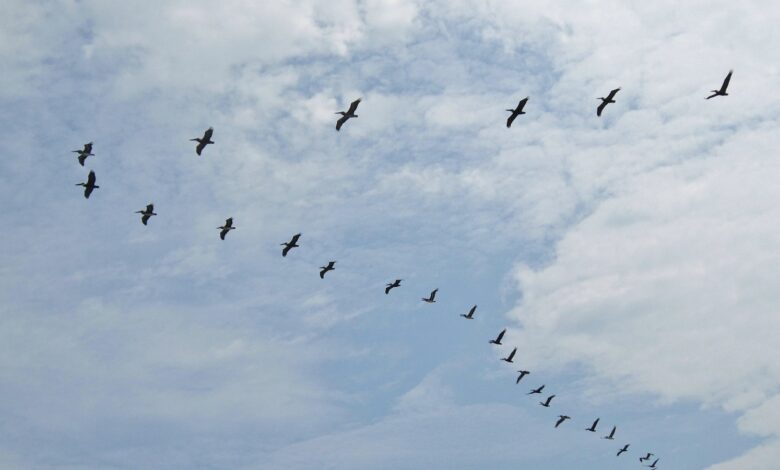

Have you ever looked up and seen a flock of birds slicing through the sky in a perfect V shape? It’s one of those fascinating sights in nature that feels both beautiful and purposeful. But this elegant flight pattern isn’t just for show; it’s a clever survival strategy backed science and teamwork.
Birds such as geese, pelicans, ibises, and other migratory species often travel long dances together in this V formation. Researchers have long studied this behaviour, and what they’ve found is truly remarkable.
According to studies scients at institutions like the University of Oxford and NASA, the V formation helps birds save energy during flight. The lead bird takes on the brunt of air resance, while those behind fly in the upwash of swirling air currents created the leader’s wings. This upward-moving air provides additional lift, making it easier for the birds behind to stay aloft with less effort.
Story continues below this ad
In fact, research published in Nature found that birds like the Northern bald ibis actively coordinate their wing flaps to optimise these aerodynamic advantages. Each bird flaps in sync with the one in front to ride the upward air current as effectively as possible.
Birds such as geese, pelicans, ibises, and other migratory species often travel long dances together in this V formation (file)
Who is the leader?
Being in the front of the V is hard work. So, like great teammates, birds rotate this role. When the front bird gets tired, it falls back, and another bird takes the lead. This cooperative strategy allows the entire group to fly farther and longer than any one bird could alone.
According to the US National Audubon Society, this shared workload can improve flight efficiency up to 70% for the trailing birds. It’s a perfect example of how nature values collaboration.
Besides saving energy, flying in a V formation also helps birds keep visual contact with one another. This is especially important during migration, when flocks may travel thousands of kilometres across countries or even continents.Story continues below this ad
The V shape makes it easier for each bird to see its neighbour, follow the group’s path, and avoid collisions. It’s not just about flying smart, it’s about flying safely, too.