

Why is this superbug called ‘Darth Vader’?
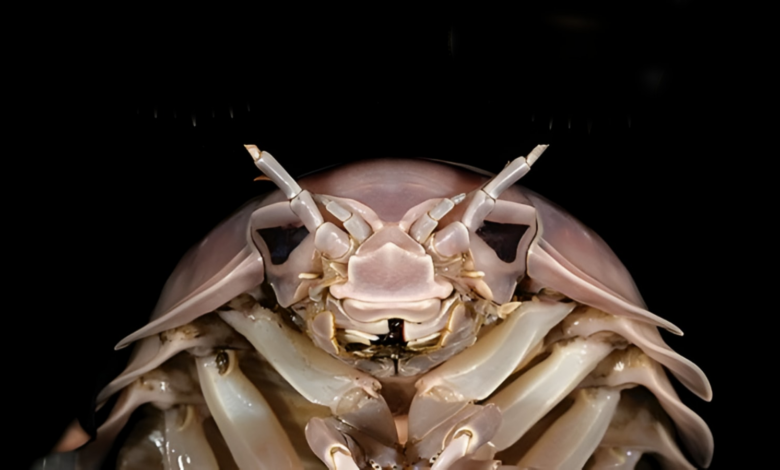

The deep sea, with its strange and unusual animals, never stops amusing scients. One of the latest discoveries is a giant sea bug called Bathynomus vaderi, found in the cold waters near the Spratly Islands in the South China Sea. The marine creature has been particularly popular among the fans of the Star Wars franchise, because of its iconic colloquial name! The angular-headed bug is being called the Darth Vader superbug, thanks to its striking similarity to the iconic villain’s helmet. Its large, triangular, and widely spaced compound eyes, as well as the facial features, further add to the resemblance.
The superbug belongs to a genus of giant isopods called Bathynomus, which live in deep, chilly waters. This new species is impressively large, weighing over 2.2 pounds (1 kilogram) and growing up to 12.8 inches (32.5 centimetres) long. Besides its Darth Vader-like appearance, the species has a unique narrowing and slight backward curve at the last segment of its back legs, which dinguishes it from typical isopods.
It was first identified in 2022, when a group of scients examined samples collected local fishers in Vietnam from the South China Sea. The fishermen fetched these bottom feeders from extremely dark depths of the sea. The researchers noted several features that set it apart from other giant isopods, including a dinct hip bone depression and a specialised bony ridge on its coracoid. These differences confirmed it as a completely new species.
Studying supergiant isopods like B. vaderi is challenging because they live in deep-sea environments that are hard to reach. Most discoveries happen when fishers bring specimens up or through special deep-sea expeditions. Every new find, however, helps scients understand deep-sea life and the unique adaptations of these remarkable creatures.
Unfortunately, Bathynomus species have recently become a popular delicacy in Vietnam, beating the original seafood staple, lobster, which is usually very pricy. While this growing demand is turning these sea bugs into a valuable seafood product, it also increases fishing pressures, which could threaten the species. This calls for a conscious effort to keep the species protected. May the force be with them!
