Why Your Next Trip Should Come With a Certificate

What was once considered an escape has now become a form of self-investment. Travel in India today is not just about sightseeing and relaxation; people are organising trips to acquire or enhance a skill—whether it’s cooking local cuisine, pottery, photography, yoga training, scuba diving, language immersion, farming, or even wildlife conservation. Skillcation—the latest trend on the block—is highlighting a significant shift in the traditional perception of travel.Nehaa K has signed up for The Forge writing retreat in Dehradun in March. For the Head Corp Comms at a PR firm, it’s all about upskilling herself. As someone who lives the quote ‘You are always learning, and there is always someone who knows better than you,’ she said, “No one ever knew that AI was going to be so important. People who are still not familiar with it are spending more time on tasks. So the idea came from there. If I want to improve writing, which is one of my core skills, I will have to meet a different set of people”
“Even on LinkedIn, it’s a hit and miss and not all your posts are going to perform well, so the best thing I learnt is to keep on changing the way you write to keep up with the algorithm,” she added.
Asif Upadhye, Director of Never Grow Up, an HR consultancy firm, opines that for a generation that grew up watching uncertainty unfold in real time, the idea of adulting and taking life as a series of experiences is “what is real”.
For them, these mini breaks and passion pursuits are a way to recharge, not disengage, helping them relieve stress, improve focus, and build transferable work skills such as problem-solving, creativity, adaptability, and resilience.
Sunny Bhanushali, Lead Art and Founder of Aliens Tattoo & School, said the skillcation trend is particularly significant in the tattoo industry, where learning is inherently experiential. According to him, arts cannot truly evolve watching tutorials alone; they need immersion, mentorship, and exposure to diverse artic cultures.
Over the past few years, a growing number of tattoo arts, especially from India, have begun organising travel around very specific learning goals, said Bhanushali, whether in realism, fine-line and micro tattooing, colour work, or Japanese traditional techniques. They seek out studios and mentors globally, spending weeks or months apprenticing, observing workflows, and absorbing the cultural context behind each art form.Story continues below this ad
Intentional travel is on the rise
Ravi Gosain, President of the Indian Association of Tour Operators, added that travel after the COVID-19 pandemic has become slower and more deliberate. “Tours are picking long visits, fewer places, and stronger ties with the local culture, and skill-based travel is perfectly fitting into this change. Moreover, flexible work and hybrid lifestyles made it hard to tell the difference between work, learning, and fun,” he said.
Riya Vaidya had been planning a trip to Bali to obtain a scuba diving certification. The law student from Symbiosis Law School, Pune, was inspired after watching an influencer take a short trip to the Indonesian island where she completed her scuba diving certification in just five days. “Scuba diving has always been one water sport I have wanted to experience, but realising that I could earn an internationally recognised certification while travelling made the idea even more appealing. It made me rethink how vacations can be more than just relaxation; they can also be meaningful and productive,” she shared.
For Gen Z like Vaidya, travelling to a new destination to learn a skill, unwind from daily stress, and return with a sense of accomplishment offers the perfect balance.
Mini breaks and passion pursuits are a way to recharge, not disengage (PR Handout)
Skills in spotlight
What is equally interesting is that this movement is not one-directional. Nishith Upadhyaya, Executive Director, Knowledge and Advisory Services, SHRM India, has long advocated the philosophy that “growth lies in continuous learning,” and the emergence of the skillcation trend in India is a compelling real-world manifestation of this principle.Story continues below this ad
Whether it is mastering pottery in a Himachali village, attending a writing retreat in the backwaters of Kerala, or learning the intricacies of sustainable farming in Sikkim, India’s youth are choosing to return from their travels not just with photographs, but with tangible new skills and a refreshed sense of self.
“When an employee spends a week learning traditional cooking in Rajasthan or practising mindfulness in the Himalayas, they aren’t just picking up a hob, they are building a resilient mindset and a global perspective—traits that are invaluable in today’s rapidly evolving workplace,” he explained.
Skillcation is one of the key models in photographer Paul McDermott’s business, pairing photography and self-expression with luxury travel. He chose photography because it has been a medium that allows him to connect with cultures, people, and experiences.
In an interview with , he said that helping others see and experience the world with fresh eyes has been as much a gift to him as it has been to them. “When I had a woman burst into tears of self-gratitude, declaring she valued her perspective for the first time in her life, I knew it was meaningful to make skillcations the model and structure for trips,” he said.Story continues below this ad
What’s pushing this trend?
According to Bhanushali, several macro forces are propelling this movement. There is a growing aspiration economy where individuals expect time and money to translate into long-term skill capital. Social media has heightened visibility of global benchmarks, making arts acutely aware of both excellence and skill gaps. Younger professionals also favour experiential learning over traditional classroom formats.
“For tattoo arts, skillcations provide not only capability-building but also credibility. Training under respected mentors across geographies adds depth, context, and authenticity to their work,” he added.
Himanshu Adlakha, founder of Winston India, a personal care brand, said that being away helps people practice skills such as grooming and hairstyling without pressure, receive hands-on guidance, and build habits. “People want to look good independently, creator and professional visibility matter and salon visits aren’t always convenient,” he said, adding that short hairstyling workshops, weekend grooming retreats and 2-3 day styling bootcamps are on the rise lately because they teach real, usable skills that come in handy.
Is this a sustainable trend?
From a sustainability standpoint, Bhanushali said that skillcations are not a passing trend. As creative industries mature, continuous upskilling becomes essential. Only the structures evolve, with shorter, outcome-driven learning programmes, stronger mentorship, and clearer skill objectives becoming the focus.Story continues below this ad
Gosain noted that skillcations typically involve smaller groups, longer stays, and stronger integration with locals. They are less of a drain on the environment and society than high-volume tourism. “For the trend not to lose its value, it is going to be very important to preserve the authenticity, pay local trainers fairly, and use volume limits,” he advised.
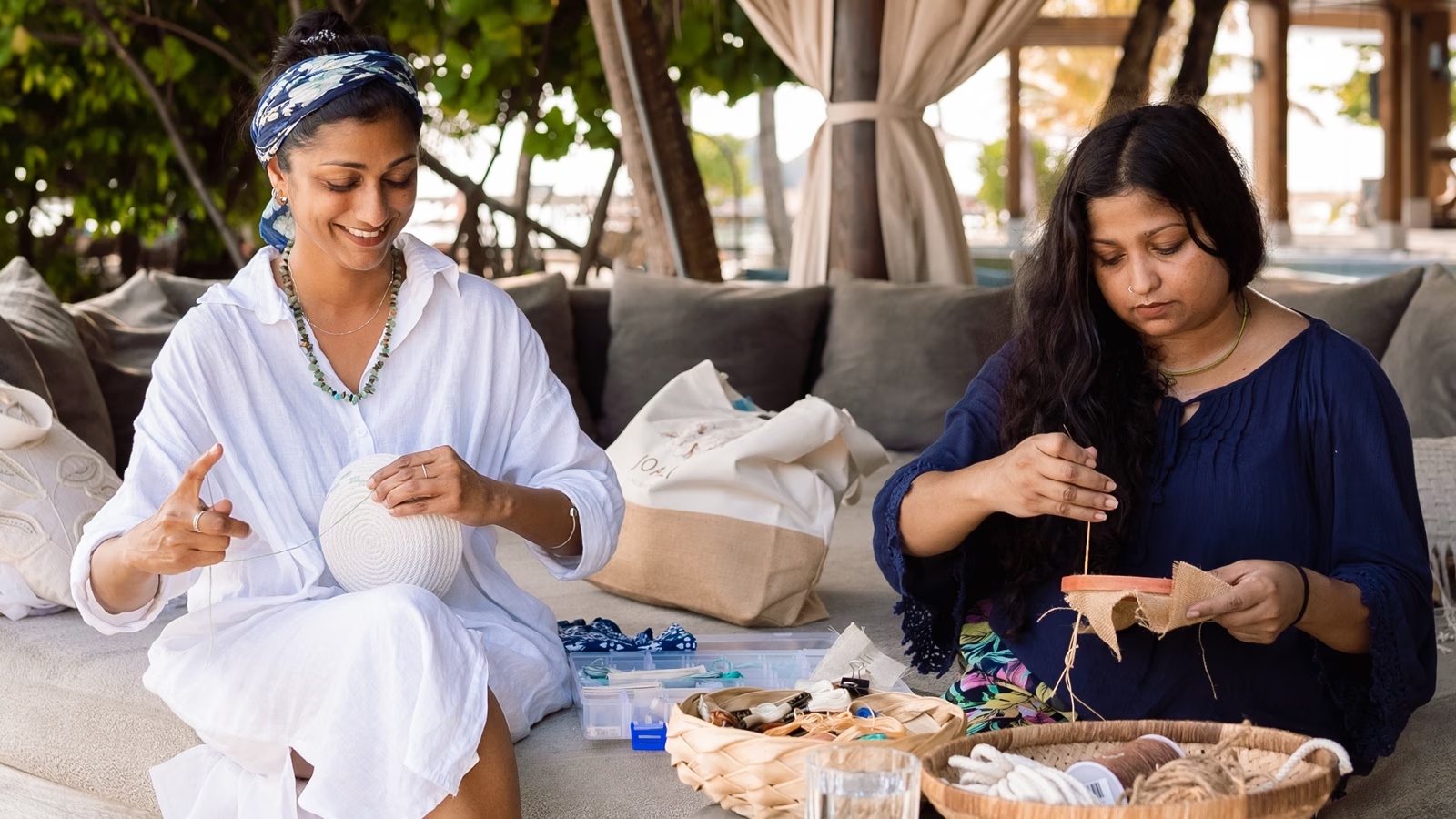
Shifaz Hassan, General Manager at JOALI Maldives, illustrated that at the country’s first art-immersive ultra-luxury resort, creativity is not an add-on but a way of living. “The resort’s Art Studio hosts daily, hands-on workshops led resident and visiting arts, where guests explore painting, mixed media, natural dyes, and sustainable craft practices inspired the island’s landscape. The Kids of JOALI programme introduces young travellers to Maldivian culture through language lessons, traditional dance, palm-leaf weaving, coral conservation, and Junior Chef culinary sessions,” he told .
These initiatives place strong emphasis on women-led creative upskilling, inviting local Maldivian women artisans to lead art and craft sessions that celebrate storytelling, self-expression, and heritage techniques passed down through generations.
While social media and remote work have made this lifestyle more viable, Nishith Upadhyaya believes it is unlikely to remain dominant in the long term, as many workplaces now require employees to work in hybrid or office-based arrangements. What will remain, however, is the shift in mindset toward valuing meaningful experiences alongside professional growth.Story continues below this ad
He encourages HR leaders to recognise and even celebrate this trend. According to him, a “future-ready workforce” is one that remains curious and engaged with the world. “ embracing the skillcation movement, we acknowledge that the boundaries between personal passion and professional excellence are becoming more fluid. These experiences serve as a powerful antidote to burnout, providing the restorative effect necessary for long-term productivity and innovation,” he concluded.
How can you jump on the bandwagon?
For anyone planning a skillcation, Bhanushali advises researching mentors thoroughly and defining clear learning goals. Respect the craft and culture you’re entering, and approach the experience with discipline. “What you should not do is treat it like a vacation with learning as a side activity,” he said. “When done right, a skillcation can transform both your career trajectory and how you experience travel.”
Echoing his thoughts, Adlakha added that one should not try to learn everything at once. “Don’t attend sessions that are only demonstrations, or treat it like a shopping or pampering trip. Lastly, don’t depend solely on experts. Self-practice is key,” he said.
For the modern Indian professional, travel has become a “classroom without walls”, and the skills they bring back will undoubtedly help shape a more creative, diverse, and capable corporate landscape.