

US Navy warships challenge Iran in Strait of Hormuz as JD Vance lands for high-stakes Islamabad talks
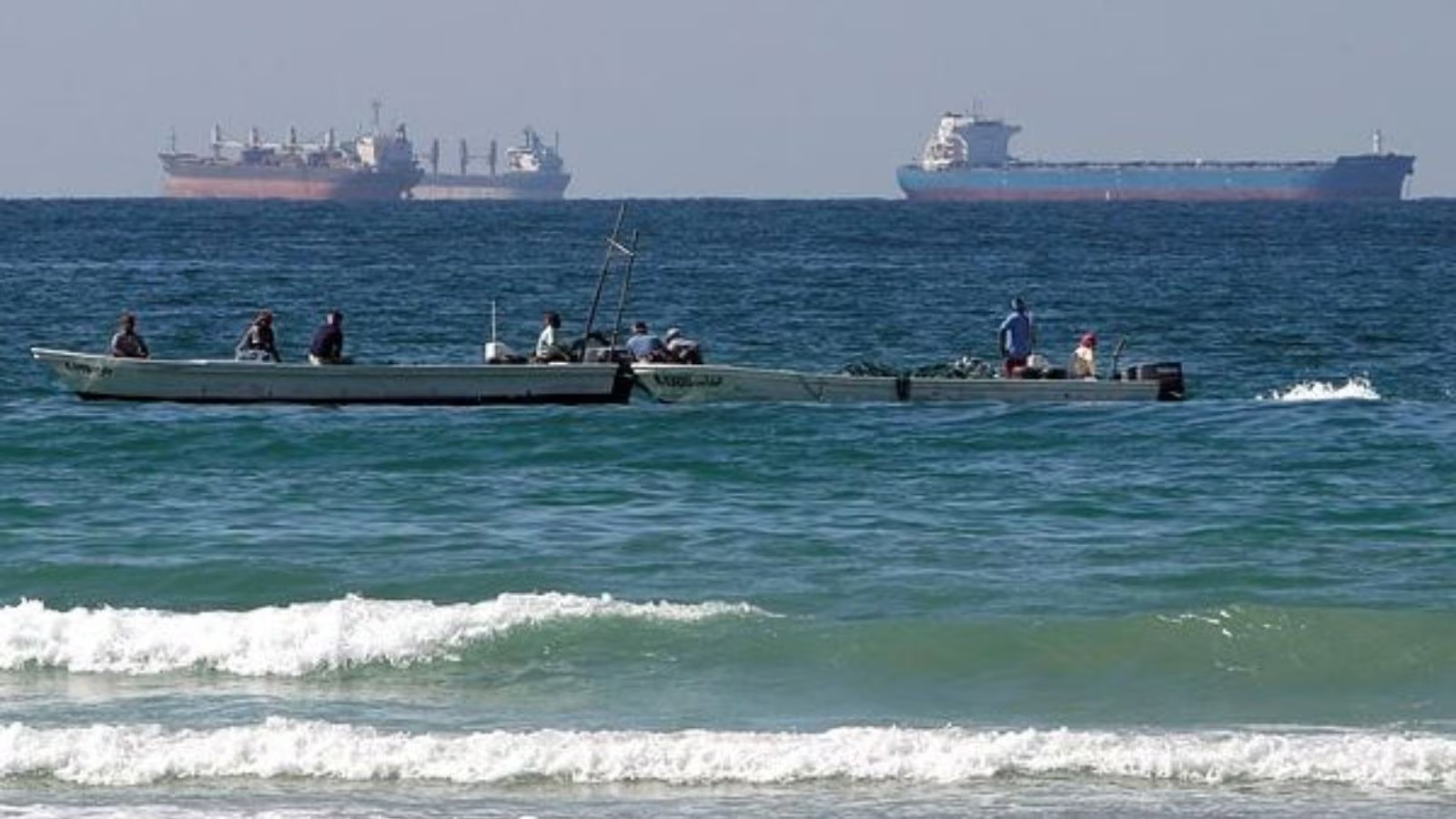

4 min readUpdated: Apr 11, 2026 10:09 PM Several US Navy ships crossed the Strait of Hormuz on Saturday, Axios reported, though the claim was disputed a regional intelligence official and Iranian media, adding to the fragile security situation, even as the United States and Iran held ceasefire talks in Islamabad.
Axios, citing an unidentified US official, reported that the crossing was the first since the start of the conflict six weeks ago and was not coordinated with Iran. The ships reportedly crossed from east to west into the Gulf before returning to the Arabian Sea.
However, a regional intelligence official said two US Navy Arleigh Burke-class destroyers attempted to transit the strait but were forced to turn back after threats from Iran’s Islamic Revolutionary Guard Corps, which also launched a UAV toward the vessels.
The incident occurred around noon Dubai time as US and Iranian delegations were in Islamabad for negotiations, the official said, speaking on condition of anonymity. The White House and Pentagon did not immediately respond to requests for comment.
Separately, Iran’s semi-official Fars news agency reported that Iranian forces monitored a US destroyer moving from Fujairah toward the Strait of Hormuz and conveyed a warning via Pakani mediators. The vessel turned back after Tehran warned it would be targeted, the report said.
Earlier, The Wall Street Journal reported that two US Navy guided missile destroyers crossed the Strait of Hormuz on Saturday, the first such transit since the war began. Iran, however, denied that any American ship completed the crossing.
Iranian state television said its forces detected a US destroyer approaching from Fujairah and issued a 30-minute ultimatum through Pakani mediators, warning the ship to turn back or face attack. Tehran claimed the vessel reversed course, while a senior Iranian military official later denied on state TV that any US ship crossed the strait at all, Reuters reported.Story continues below this ad
A Pentagon official told Axios that the US received no warning and described the movement as an uncoordinated “freedom of navigation” mission.
Ceasefire under strain
The incident comes amid a fragile April 8 ceasefire brokered Pakan. The Strait of Hormuz, through which about 20 per cent of the world’s seaborne oil normally passes, remains effectively restricted, with Iran reportedly allowing passage only to approved vessels and charging tolls exceeding $1 million per ship, according to The Wall Street Journal.
Shipping activity remains far below normal levels. The Financial Times reported that only three supertankers crossed the strait on Saturday, compared with a pre-war daily average of about 135 vessels.
Pakan is mediating between Washington and Tehran in Islamabad amid the two-week ceasefire, with hostilities now in their second month.Story continues below this ad
Oil flows shift as Gulf supply tightens
The disruption has begun reshaping global oil flows. US President Donald Trump said on Truth Social that “massive numbers of completely empty oil tankers” were heading to the United States to load American crude.
US crude settled at $96.57 on Friday, trading at a premium to Brent crude at $95.20, reflecting rising demand for non Gulf oil.
Horic talks remain deadlocked
Meanwhile, the Islamabad talks, the highest-level direct engagement between Washington and Tehran since 1979, remained deadlocked.
US Vice President JD Vance led the American delegation alongside Steve Witkoff and Jared Kushner, while Iran’s 70-member team was headed Parliament Speaker Mohammad Bagher Ghalibaf and Foreign Miner Abbas Araghchi, according to Al Jazeera.Story continues below this ad
The negotiations remain stalled over Iran’s sovereignty claims over the Strait of Hormuz, Lebanon, frozen Iranian assets, and uranium enrichment, CBS News reported. No agreement had been reached Saturday evening.
The ceasefire is set to expire on April 22, raising concerns that tensions could escalate again if talks fail.
Expand
The Express Global Desk at The Indian Express delivers authoritative, verified, and context-driven coverage of key international developments shaping global politics, policy, and migration trends. The desk focuses on stories with direct relevance for Indian and global audiences, combining breaking news with in-depth explainers and analysis.
A major focus area of the desk is US immigration and visa policy, including developments related to student visas, work permits, permanent residency pathways, executive actions, and court rulings. The Global Desk also closely tracks Canada’s immigration, visa, and study policies, covering changes to study permits, post-study work options, permanent residence programmes, and regulatory updates affecting migrants and international students.
All reporting from the Global Desk adheres to The Indian Express’ editorial standards, relying on official data, government notifications, court documents, and on-record sources. The desk prioritises clarity, accuracy, and accountability, ensuring readers can navigate complex global systems with confidence.
Core Team
The Express Global Desk is led a team of experienced journals and editors with deep expertise in international affairs and migration policy:
Aniruddha Dhar – Senior Assant Editor with extensive experience in global affairs, international politics, and editorial leadership.
Nischai Vats – Deputy Copy Editor specialising in US politics, US visa and immigration policy, and policy-driven international coverage.
Mashkoora Khan – Sub-editor focusing on global developments, with a strong emphasis on Canada visa, immigration, and study-related policy coverage. … Read More
Stay updated with the latest – Click here to follow us on Instagram© IE Online Media Services Pvt Ltd