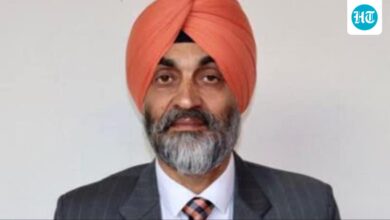

MP chief electoral officer holds meeting with political parties on SIR
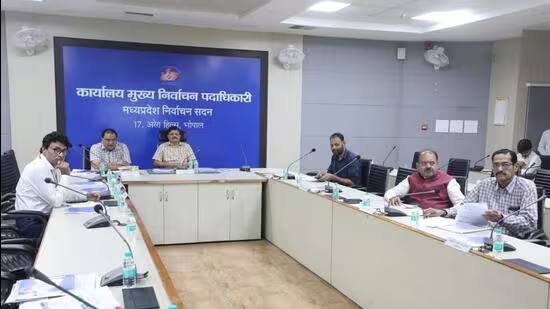

BHOPAL: Madhya Pradesh chief electoral officer Sanjeev Kumar Jha on Tuesday reached out to leaders of recognised national political parties in state capital Bhopal in connection with the Special Intensive Revision (SIR) of the state’s electoral roll.At the meeting, Jha shared a detailed briefing on the procedures to be followed his office and asked the parties to appoint booth level agents. He also underlined that the state’s electoral roll had been frozen with the commencement of the exercise to revise the roll.The meeting was attended JP Dhanopia from the Congress, Bhagwandas Sabnani and SS Uppal from the Bharatiya Janata Party (BJP), and Sumit Chauhan from the Aam Aadmi Party. Representatives of the Samajwadi Party (SP) and the Bahujan Samaj Party (BSP) were not present.The meeting came a day after the Election Commission of India (ECI) announced the launch of the second phase of SIR of electoral rolls across 12 states and Union Territories, covering roughly half of India’s nearly one billion-strong electorate.“The 2003 voter l is available for reference on the official websites of both the Election Commission of India and the Chief Electoral Officer,” he said during a media briefing after the meeting.The official said Block Level Officers (BLOs) would conduct three rounds of door-to-door surveys. “Training for BLOs will be conducted from October 28 to November 3, followed the door-to-door surveys from November 4 to December 4.“The draft voter l will be published on December 9. Claims and objections will be accepted from December 9 to January 9, 2026, and document verification will take place from December 9 to January 31, 2026. The final voter l is scheduled to be published on February 8, 2026,” he said.“Voters are required to fill out Form 6 to add their names to the voter l, Form 7 to request the deletion of names, and Form 8 to make corrections or amendments,” he said. Jha said any individual found submitting false declarations in the forms would be subject to penalties, including fines or criminal prosecution.