BNP secures landslide victory, Tarique Rahman tipped to be PM
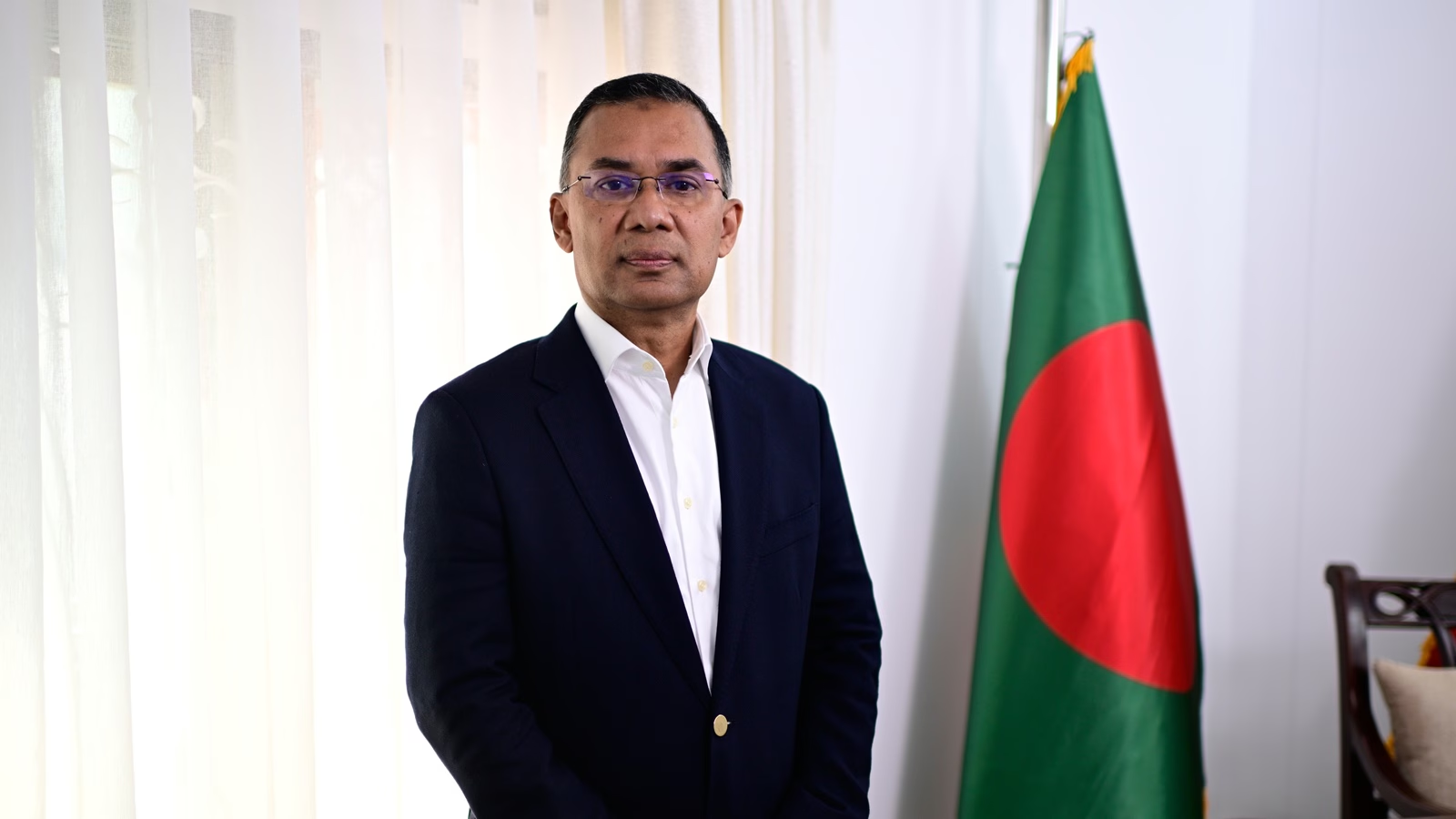

4 min readDhakaUpdated: Feb 13, 2026 10:52 PM Signalling the start of a new chapter in the country’s hory, the centre-right Bangladesh National Party (BNP), led Tarique Rahman, returned to power Friday after nearly two decades, securing a landslide victory in the first national elections since the August 2024 ouster of Prime Miner Sheikh Hasina.
The Election Commission announced that the BNP had won 209 seats in the 300-seat Bangladesh parliament.
With a commanding two-thirds majority, the BNP will be able to form the government and 60-year-old Rahman, who is tipped to be the Prime Miner, will not need the support of smaller parties to push his agenda in the Jatiyo Shangsad, the country’s parliament.
There was no immediate statement from the BNP but it released photographs of Rahman in a celebratory mood. The last time the BNP was in power, from 2001 to 2006, Rahman’s mother Khaleda Zia was Prime Miner. She died in December 2025, days after Rahman returned to the country from the UK where he was in self-exile for 17 years.
The Jamaat-e-Islami won 68 seats, making it the second largest party and the main Opposition party in parliament. It was the BNP’s main rival this election – the Awami League of Sheikh Hasina was banned from contesting the polls after student-led street protests overthrew her government in August 2024, forcing her to flee to India.
Also Friday, the Election Commission said the ‘Yes’ vote in a referendum on constitutional reform totalled 4.8 crore votes as against 2.25 crore ‘No’ vote.
The reform is a package: It limits the term for an individual to remain Prime Miner up to 10 years, reinstate a caretaker government, introduce a bicameral parliament, grant more independence to the judiciary.Story continues below this ad
Of the 300 seats, polling for one seat was cancelled and was under challenge on two seats, according to the Election Commission.
The counting of votes, undertaken after polling ended late Thursday afternoon, continued through the night and it became clear that people had opted for the mainstream BNP, not the new parties.
The emergence of the Jamaat-e-Islami as the second largest party is a stunning turnaround. For a very long time, it was a political pariah, especially during the rule of Sheikh Hasina. Following her overthrow, its popularity and support swelled and in university elections last year, it won in Dhaka University and other government-run universities across the country.
Despite a high-octane campaign, it could not match the BNP because there were concerns over its policies regarding the status of women and religious conservatism.Story continues below this ad
As the results came in, the Jamaat-e-Islami alleged “abnormal delays” and “tampering” and threatened a stir if the mandate was “snatched away”.
The party’s assant secretary general Ahsanul Mahboob Zubair alleged that returning officers were intentionally delaying results to favour a “particular party” – a charge the Election Commission rejected.
But these results have not surprised many in Bangladesh. The election ban on Awami League ensured it vacated the political landscape for the BNP and the Jamaat-e-Islami. The Awami League has rejected the election, calling it a farce.
Although the Jamaat-e-Islami tied up with the National Citizen Party (NCP), a party floated student protesters, the arrangement did not yield much result. The NCP managed to win only six seats, according to results announced so far.Story continues below this ad
Many attributed the NCP’s poor showing to the dismal performance of student leaders who had joined the interim government as advisors and worked in other government roles. There were also allegations of corruption, casting a shadow in the run-up to the elections.
Expand
Shubhajit Roy, Diplomatic Editor at The Indian Express, has been a journal for more than 25 years now. Roy joined The Indian Express in October 2003 and has been reporting on foreign affairs for more than 17 years now. Based in Delhi, he has also led the National government and political bureau at The Indian Express in Delhi — a team of reporters who cover the national government and politics for the newspaper. He has got the Ramnath Goenka Journalism award for Excellence in Journalism ‘2016. He got this award for his coverage of the Holey Bakery attack in Dhaka and its aftermath. He also got the IIMCAA Award for the Journal of the Year, 2022, (Jury’s special mention) for his coverage of the fall of Kabul in August 2021 — he was one of the few Indian journals in Kabul and the only mainstream newspaper to have covered the Taliban’s capture of power in mid-August, 2021. … Read More
Stay updated with the latest – Click here to follow us on Instagram© The Indian Express Pvt Ltd