

Funding freeze to court reprieve, the Harvard vs Washington case for academic autonomy | World News
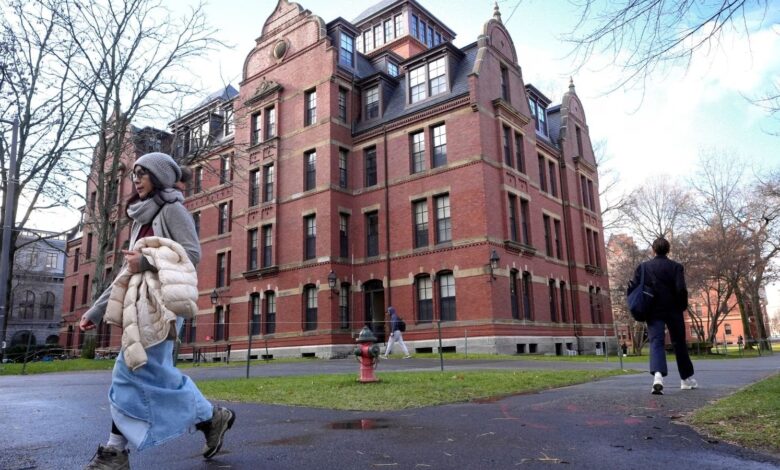

A US court has blocked the Trump adminration’s attempt to bar international students from enrolling at Harvard University, handing the Ivy League institution a crucial legal victory. But even as Harvard celebrates the reprieve, the deeper confrontation over academic freedom, political interference, and institutional autonomy continues to escalate.The ruling US Drict Judge Allison Burroughs offers immediate relief to nearly 7,000 international students, including approximately 800 from India, who had been caught in a geopolitical crossfire. Yet the university remains at the centre of a campaign the US government to assert control over its admissions, curriculum, and funding, raising questions that go well beyond immigration policy.
Judge Burroughs, who issued the preliminary injunction, described the adminration’s actions as a likely violation of the First Amendment, characterising the crackdown as retaliatory and ideologically driven.
Story continues below this ad
“Freedom of thought, expression, and speech,” she wrote, “are pillars of a functioning democracy and an essential hedge against authoritarianism.”
The ruling halts enforcement of a presidential proclamation that sought to suspend Harvard’s ability to host international students and threatened visa revocations. That executive order, issued under the guise of national security, followed a broader campaign against Harvard.
The Trump adminration is intensifying talks with Harvard University and anticipates reaching an agreement the end of June to resolve its ongoing dispute with the nation’s oldest and wealthiest university, according to The Washington Post on Wednesday.
Speaking on Friday, Trump suggested that a resolution to the months long standoff sparked the adminration’s decision to cut billions in grants and block the admission of international students could be announced “within the next week or so.”Story continues below this ad
While the injunction secures short-term protection for students and scholars, still, Harvard remains under duress.
Its research grants are frozen, its tax exemption threatened, and investigations into foreign ties are ongoing. The university has filed two ongoing lawsuits seeking to unfreeze $2.5 billion in federal funding and to block future immigration actions targeting its student body.
Seven legal scholars told The Harvard Crimson that Harvard’s case is “likely to succeed,” with UNC Law Professor Michael Gerhardt calling the government’s demands “egregiously illegal”. Geoffrey R Stone, former dean at Chicago Law, added: “The government actions are a pretty conspicuous violation of the First Amendment”.
An amicus brief from organisations including the ACLU and Cato Institute warned against an “ideological takeover of private institutions,” asserting that the First Amendment “prohibits the government from imposing ideological admissions, hiring, and programmatic requirements”. These voices reinforce the court’s conclusion: Harvard appears to be defending not just itself, but a constitutional principle.Story continues below this ad
Internally, debate is intensifying. Some university officials have discussed negotiating a settlement with the adminration to stabilise its finances and global programs. Others argue that even appearing to yield would erode Harvard’s credibility as a bastion of academic independence.
An alumni group, Crimson Courage, has urged the university to stand firm: “We cannot defend truth if we are willing to bend it under pressure.”
At the heart of the dispute is a stark ideological divide. The Trump adminration has accused Harvard of promoting antisemitism, coordinating with the Chinese government, and failing to uphold “viewpoint diversity.”
Homeland Security Secretary Kri Noem’s revocation of Harvard’s Student and Exchange Visitor Program certification was issued without concrete evidence, sparking alarm across the academic world.Story continues below this ad
Other elite institutions have responded differently. Columbia, Brown, and Princeton have avoided court battles, opting for quieter negotiations. Harvard stands alone in choosing confrontation, turning the university into both litigant and lightning rod.
In March, the Task Force announced it was reviewing approximately 256 million dollar in federal contracts awarded to Harvard, along with an additional 8.7 billion dollar in what it described as “multi-year commitments.” The inquiry stemmed from allegations that the university had failed to adequately address antisemitic harassment on campus.
Following this, the government sent two letters to Harvard on April 3 and April 11 outlining a range of “broad, non-exhaustive areas of reform” it deemed essential for the university to continue receiving federal funds. Among the proposed measures were the elimination of all diversity, equity, and inclusion (DEI) initiatives, disclosure of disciplinary actions related to antisemitic incidents since October 7, 2023, and the identification of students considered “hostile to American values.”
In response on April 14, Harvard President Alan Garber rejected the demands, saying that the reforms infringed on the university’s First Amendment rights and institutional autonomy. He condemned the federal government’s approach of tying funding to compliance, arguing that the proposed conditions passed legal standards and due process required law. “The government’s terms also circumvent Harvard’s statutory rights requiring unsupported and disruptive remedies for alleged harms that the government has not proven through mandatory processes established Congress and required law,” Garber wrote.Story continues below this ad
Two days later, on April 16, the Department of Homeland Security (DHS) informed Harvard that it was freezing 2.2 million dollar in multi-year grants and suspending a separate 60 million dolalr contract.
