Is it Visible in India and How to Watch?

3 min readNew DelhiUpdated: Feb 24, 2026 06:05 PM The first total lunar eclipse of the year will take place on March 3, 2026, offering a striking celestial display. In India, the phenomenon is known as Chandra Grahan, and can be viewed with the naked eye. All that’s needed is a clear view of the sky and a quiet moment to watch it unfold.
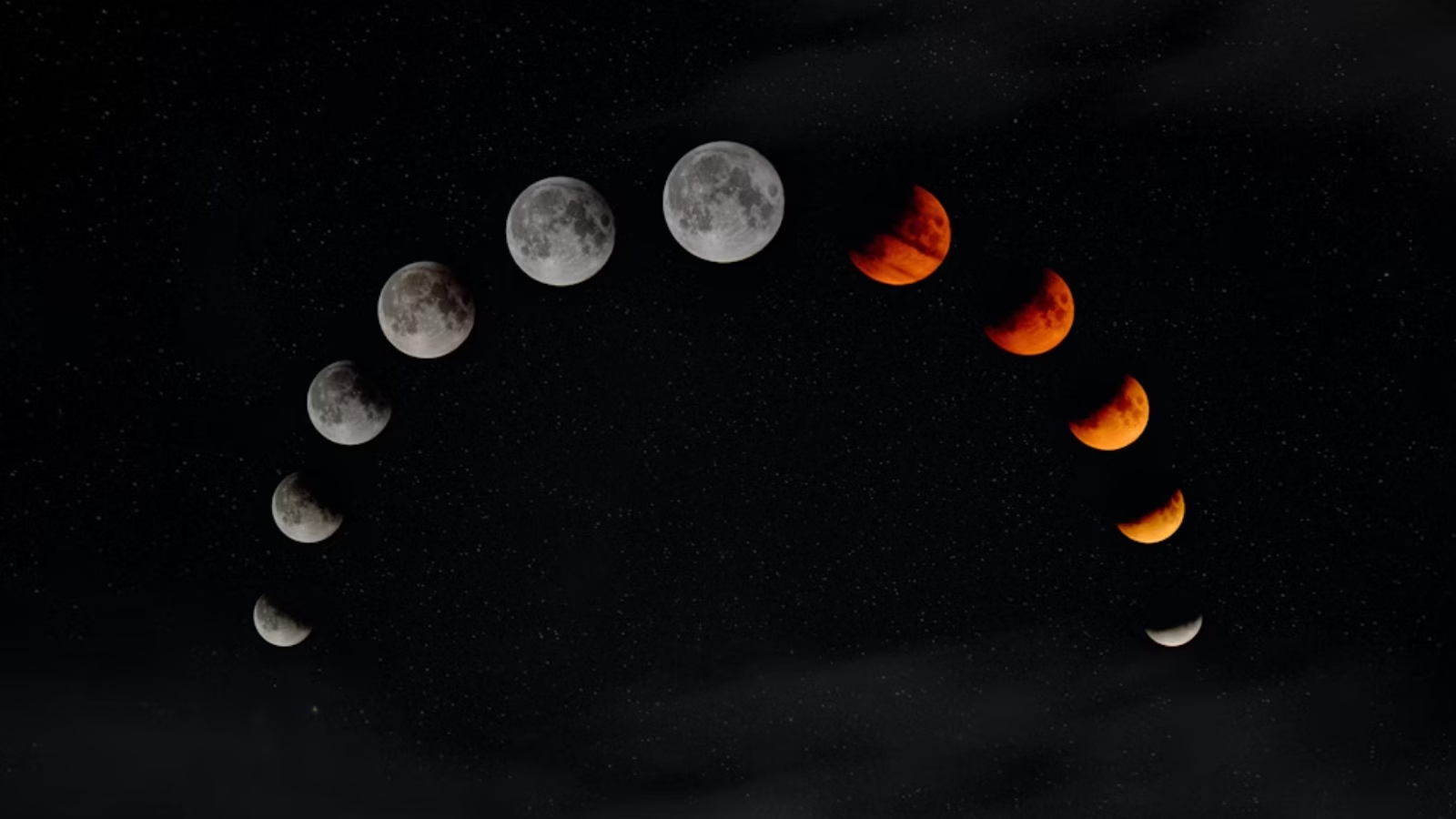
A lunar eclipse occurs when the Earth moves between the Sun and the Moon, causing the Earth’s shadow to fall on the Moon’s surface.
During this time, the Moon may appear dimmer or take on a reddish hue. This reddish appearance is often called a “Blood Moon.”
Lunar eclipses happen a few times each year around the world. However, not all of them are visible from India, which makes this particular event special.
Lunar eclipse time in India
According to the data available on Time and Date, the timings of the eclipse in Indian Standard Time () are as follows:
Start of penumbral phase: 4.58 pm
Start of totality: 4.58 pm
End of totality: 5.32 pm
End of penumbral phase: 7.53 pm
However, one important point to note is that in most parts of India, the Moon will be rising during the eclipse.
This means viewers will only be able to see the event’s final phase. The most noticeable changes will occur around sunset, and the visible portion of the eclipse will last for approximately 20 minutes.Story continues below this ad
There is no need to stay awake late. Just step outside at dusk and look to the east as the Moon rises.
City-wise visibility in India
While most of India will witness only a partial eclipse at moonrise, several cities in the Northeast are expected to experience full totality.
In these areas, the Moon will be completely covered the Earth’s shadow at some point during the eclipse.
Cities expected to experience 100% obscuration
Dibrugarh, Assam
Dispur, Assam
Guwahati, Assam
Itanagar, Arunachal Pradesh
Shillong, Meghalaya
In these regions, totality is expected to start in the afternoon and continue into the evening, with the maximum phase occurring between approximately 5.10 pm and 5.25 pm , depending on the city.Story continues below this ad
How to watch the lunar eclipse
A lunar eclipse is easy to witness, and you don’t need any special equipment. Unlike a solar eclipse, you do not need any special glasses to watch a lunar eclipse. If you have binoculars, you can have a better view, but it is not necessary.
Also Read: How did supermassive black holes become such monsters? New study shows it may have been ‘feeding frenzy’
Find a spot from where you can see the eastern horizon clearly. If the sky is clear, you will notice a change in the Moon’s colour and brightness.
The total lunar eclipse of March 3, 2026, may be a brief experience for many people in India, but it is a reminder that sometimes the most beautiful things in life require no more than a glance upwards.
Expand © IE Online Media Services Pvt Ltd