MIT-educated brothers Googled ‘money laundering’ before $25 million crypto he
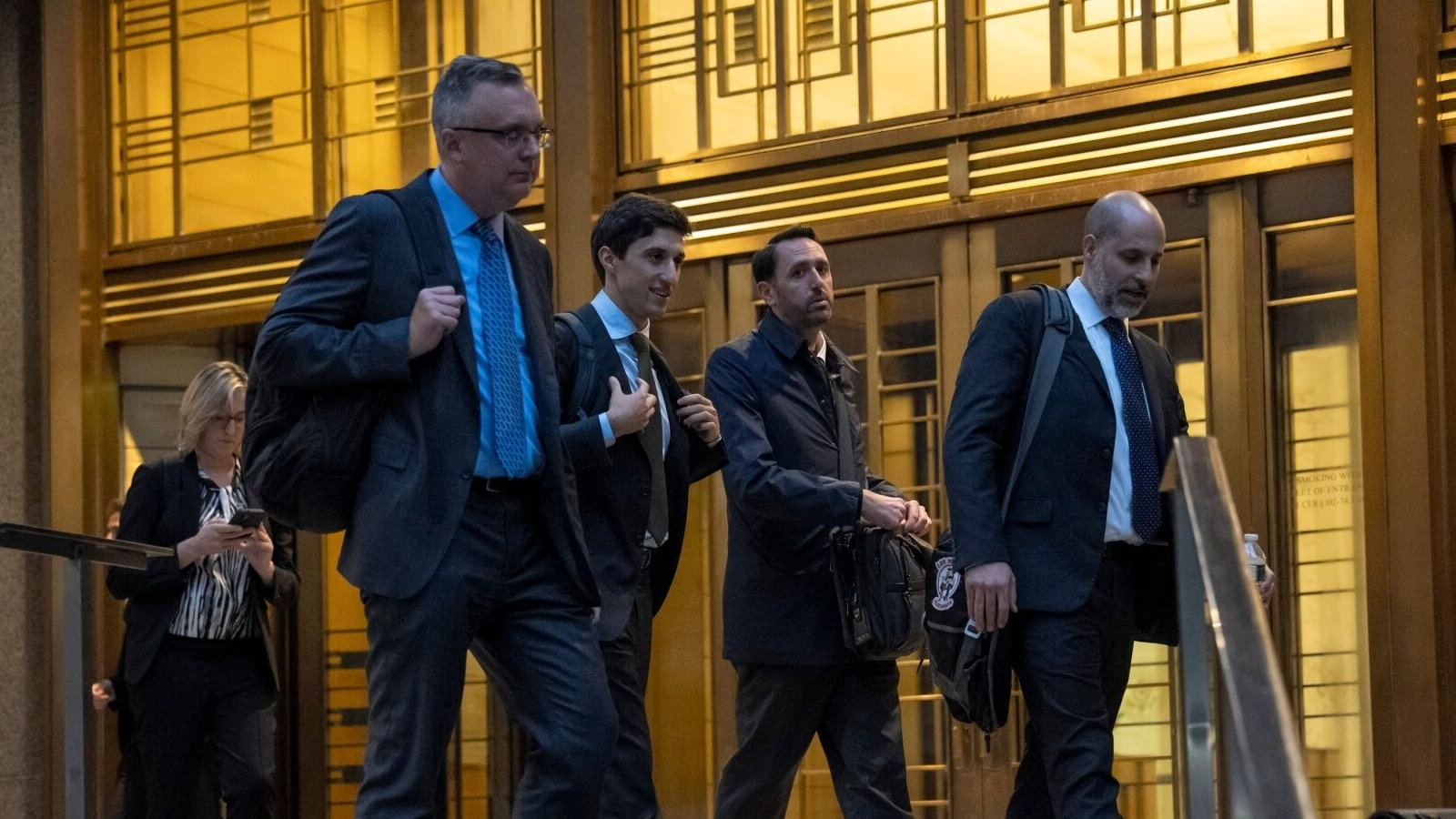

A federal jury is set to hear opening statements in the case of two MIT-educated brothers accused of swiping $25 million in a 12-second cryptocurrency he. James Peraire-Bueno arrives at federal court in New York, US, on Tuesday, Oct. 14, 2025. Two brothers, both recent Massachusetts Institute of Technology graduates accused of stealing $25 million of cryptocurrency from Ethereum traders, are going on trial.(Bloomberg) Anton Peraire-Bueno, 25, and James Peraire-Bueno, 29, will face a jury composed of college-educated individuals in Manhattan on Tuesday, Business Insider reported. A $25 million crypto heThe opening statements on Tuesday are expected to describe how the Peraire-Bueno brothers carried out a complicated, multi-step transaction on the Ethereum blockchain to fraudulently obtain approximately $25 million worth of cryptocurrency from victim cryptocurrency traders. The he took months to plan and just 12 seconds to complete, the US Department of Justice said in a 2024 press release. Prosecutors say that before the he, the brothers Googled “how to wash crypto,” “top crypto lawyers,” “fraudulent Ethereum addresses database,” and “money laundering statue [sic] of limitations.” “These brothers allegedly committed a first-of-its-kind manipulation of the Ethereum blockchain fraudulently gaining access to pending transactions, altering the movement of the electronic currency, and ultimately stealing $25 million in cryptocurrency from their victims,” said Special Agent in Charge Thomas Fattorusso of the IRS Criminal Investigation (IRS-CI) New York Field Office. The MIT-educated crypto thievesAnton Peraire-Bueno and James Pepaire-Bueno are brothers who studied mathematics and computer science at the Massachusetts Institute of Technology (MIT) – one of the world’s most prestigious universities. “Using the specialized skills developed during their education, as well as their expertise in cryptocurrency trading,” the brothers “exploited the very integrity of the Ethereum blockchain,” prosecutors said in a 19-page indictment last year, as reported Business Insider. They stand accused of wire fraud and money laundering, but have “strongly contested” the accusations. Their attorney claims that they did not defraud crypto traders but merely outsmarted automated trading bots.