NASA and Google develop an AI medical assant to be used astronauts on deep‑space missions | Technology News
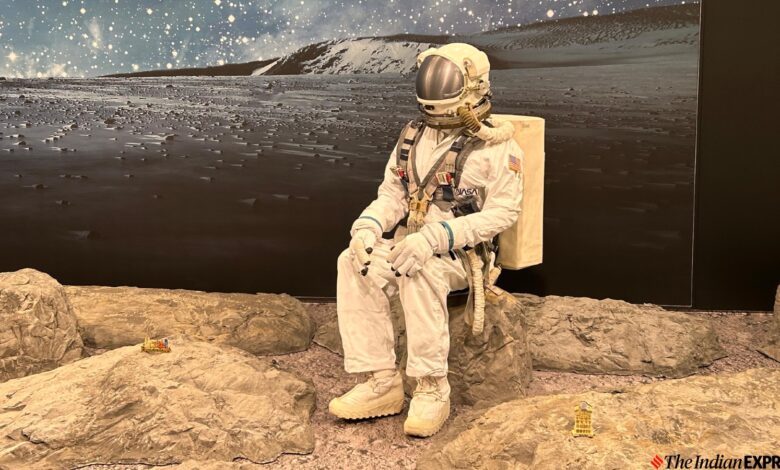

Google and NASA are working on a medical assant powered artificial intelligence that could be used for extended trips to the space, starting with its Artemis campaign to return to the moon.
The tool, called the Crew Medical Officer Digital Assant (CMO-DA), is currently a proof-of-concept AI designed to help astronauts diagnose and treat symptoms when no doctor is available onboard or when communication with Earth is limited.
The Crew Medical Officer Digital Assant (CMO‑DA) is powered Google AI trained on spaceflight literature. It’s designed to support a crew medical officer or flight surgeon in keeping the flight crew healthy. The AI medical assant provides real‑time analysis of crew health and performance, enabling medical decisions driven data and predictive analytics.
Story continues below this ad
Google said the AI assant is being tested with simulated scenarios and evaluated using a clinical framework designed to assess the performance of medical students. The model performed well in early tests with a diagnostic accuracy of 88 per cent for the ankle injury case, 80 per cent for ear pain, and 74 per cent for flank pain, according to a TechCrunch report.
“Early results showed promise for reliable diagnoses based on reported symptoms,” the blog reads. “Google and NASA are now collaborating with medical doctors to test and refine the model, aiming to enhance autonomous crew health and performance during future space exploration missions.”
The project is being implemented under a fixed contract with Google Public Sector, which includes cloud computing, infrastructure for application development, and model training. NASA owns the source code of the application and the agency will participate in the finalisation of the models. Vertex AI provides access to both Google models and third-party solutions.
NASA plans to gradually expand the system’s capabilities. Future versions will incorporate real‑time data from onboard medical devices and learn to detect spaceflight‑specific health conditions such as the effects of microgravity on the human body.
Google Cloud and @NASA have collaborated on a new AI-powered proof of concept tool to help astronauts autonomously diagnose and treat symptoms during deep space missions, a significant step that could also benefit remote medical care on Earth. https://t.co/QpiA8UB9al
— Thomas Kurian (@ThomasOrTK) August 7, 2025
https://platform.twitter.com/widgets.jsStory continues below this ad
Both NASA and NASA are now working with doctors to refine the model, with the goal of improve autonomous medical care for future missions to the moon, Mars and beyond. The technology could also help deliver quality medical care to people in remote parts on Earth.
This isn’t the first NASA project to incorporate artificial intelligence. Earlier this year, the space agency’s Jet Propulsion Laboratory successfully tested a new AI system called Dynamic Targeting, which allows Earth‑observing satellites to autonomously decide where and where not to point their cameras in under 90 seconds, without human intervention. Developed over more than a decade, this technology mimics how a human might interpret imagery.
© IE Online Media Services Pvt Ltd
Expand