Madhya Pradesh: 11 cops booked for allegedly looting seized hawala money
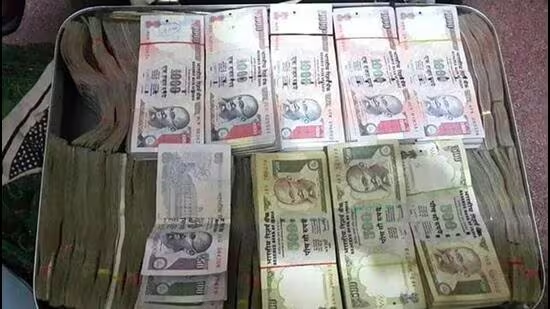

Bhopal: Eleven police personnel, including a woman sub-divisional officer of police (SDOP), have been booked for dacoity, kidnapping, and criminal conspiracy for allegedly looting ₹1.45 crore hawala money in Seoni, Madhya Pradesh. Police have arrested Seoni SDOP Pooja Pandey, sub-inspector Arpit Bhairam, and constables Yogendra, Neeraj, and Jagdish while six others are absconding.Madhya Pradesh chief miner Mohan Yadav said the state government will not tolerate police officers who act beyond their duties (Representational image)The police team had allegedly seized approximately ₹2.9 crore from a Nagpur-based businessman, Sohan Parmar, in the first week of October but only showed ₹1.45 crore in the report and released the accused without taking any action.After the incident came to light, police arrested Parmar and his two employees, Sheikh Mukhtar and Imran Pathan, on Friday and they are being interrogated to know who is the real kingpin in the case.On Saturday, Jabalpur range IG Pramod Verma suspended nine police officers, including station in-charge Arpit Bhairam while DGP Kailash Makwana suspended SDOP Pooja Pandey in connection with the misconduct.In the money laundering case, the police have also arrested two accused, Akash Jain and Aman Gurnani, from Nagpur, and seized ₹1 crore and ₹25 lakh, respectively. The Crime Branch team has brought both the accused to Jabalpur.The case regered against the accused police personnel includes charges under sections 310(2) (dacoity), 126(2) (wrongful restraint), 140(3) (kidnapping), and 61(2) (criminal conspiracy) of the Indian Penal Code (IPC).Chief miner Mohan Yadav said, “Maintaining law and order in the state, creating a crime-free environment, and protecting citizens are the primary responsibilities of police officers and employees. The state government will not tolerate police officers who act beyond their duties. Those found guilty in the Seoni incident will face strict disciplinary and legal action.”