US-Iran Talks in Islamabad: Date, Agenda, Ceasefire Conditions Explained


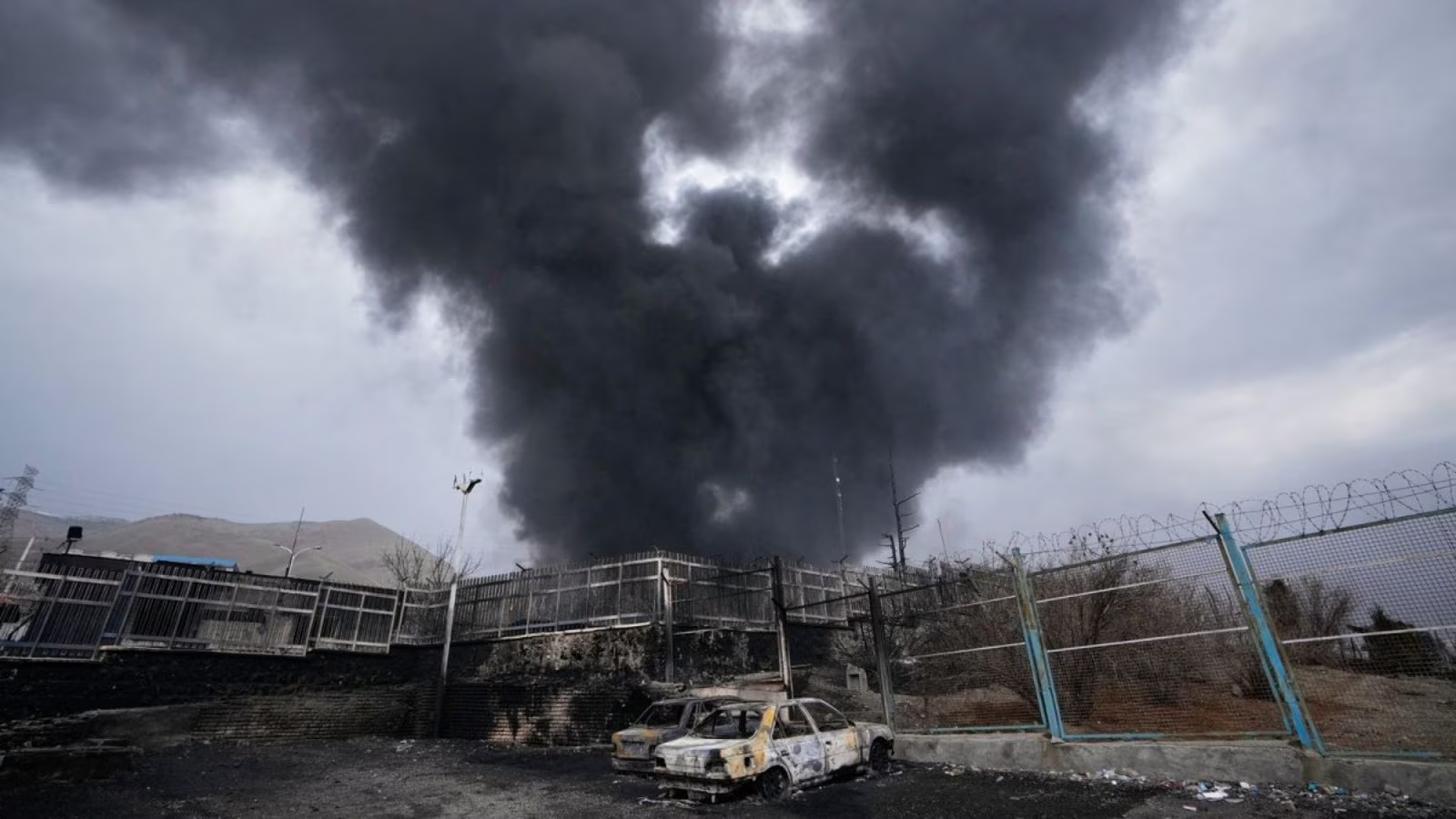
Top officials from the US and Iran are set to arrive in Islamabad following a ceasefire deal between the two countries, weeks after the US killed Iran’s Supreme Leader Ayatollah Ali Khamenei in an attack on February 28, that triggered a war. Israel joined the US in attacks on Iran and Hezbollah in Lebanon causing widespread loss of lives across the Middle East region. However, as per Iranian news agency Fars, the Islamabad peace talks remain on hold if attacks continue in Lebanon. Citing a source, Fars reported that news reports claiming that an Iranian negotiating delegation has arrived in Islamabad to hold talks with US officials are completely false.
“Negotiations remain suspended until the United States upholds its commitments regarding the ceasefire in Lebanon and the Israeli regime stops its attacks,” reported Fars.
Pakan offered to mediate between the two countries and will host a talk in Islamabad on Saturday. However, the truce seems already under strain as Israel continues bombing Lebanon. Iran reiterated that Israeli attacks on its military allies violate the ceasefire deal and closed the Strait of Hormuz on Wednesday.
Here’s everything you need to know about the talks scheduled this weekend:
When and where will the talks be held?
The negotiations are expected to begin on Saturday after the US accepted a 10-point plan proposed Iran to come to terms ahead of the ceasefire deal. Pakani Prime Miner Shehbaz Sharif formally invited officials from both the countries to pursue talks to formally end the war through diplomatic channels.
The White House confirmed that talks will be held on Saturday morning in Islamabad while Iran’s Supreme National Security Council said on April 8 that talks could continue for up to 15 days, reported Al Jazeera.
Deputy Prime Miner of Pakan Ishaq Dar informed on X that dignitaries including journals will be given a visa on arrival.
Pakan welcomes all delegates including journals from participating nations, traveling in relation to Islamabad Talks 2026. To this end, all airlines are requested to permit boarding to all such individuals without Visa. Immigration authorities in Pakan will issue them… pic.twitter.com/mvWJyv2P4s
— Ishaq Dar (@MIshaqDar50) April 10, 2026
Talks will be held at Islamabad’s Serena Hotel, located next to the foreign minry, in the Red Zone, reports Al Jazeera. Story continues below this ad
Authorities have declared two-days public holiday on April 9 and April 10 public holidays in Pakan limiting essential services with exemptions on hospitals and utilities. Traffic restrictions have also been imposed.
Who will attend the talks?
The White House has confirmed that US Vice President JD Vance will lead the US delegation. He will be joined President Donald Trump’s senior envoy Steve Witkoff and his son-in-law Jared Kushner, according to Al Jazeera.
Although Iranian media says talks will be on hold if attacks continue on Lebanon, Iranian Parliament Speaker Mohammad Bagher Ghalibaf and Foreign Miner Abbas Araghchi are expected to lead the delegation if conditions are met. It is not clear whether any representative from Iran’s Islamic Revolutionary Guard Corps (IRGC), which is directing Tehran’s military response in the war, will attend the talks. Ghalibaf is a former IRGC commander. However, Iran said on Friday that talks are on hold, reported Fars.
What’s on agenda?
Both sides are expected to enter the talks with differences. US Vice President JD Vance on Wednesday urged Iran not to let the fragile ceasefire deal fall apart over Israel’s attacks on Lebanon.Story continues below this ad
As Iran’s president said a truce in Lebanon was a key condition for ending the Middle East war, Vance said he believed there had been a “legitimate misunderstanding”, reports the New York Times.
The United States has not formally accepted these terms, though Trump has called the 10-point plan ‘workable’. The White House has instead claimed Iran is willing to surrender its stock of enriched uranium, a position spokesperson Karoline Leavitt described as a non-negotiable demand. Iran has not officially accepted that it is ready to give up its enriched uranium, reports Al Jazeera.